|
Getting your Trinity Audio player ready...
|
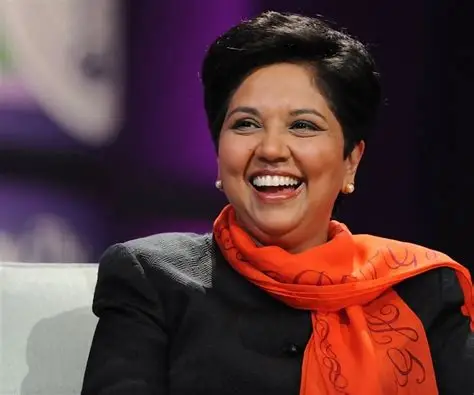
Indra Nooyi, born in India in 1955, joined PepsiCo in 1994 as head of strategic planning, became president and chief financial officer in 2001 and took over as chief executive in 2006, the first woman to hold the job. She led the company until 2018, and she often explained what the top job taught her. One lesson stands out: “Just because you are CEO, don’t think you have landed.” She went on to say that a chief executive must keep expanding what they learn, how they think and how they approach the organisation, and that she has never forgotten the point.
The sentence rejects a comfortable idea. Many people treat a major promotion as an arrival, the point where the climbing ends and the managing begins. Nooyi argues the opposite. In her experience, the top job demands more learning than any role before it, because the problems get larger, the information gets thinner and the margin for error shrinks.
“Just Because You Are CEO, Don’t Think You Have Landed” – Indra Nooyi
The image behind the word “landed” is useful. A plane that has landed stops moving, and nothing more is expected of it. Nooyi uses the picture to warn against stopping. She names three areas for continued growth: what a leader learns, how a leader thinks and how a leader approaches the organisation. The second and third matter most. Knowledge can come from a book, but thinking habits and organisational methods change only when a leader questions their own defaults.
Nooyi has also described why this matters in practical terms. She noted that the demands of leadership do not rise in a straight line as you move up. They grow exponentially, so a leader who ran a business unit well can feel overwhelmed when the whole company lands on their desk. She said she had to become a learning CEO, someone who goes back to school all the time and renews skills constantly, because coasting leaves a gap.
A related idea from Nooyi explains the stakes. She has said that the distance between the number one person and the number two stays constant. If a leader wants the organisation to improve, the leader must improve first, and the organisation then rises with them. A chief executive who stops growing becomes a ceiling, because the team can only rise as far as the person above it.
Consider two managing directors who each inherit a company at the same moment. The first assumes experience is enough and keeps running the business as it was run before. The second sets aside time each week to study one change affecting the market, such as a new competitor, a shift in customer habits or a regulatory update. Within two years, the second director spots problems earlier, asks better questions and brings the team along, while the first reacts to events that others saw coming.
Learn like a student, not a spectator
Nooyi’s advice about learning goes beyond courses and books. She has said that leaders should read widely, walk the market, study trends, make connections that are not obvious and picture what the future could look like, then watch how consumers behave. The point is to gather different kinds of evidence. A leader who relies only on reports from their own team sees a filtered picture.
A simple habit helps: spend regular time outside your own office. Visit customers, shops or suppliers, and ask what has changed since your last visit.
Change how you think, not just what you know
The middle phrase in the quote, the way you think, deserves attention. A leader can collect more facts and still reason in the same old patterns. Updating your thinking means testing your assumptions against new evidence, welcoming people who disagree and admitting when an earlier approach no longer fits. One practical test is to ask what you would advise a competitor to do in your position, then compare it with what you are doing.
Your growth sets the pace for everyone else
Nooyi’s point about the constant distance carries a management lesson. People watch what leaders do, not only what they say. A leader who studies, asks questions and visibly changes their mind makes learning normal for the whole team. A leader who acts as though they have finished learning signals that everyone else should stop too.
Why this advice still holds true today
Markets now change faster than any single career path can anticipate. New technologies, new customer expectations and new competitors appear in months, not decades. A leader who treats a senior title as an endpoint will fall behind within a few seasons. Nooyi’s sentence offers a simple discipline: after every promotion, ask what you now need to learn that you did not need before. The leaders who keep asking that question tend to be the ones whose organisations keep improving.