|
Getting your Trinity Audio player ready...
|
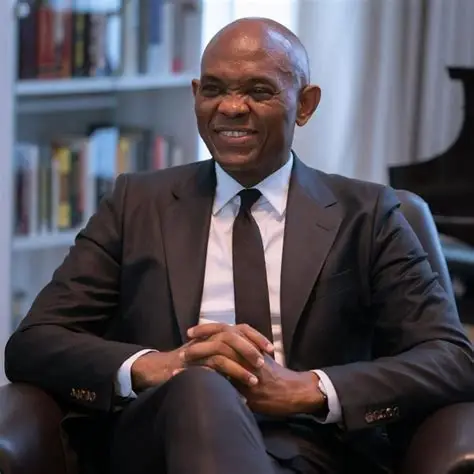
Starting a business can be exciting, but keeping that business alive and growing is often the harder challenge. For Nigerian businessman and investor Tony Elumelu, entrepreneurship is not simply about creating businesses. It is about building companies that can survive, grow and contribute to the wider economy.
“Starting businesses is good. Sustaining them is critical, and that’s how we transform this economy,” Elumelu said at the GROW Nigeria Conference 2.0 in Lagos in November 2025.
The statement reflects one of the central ideas behind Elumelu’s approach to entrepreneurship. He has consistently argued that African businesses and entrepreneurs have an important role to play in creating jobs, building wealth and transforming communities.
The Story Behind the Quote
Elumelu made the comment while speaking about the need to empower Nigerian entrepreneurs and build institutions that can last.
The businessman has spent years promoting entrepreneurship across Africa through the Tony Elumelu Foundation. His work has focused on identifying, training and supporting entrepreneurs who are building businesses across different sectors.
His message at the GROW Nigeria Conference was particularly focused on the difference between starting a company and creating a sustainable business.
Having an idea and registering a business may be the beginning of an entrepreneurial journey, but neither guarantees long-term success.
Why Starting a Business Is Not Enough
Many people associate entrepreneurship with launching a company.
They think about developing an idea, raising capital, getting customers and making the first sale. These are important milestones, but they are only part of the journey.
A business must eventually prove that it can operate consistently.
It needs customers who continue to buy. It needs reliable systems, responsible financial management, capable employees and leaders who can make difficult decisions when circumstances change.
This is why Elumelu places so much importance on sustainability.
A company that survives for years and continues to create value can have a much greater impact than a business that grows quickly but disappears after a short period.
The Bigger Economic Lesson
Elumelu’s statement also goes beyond individual business owners.
When businesses survive and expand, they can employ more people, support suppliers and contribute to economic activity. This makes business sustainability important to the wider economy.
Elumelu has repeatedly argued that entrepreneurship can transform individuals, families, communities and countries. At Stanford Graduate School of Business, he described entrepreneurship as a force capable of transforming families, communities, countries and societies.
This explains why he has continued to advocate for greater support for African entrepreneurs.
The objective is not simply to create more business owners. It is to create entrepreneurs capable of building lasting companies.
What Nigerian Entrepreneurs Can Learn
For entrepreneurs in Nigeria, Elumelu’s message offers a practical lesson.
Starting with a good idea is important, but the entrepreneur must think beyond the launch.
The business needs a clear understanding of its customers and market. It also needs a realistic approach to costs, cash flow and growth.
Entrepreneurs must understand that revenue does not always mean profitability. A company can generate significant sales and still struggle if expenses are poorly controlled.
Sustainability requires discipline.
It means knowing when to expand, when to reduce costs, when to change strategy and when to invest in people and technology.
Think Beyond the First Few Years
Elumelu has often encouraged entrepreneurs to think long term.
In a speech on entrepreneurship, he explained that when he and his partners were building Standard Trust Bank, they established specific milestones for the business. Their strategy was to first make the bank viable, then move it into Nigeria’s top 10 and eventually into the top three.
That approach demonstrates the difference between having an ambition and having a structured plan for achieving it.
Entrepreneurs can apply the same thinking to smaller businesses.
Instead of focusing only on the next sale, they can establish clear targets for revenue, customers, employees, products and expansion.
Small milestones can provide direction while keeping the larger goal in view.
Entrepreneurship Requires Resilience
Building a sustainable company also requires the ability to withstand setbacks.
Markets change. Customers change. Costs increase. Competitors emerge. Regulations can shift, while economic conditions can make business operations more difficult.
Elumelu recently described resilience as one of the qualities that separates entrepreneurs who build lasting institutions from those who do not. He argued that successful entrepreneurs must remain committed when progress is slow and continue working toward their long-term vision.
This makes sustainability as much a leadership challenge as a financial one.
An entrepreneur needs the patience to keep building even when the initial excitement around the business has disappeared.
From Business Creation to Wealth Creation
The ultimate lesson in Elumelu’s statement is that entrepreneurship should not stop at business creation.
A sustainable business can become an engine for wealth creation and employment.
It can provide opportunities for employees, create markets for suppliers and give other entrepreneurs a reason to build around it.
This is also closely connected to Elumelu’s philosophy of Africapitalism, which promotes private-sector-led development and the idea that businesses should contribute to broader economic and social progress.
For Nigeria, where millions of people depend on private businesses for income and employment, the survival and growth of those businesses can have a significant economic impact.
The Bottom Line
Tony Elumelu’s message is straightforward: starting a business is only the beginning.
The real test comes afterward.
Can the business survive difficult economic conditions? Can it retain customers? Can it manage its finances? Can it create jobs? Can it continue operating when the founder is no longer involved in every decision?
Those are the questions that determine whether a business becomes sustainable.
For entrepreneurs looking beyond their first sale or first year, Elumelu’s advice is worth remembering. Creating a business matters, but building one that lasts can have a much greater impact on the entrepreneur, employees, customers and the economy