|
Getting your Trinity Audio player ready...
|
Why this quote still matters today
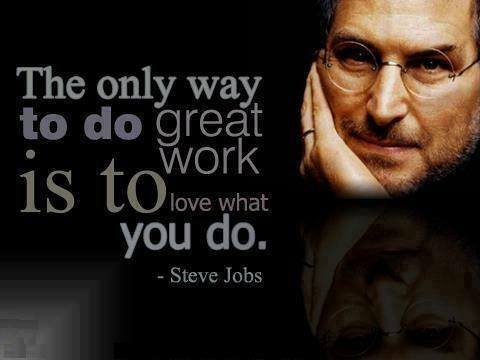
In June 2005, Steve Jobs stood in front of Stanford’s graduating class and said something that has since been repeated in more commencement speeches, LinkedIn posts and office posters than almost any other line from a tech executive: “The only way to do great work is to love what you do. If you haven’t found it yet, keep looking. Don’t settle.” Twenty years on, it remains one of the most searched quotes about work and career online.
Part of why it has stayed so popular is that it speaks to a fear a lot of people carry quietly, the fear of spending decades doing work that never actually meant anything to them. But the quote has also aged into something more complicated than a simple motivational line. Not everyone has the freedom to keep looking indefinitely, and not every job in a difficult economy can be walked away from just because it does not feel like love. That tension is exactly what makes the quote worth examining honestly rather than just repeating it.
Loving the work and needing the income are not opposites
There is a common criticism of this quote, that it was said by someone who built one of the most valuable companies in the world and could afford to hold out for passion in a way most people cannot. That criticism has real weight, and it should not be dismissed. At the same time, the quote does not have to mean quitting a stable job to chase a dream with no plan. A more useful reading is that love for the work and financial necessity can exist in the same career at the same time, and the goal is to shrink the gap between them over years, not force a dramatic leap overnight.
Consider two people working the exact same entry-level job neither of them originally wanted. One treats it purely as a paycheck and does the minimum required to keep it. The other, while still needing the income just as much, looks for the one part of the role they can actually get better at and start to care about, whether that is solving customer problems, organising information, or mentoring someone newer. Years later, the second person often finds that the “boring” job quietly became the foundation for something they do genuinely love, not because the job changed, but because they kept shaping their relationship to it.
Very few jobs are loved in their entirety. It is more realistic, and more useful, to notice which specific tasks inside a role genuinely pull your attention, and which ones drain it. A salesperson might dislike the paperwork but genuinely enjoy solving a client’s problem. A developer might find debugging tedious but love the moment a system finally clicks into place. Paying attention to these smaller patterns is often a more practical starting point than waiting to feel love for an entire job title.
Jobs’ advice to “keep looking” is sometimes read as permission to drift from role to role hoping to stumble onto the right one. A steadier approach is to treat it as a direction to build toward. If a specific kind of work consistently pulls your attention, it is worth deliberately gaining the skills and experience that move you closer to doing more of it, rather than waiting passively for the perfect opportunity to appear on its own.
Do not confuse comfort with love, or difficulty with the wrong path
Meaningful work is rarely free of frustration. There will be days inside genuinely loved work that feel exhausting, unclear, or thankless. The quote is easy to misread as a promise that the right work will always feel good. A more accurate reading is that the right work is worth the hard days in a way that the wrong work never quite is, even when both look similarly difficult from the outside.
This does not require quitting a stable job on the strength of one quote. It can start much smaller. At work, it might mean noticing which single task you would happily do even without being asked, and finding ways to do more of it inside your current role. In education, it might mean paying attention to which subject you return to out of curiosity rather than obligation, since that pattern often points toward a direction worth pursuing further. In personal projects, it can mean protecting a small amount of time for the kind of work that genuinely interests you, even while a main job pays the bills, so that the gap between necessity and love keeps narrowing rather than staying fixed.
Why this advice still holds true today
Steve Jobs delivered this line to a room full of graduates about to enter a workforce very different from today’s, yet the core tension he described, between settling and searching, between necessity and meaning, has not gone away. Economic pressure is real, and not everyone can afford to “keep looking” without limits. But the quote is less useful as a demand to have everything figured out immediately and more useful as a standing reminder to keep nudging a career toward the parts of it that actually feel worth doing. Great work rarely arrives fully formed. It tends to be built, slowly, by people who kept paying attention to what pulled them in, even while doing work that was simply necessary at the time.