|
Getting your Trinity Audio player ready...
|
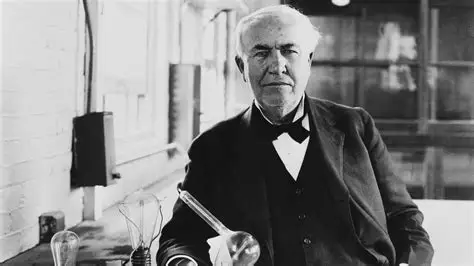
Inventor Thomas Edison, who lived from 1847 to 1931, built a laboratory at Menlo Park, New Jersey, that turned invention into a team effort, and he went on to hold more than a thousand US patents. He is best known for the practical electric light and the phonograph. He is also the man behind the line: “Genius is one percent inspiration and ninety-nine percent perspiration.” In a 1927 letter, Edison wrote that he had once made the statement and was still of the same opinion.
The sentence has a longer history than most people realise. Earlier magazine reports quoted Edison giving a different split, two percent inspiration and ninety-eight percent hard work, and another early report had him saying that genius is not inspired because inspiration is perspiration. A lecturer in the 1890s had already used the pairing of inspiration and perspiration. Edison made the idea famous, and the 1932 article that fixed the one and ninety-nine wording placed the original remark around 1902 or 1903.
“Genius Is One Percent Inspiration and Ninety-Nine Percent Perspiration” – Thomas Edison
The numbers are not a measurement. Nobody timed Edison’s working hours and divided them into categories. They make a point about proportion: the flash of an idea matters, yet it accounts for a very small share of what it takes to build something that works. The remaining effort goes into testing, failing, adjusting and testing again.
Edison described his method in the same spirit. He said none of his inventions came by accident. He saw a worthwhile need, and then he made trial after trial until a solution appeared. His laboratory ran on that principle. His team tested hundreds of materials while searching for a durable lamp filament, and success came from persistence, not from one moment of insight.
Consider two entrepreneurs who each imagine an app that helps farmers sell produce directly to restaurants. The first treats the idea as the achievement. She tells friends about it, writes a long plan and waits for the perfect moment to start. The second treats the idea as a hypothesis. He builds a simple version in a month, tests it with five farmers, learns that pricing confuses them and rebuilds the checkout page. After six months, he has real customers and real data, while the first entrepreneur still has a plan.
Ideas are cheap, execution is scarce
The most useful business lesson in Edison’s line is about where value comes from. Many people have good ideas, and few turn them into products that customers use. The gap lies in daily work: building the first version, finding the first buyers, fixing problems and keeping going when results are slow. Leaders who recognise this tend to measure progress by tests completed and customers served, not by ideas collected.
Testing turns inspiration into evidence
Edison treated experiments as the main source of knowledge. A founder can borrow the habit by treating each assumption as something to check. Before spending large sums, test the smallest version that could prove the idea wrong: a landing page, a pilot with a few customers or a manual version of the service. Each test produces evidence, and each failure narrows the search for what works.
Consistency beats bursts of energy
The ninety-nine percent is mostly routine. It includes showing up on slow days, repeating a sales pitch that has not landed yet and improving a process a little at a time. Teams that build steady habits, such as weekly reviews and regular customer contact, tend to outlast teams that depend on bursts of enthusiasm. Edison’s laboratory gave him the structure to keep experiments running day after day.
Inspiration still matters
It would be a mistake to read the quote as dismissing creativity. Edison’s one percent was real, and without it his laboratory would have had nothing to test. The point is that inspiration needs work to become useful. A founder who values both parts spends time looking for good ideas and committing even more time to making the best ones work.
Hard work needs direction
Another caution is worth adding. Perspiration alone does not guarantee results, because people can work hard on the wrong problem. Edison chose projects with clear commercial value, and he said he invented to earn money so that he could keep inventing. Effort pays off best when it points at a real customer need.
Why this advice still holds true today
Modern tools make it easy to feel that business is mostly about ideas, from pitch decks to social media attention. Edison’s sentence pushes the other way. It reminds founders that building, testing and executing decide who succeeds, and that these tasks consume most of the time. More than a century after he made the remark, the practical message stands: have the idea, then spend the real effort finding out whether it works.