|
Getting your Trinity Audio player ready...
|
A high-performing student in South Korea has admitted using artificial intelligence to cheat in an examination, triggering fresh debate about academic integrity and the growing challenges artificial intelligence presents to education systems.
The admission has attracted attention because it involves a student who achieved one of the highest scores in a competitive examination, raising questions about how effectively schools and examination authorities can detect the use of AI-assisted cheating.
The candidate, identified in South Korean media as 34-year-old Han Won-seok, reportedly used a miniature camera to photograph examination questions, sent the images to an artificial intelligence tool and checked the answers returned by the system on a smartphone.
Han disclosed the cheating in a video published on his lawyer’s YouTube channel, where he apologised for his actions and said he had submitted a written confession to the Seoul Metropolitan Police Agency. Police confirmed receiving the statement and said the case had been assigned to investigators for examination.
The confession brought an end to weeks of speculation surrounding his unusually high performance in the 2026 Certified Tax Accountant examination. Han had initially denied allegations that he used electronic devices to obtain answers, but later admitted that he cheated during both stages of the qualification test.
Han’s first-stage result was particularly striking. He scored 397.5 out of a possible 400 points, answering 159 of the 160 questions correctly in the examination held in April. He subsequently scored 663 out of 800 in the second-stage written examination in July, eventually emerging as the overall top candidate.
His performance attracted attention among other candidates and professionals familiar with the difficulty of the examination. Some questioned how a candidate could achieve such an exceptional result, particularly after sharing details of his preparation and presenting himself as someone who had succeeded through self-study.
The questions intensified after Han’s results became a subject of discussion in online communities. Some initially suspected that he had used AI-powered smart glasses, which had already become a concern for examination authorities. His confession, however, revealed a different method involving a miniature camera, artificial intelligence and a smartphone.
He also admitted using the same approach during the first stage of the Certified Public Accountant examination, raising the possibility that the investigation could extend beyond the tax accountant qualification test.
Han said he regretted his decision and explained that financial difficulties and pressure to succeed had influenced his actions. He had left a corporate job to establish his own business, but the venture reportedly struggled with rising operating costs and other financial challenges.
He said the uncertainty surrounding how long it would take him to qualify as a tax accountant made him anxious. He also spoke about wanting to make his parents proud after leaving a stable job, although he acknowledged that his decision to cheat was wrong.
The candidate’s explanation has not changed the seriousness of the allegations. His confession has instead placed the examination’s security arrangements under scrutiny, particularly because he reportedly managed to use prohibited electronic equipment without being detected by supervisors.
Police investigation and possible consequences
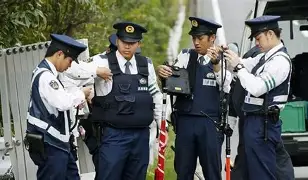
The Seoul Metropolitan Police Agency has opened an investigation following receipt of Han’s written confession. Investigators are expected to examine his account, establish how the cheating was carried out and determine whether other people were involved.
The Human Resources Development Service of Korea, which administers the national qualification examination, is also facing questions about how the candidate managed to cheat during both stages of the test.
According to reports, four examination supervisors who were responsible for monitoring Han during the two stages said they had not noticed suspicious behaviour. The agency had initially indicated that it found no concrete evidence supporting the allegations before the candidate admitted to cheating.
The case has exposed a difficult problem for examination authorities. Traditional supervision methods may be inadequate when candidates use miniature electronic equipment that can be concealed and operated without attracting obvious attention.
South Korea’s Ministry of Finance and Economy has indicated that it intends to move quickly to suspend the validity of Han’s certificate confirming that he passed the examination. Under the applicable rules, candidates found guilty of cheating can have their examination results invalidated and face a five-year ban from taking the examination, beginning from the date the relevant sanction is imposed.
The police investigation could also result in criminal charges, depending on the evidence and the applicable laws. Authorities have not announced a final decision on Han’s professional qualification, and the investigation remains ongoing.
AI cheating raises concerns ahead of South Korea’s university entrance examination
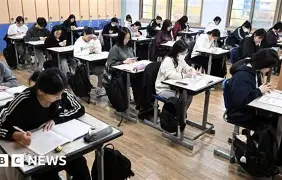
The scandal has emerged at a particularly sensitive time for South Korea’s education system, with the country’s annual university entrance examination, known as the College Scholastic Ability Test or Suneung, scheduled for November 19, 2026.
The examination is one of the most important academic events in South Korea. Its results can significantly influence university admission opportunities and future career prospects, making fairness and strict supervision essential.
The presidential office has acknowledged the seriousness of the latest cheating case and announced plans for an emergency meeting to discuss additional measures. Presidential chief of staff Lim Kwang-hyun said the government was working on responses to the growing threat of AI-assisted examination fraud.
South Korean authorities have already increased efforts to prevent candidates from using smart glasses and other electronic devices during examinations. The government has also warned that students caught using prohibited technology during the university entrance examination could face criminal complaints.
The latest confession has complicated those preparations because the candidate did not rely on smart glasses, as many officials had initially feared. His admission has highlighted the possibility that miniature cameras and other concealed equipment could be used to obtain examination questions without attracting the attention of supervisors.
The Human Resources Development Service of Korea has acknowledged the challenges associated with detecting such devices. The case has prompted renewed discussion about whether existing inspection procedures are sufficiently effective against increasingly sophisticated methods of cheating.
There have also been other reports of AI-assisted examination fraud in South Korea. Two university applicants were reportedly caught using AI glasses during entrance examinations at universities in Seoul in October. Four additional cases involving AI glasses were reported at middle and high schools this year, according to education ministry data covering the period from October 27 to November 3.
Why the case matters beyond South Korea
Han’s confession has raised questions about the future of examinations at a time when artificial intelligence tools are becoming increasingly accessible. AI systems can process written questions and provide answers within seconds, creating opportunities for candidates to obtain outside assistance even when they are physically present in examination halls.
The challenge for examination organisers is that traditional measures, including checking identification, collecting mobile phones and monitoring candidates, may not be sufficient to prevent every form of electronic cheating.
The incident also highlights the difference between using AI as a learning tool and using it to gain an unfair advantage during a supervised examination. Students can legitimately use artificial intelligence to understand difficult subjects, practise questions and improve their preparation. However, secretly using the technology to obtain answers during an examination undermines the credibility of the results.
For professional qualification examinations, the consequences can extend beyond the candidate and other examination participants. A tax accountant’s qualification is intended to demonstrate the knowledge and competence required to provide professional services. If someone obtains that qualification through cheating, it raises concerns about whether the person has the ability to perform the work expected of a licensed professional.
The controversy could therefore lead to broader reviews of examination procedures, including stronger screening arrangements, improved monitoring technology and clearer rules for dealing with AI-assisted misconduct.
For now, the immediate priority for South Korean authorities is to establish the full circumstances of Han’s confession, determine the validity of his examination results and strengthen security ahead of the November 19 university entrance examination.
The case has demonstrated that even a candidate who achieves the highest score in a highly competitive national examination can later face serious scrutiny when the integrity of the result is questioned. Han has admitted wrongdoing, but the final legal and administrative consequences will depend on the outcome of the investigations.