|
Getting your Trinity Audio player ready...
|
The Lagos State Government has announced plans to achieve 90 per cent flood control coverage ahead of the 2027 rainy season, as authorities intensify efforts to improve drainage infrastructure, clear water channels and reduce the risk of flooding across the state.
The target was disclosed by the Lagos State Commissioner for the Environment and Water Resources, Tokunbo Wahab, who said the government was strengthening its flood management strategy to address recurring environmental challenges in different parts of the state.
The initiative is expected to involve improvements to existing drainage networks, maintenance of major water channels, removal of obstructions and other environmental interventions designed to improve the movement of stormwater during periods of heavy rainfall.
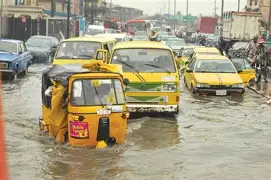
Flooding remains one of the major environmental challenges facing Lagos, particularly during the rainy season when intense rainfall can overwhelm drainage infrastructure and cause water to accumulate in residential areas, roads and commercial districts.
The state’s geographical characteristics also make flood management an important public policy issue. Lagos has extensive coastal and lagoon-facing communities, low-lying settlements and densely populated urban areas where inadequate drainage can increase the impact of heavy rainfall.
For residents and businesses, flooding can result in damaged properties, disrupted transportation, temporary displacement and financial losses. The proposed 90 per cent target therefore represents an important part of the government’s preparations for the next rainy season.
However, achieving the target will depend on the scale of infrastructure improvements, effective maintenance, enforcement of environmental regulations and cooperation from residents.
The government will also need to ensure that drainage interventions cover vulnerable communities rather than concentrating only on major roads and commercial areas.
The commissioner made the disclosure during an inspection of government projects and disputed development sites in Oregun, Surulere and Osborne Foreshore Estate in Ikoyi on Saturday, November 7, 2026.
According to Wahab, the state had recorded between 75 and 80 per cent success in managing flooding over the preceding years. The government now wants to improve that performance through additional infrastructure investments, continuous drainage maintenance and stronger environmental policies.
He explained that Lagos could not realistically achieve 100 per cent flood prevention because of its coastal geography, tidal movements, intense rainfall and rising sea levels.
The commissioner maintained that the government’s objective was to reduce the frequency, severity and duration of flooding while improving the ability of drainage infrastructure to evacuate stormwater.
He also appealed to residents not to panic whenever temporary flash flooding occurs, explaining that water in affected areas should recede as drainage channels discharge accumulated stormwater.
The announcement comes as Lagos continues to experience the effects of urbanisation, changing weather patterns and pressure on existing environmental infrastructure. Punch Newspapers+1
The 90 to 95 per cent target is particularly important because Lagos has experienced repeated flooding incidents that have disrupted transportation, affected residential communities and raised concerns about the safety of properties in vulnerable locations.
However, the commissioner did not suggest that all flood-prone areas would become completely free from water accumulation. Instead, the government is focusing on improving the capacity of existing drainage systems and ensuring that water can move away from affected locations more efficiently.
Year-round drainage maintenance becomes central to Lagos flood control
One of the major components of the state’s strategy is the shift from seasonal drainage clearance to continuous maintenance throughout the year.
Traditionally, drainage clearance activities were often intensified shortly before the rainy season. However, the Lagos government says it has adopted a more consistent approach through the Emergency Flood Abatement Gang, which works throughout the year to identify and remove obstructions from drainage channels.
The commissioner explained that the government no longer waits for the rainy season before addressing blocked drains. Maintenance teams are deployed whenever inspections identify accumulated refuse, silt or other materials affecting water movement.
This approach is intended to prevent minor drainage obstructions from developing into larger problems during periods of intense rainfall.
The Emergency Flood Abatement Gang is an important part of the strategy because drainage infrastructure requires regular attention even when rainfall is relatively low.
Plastic bottles, nylon bags, construction materials and other waste can accumulate in drainage channels and reduce their ability to carry stormwater.
The government has repeatedly warned that indiscriminate waste disposal contributes to drainage blockages and increases the risk of localised flooding.
In an interview published by Punch in July 2026, Wahab explained that the Emergency Flood Abatement Gang operates around the clock, allowing the government to respond when drainage channels become obstructed after previous clearance exercises.
He also said the state had expanded its maintenance approach beyond the traditional practice of clearing drains only before the rainy season. Commission+1
The continued operation of these teams will be important as Lagos prepares for the 2027 rainy season. However, the effectiveness of the programme will depend on how frequently vulnerable drainage networks are inspected and how quickly identified problems are addressed.
Lagos intensifies drainage infrastructure development
Beyond clearing existing drainage channels, the government is also relying on infrastructure improvements to strengthen the state’s flood management capacity.
Wahab identified resilient infrastructure as a major component of the plan to improve flood control performance before 2027.
Drainage construction and rehabilitation are particularly important in densely populated areas where existing channels may struggle to accommodate the volume of water generated during heavy rainfall.
In January 2026, the commissioner disclosed that construction activities were ongoing at several locations along the Lekki corridor.
These included concrete lining works around Ikota, identified as System 44, and drainage construction along Kusenla Road in Ikate, where a pumping station was also being developed to discharge water into the Freedom drainage alignment.
The government also identified System 46 and wetlands around Ikota and Ogombo as areas requiring protection against encroachment.
These projects form part of broader efforts to improve stormwater evacuation and address persistent flooding concerns in vulnerable communities. Punch Newspapers
The importance of drainage infrastructure is also reflected in earlier government figures. In June 2025, Wahab said Lagos had constructed approximately 76 kilometres of trapezoidal drainage channels over the preceding two years as part of its efforts to strengthen environmental resilience.
The investment was presented as part of the state’s response to climate-related risks, including rising sea levels and increasingly intense rainfall.
However, infrastructure construction alone cannot guarantee effective flood control. The condition of existing channels, the availability of adequate discharge routes and the protection of natural waterways remain important factors.
For the 2027 target to be meaningful, the government will need to ensure that newly constructed drainage systems connect effectively with existing infrastructure and that maintenance continues after construction is completed. TheCable+1
Commissioner explains why Lagos cannot completely eliminate flooding
Wahab also used the inspection exercise to explain why the government does not consider 100 per cent flood prevention a realistic target for Lagos.
The state has a coastal location, with several communities situated in low-lying areas that are vulnerable to tidal movements and rising water levels.
During periods of heavy rainfall, water must move through drainage channels before eventually reaching lagoons and other receiving water bodies.
However, when lagoon water levels rise, the movement of stormwater out of drainage channels can become slower.
This can result in temporary water accumulation on roads and in residential areas, particularly when intense rainfall occurs at the same time as unfavourable tidal conditions.
The commissioner said these environmental factors make it difficult for a coastal city such as Lagos to eliminate all flooding incidents.
He explained that the government was instead investing in infrastructure capable of reducing the impact of these events.
This distinction is important because flash flooding and prolonged flooding can have different causes and require different responses.
Flash flooding may occur when intense rainfall temporarily exceeds the capacity of drainage infrastructure. Water can accumulate quickly and subsequently recede once the drainage network has enough capacity to discharge it.
Prolonged flooding, on the other hand, can remain in affected locations for extended periods, creating more serious disruption for residents and businesses.
In July 2026, Wahab told Punch that some water accumulation recorded during heavy rainfall in Lagos had receded within approximately 35 minutes to an hour after rainfall stopped.
He maintained that the government was investing in drainage systems to reduce the duration of such incidents.
Nevertheless, residents who experience flooded roads and homes may still face significant disruption, even when the water eventually recedes. The distinction does not remove the need for continued investment in flood prevention and emergency response. Commission+1
Government warns against building on drainage channels
Another major concern raised by the commissioner is the continued development of properties around drainage channels and designated waterways.
During the November 7 inspection, the ministry visited Oregun, Surulere and Osborne Foreshore Estate in Ikoyi to investigate complaints involving alleged encroachment on drainage alignments and government-approved development sites.
At Oregun Mixed-Use Scheme, the government responded to complaints from property owners who alleged that automobile mechanics had occupied parts of their land and encroached on a natural drainage route known as System One.
Wahab said the ministry had reassured the affected property owners that their government-approved titles and Certificates of Occupancy remained valid, while directing the mechanics to vacate the affected land.
In Surulere, officials investigated allegations that construction by the Lagos State Development and Property Corporation had encroached on the right-of-way of a drainage channel.
Following physical measurements conducted in the presence of stakeholders, the commissioner said the ministry found no encroachment on the drainage alignment.
A separate inspection at Osborne Foreshore Estate also focused on allegations involving construction around a drainage channel.
Wahab maintained that the development had not encroached on the government’s drainage alignment and advised those involved against removing a culvert installed for safety reasons.
These inspections demonstrate the government’s intention to protect existing drainage infrastructure from developments that could interfere with the movement of stormwater.
The commissioner also warned that blocking natural waterways or building within designated drainage corridors could undermine flood management efforts.
For Lagos to improve its flood control performance, enforcement of planning regulations will remain important alongside the construction of new drainage infrastructure. Punch Newspapers
Lagos government links waste management to flood prevention
Waste disposal is another issue the government has identified as important to its 2027 flood control target.
Drainage channels can become blocked when residents dispose of household refuse, plastics and other materials in waterways.
Even relatively small quantities of waste can contribute to larger obstructions when accumulated over time, reducing the amount of water that drainage systems can carry.
Wahab said the government’s environmental policies, including restrictions on Styrofoam food containers and efforts to phase out single-use plastics, were designed partly to address the problem of waste entering drainage infrastructure.
The commissioner maintained that these measures were deliberate efforts to improve environmental management and protect the state’s drainage network.
However, enforcement and public cooperation will be necessary to achieve the intended results.
Residents also have responsibilities, including disposing of household waste through approved channels, avoiding the dumping of refuse in canals and keeping accessible drains around their properties free from obstructions.
The commissioner has previously stressed that flood control cannot be left entirely to the government.
In his July 2026 interview with Punch, he called on Lagos residents to become active participants in environmental management, arguing that public infrastructure could not function effectively if people continued to obstruct it through indiscriminate waste disposal.
The government’s challenge will be to combine public education with consistent enforcement so that environmental regulations are followed across residential, commercial and industrial communities. Punch Newspapers+1
Climate change adds pressure to Lagos flood management
Lagos is also dealing with wider environmental challenges associated with climate change.
Rising sea levels, coastal exposure, changing rainfall patterns and rapid urban development have increased the importance of long-term flood resilience planning.
In August 2026, the Federal Government reaffirmed its commitment to working with Lagos State on flood resilience, sustainable water management and sanitation.
The Federal Ministry of Water Resources and Sanitation identified Lagos as one of the states facing significant flood risks under the Nigeria Hydrological Services Agency’s 2026 Annual Flood Outlook.
The Federal Government also highlighted the importance of early warning systems, improved drainage infrastructure, integrated water management and stronger coordination between government agencies.
The partnership is particularly important because some flood-related challenges extend beyond the administrative boundaries of Lagos.
Water movement along river systems, coastal conditions and activities in neighbouring states can influence flooding in vulnerable communities.
Lagos also maintains cooperation with the Ogun-Oshun River Basin Development Authority concerning water releases from Oyan Dam.
According to Wahab, the arrangement allows the state to receive advance information about expected releases and alert communities along the Ogun River corridor, including Agiliti and neighbouring areas.
This type of coordination is important for communities that may experience flooding when water levels rise along river channels.
The government will therefore need to maintain cooperation with federal agencies and neighbouring authorities as it works towards its 2027 flood control target. Federal Ministry of Info+2
What Lagos residents should expect before the 2027 rainy season
The government’s preparations are expected to focus on drainage maintenance, infrastructure development, environmental enforcement and public awareness.
Residents in flood-prone communities will also need to pay attention to official weather forecasts and flood warnings as the next rainy season approaches.
The Nigeria Hydrological Services Agency provides seasonal flood information that can help residents and government authorities identify vulnerable locations and prepare for possible emergencies.
People living in low-lying areas should take particular care to protect important documents, household valuables and electrical equipment from potential water damage.
Motorists should also avoid driving through floodwater when the depth and condition of the road cannot be established.
For the Lagos government, the next major test will be demonstrating measurable improvements across vulnerable communities rather than relying solely on the number of drainage projects completed.
The 90 to 95 per cent target announced by Wahab sets out the administration’s intended level of flood control success, but the commissioner has acknowledged that coastal conditions and extreme weather make complete prevention unrealistic.
The effectiveness of the programme will ultimately depend on whether drainage infrastructure can handle heavy rainfall more efficiently, whether maintenance teams respond quickly to blockages and whether development activities respect natural waterways.
As Lagos prepares for the 2027 rainy season, the government is seeking to strengthen its environmental infrastructure while encouraging residents to take greater responsibility for protecting drainage systems.
The coming months will show how much progress the state makes towards its target and whether the planned interventions translate into fewer disruptions for households, businesses and road users.
For more updates on Lagos infrastructure, environmental policies and Nigerian economic developments, visit BusinessTech Nigeria.
Residents can also consult the Nigeria Hydrological Services Agency for official flood outlooks and related seasonal information.