|
Getting your Trinity Audio player ready...
|
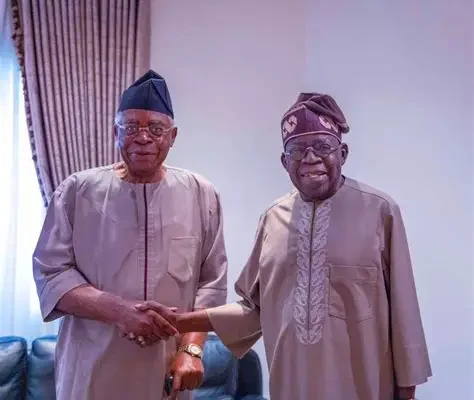
President Bola Ahmed Tinubu has expressed condolences to Niger Republic’s military leader, General Abdourahamane Tchiani, following the death of his father, extending Nigeria’s sympathy to the bereaved family and the people of the neighbouring West African country.
The condolence message highlights the diplomatic relationship between Nigeria and Niger at a time when relations between the two countries have faced significant challenges following the 2023 military coup that removed President Mohamed Bazoum from power.
Tinubu’s message is also significant because Tchiani, who leads Niger’s military government, remains one of the most influential political figures in the Sahel region. His administration has been at the centre of major regional discussions involving security cooperation, economic relations and the future of political stability in West Africa.
By extending his condolences, the Nigerian President has demonstrated the importance of maintaining diplomatic communication even when neighbouring countries experience political disagreements.
The death of a family member is a personal loss, and Tinubu’s gesture provides an opportunity for Nigeria to express sympathy beyond the political differences that have affected relations between both governments.
Niger and Nigeria share important historical, cultural, economic and security connections. Their relationship remains particularly important because of their geographical proximity and shared interests in addressing insecurity, cross-border criminal activities and economic development.
Tinubu Condoles Niger Military Leader Abdourahamane Tiani Over Father’s Death at 110, Reaffirms Nigeria’s Solidarity
President Bola Ahmed Tinubu has extended Nigeria’s condolences to Niger Republic’s military leader, General Abdourahamane Tiani, following the death of his father, Elhadji Tiani Hassane, who died at the age of 110.
Tinubu conveyed the message of sympathy on Saturday, November 7, 2026, assuring the Nigerien leader that the Nigerian government and people stood with him and his family during their period of mourning.
The condolence message was signed by the President’s Special Adviser on Information and Strategy, Bayo Onanuga, and released through the State House in Abuja.
According to the presidential statement, Elhadji Tiani Hassane died on Thursday, November 5, 2026, after living for more than a century.
The President described the death of a father as a deeply personal loss, acknowledging the emotional difficulties that accompany the passing of a parent, regardless of the deceased’s age.
Tinubu also encouraged Tiani to find comfort in his father’s long life and the positive influence he had on those around him.
The President’s message went beyond expressing personal sympathy, extending Nigeria’s solidarity to the government and people of Niger Republic during the mourning period.
He also prayed for the repose of the deceased’s soul, asking Almighty Allah to grant him Al-Jannah Firdaus and provide comfort to his family.
The development has attracted attention because of the political and diplomatic relationship between Nigeria and Niger, two neighbouring West African countries with longstanding historical, economic, cultural and security connections.
Although their governments have experienced significant disagreements since the 2023 military takeover in Niger, Tinubu’s condolence message demonstrates the importance of maintaining diplomatic communication during sensitive moments.
The statement also provides an opportunity to examine the relationship between the Nigerian government and the military administration led by Tiani, particularly as both countries continue to face shared security and economic challenges in the Sahel and wider West African region. State House Abuja+1
Tinubu pays tribute to Tiani’s father
In his condolence message, Tinubu acknowledged the remarkable length of Elhadji Tiani Hassane’s life and the legacy he left behind.
The President noted that his death represented a profound loss for the Nigerien leader and his family, but encouraged Tiani to draw strength from the knowledge that his father had lived a long and fulfilled life.
Tinubu wrote that the deceased’s legacy of faith, honour and integrity should provide comfort to the bereaved family.
He also observed that the elder Tiani had made a significant impact on the lives of people who knew him.
The President’s message stated:
“In this moment of mourning, I pray that you will find solace in the enduring legacy of faith, honour, and integrity that your father leaves behind, and in the knowledge that his long and fulfilled life was a blessing to all who knew him.”
The statement further reaffirmed Nigeria’s support for its neighbouring country.
“Nigeria stands in solidarity with Your Excellency and the Government and people of the Republic of Niger during this period of grief.”
Tinubu concluded by praying that Almighty Allah, in His infinite mercy, would grant the deceased Al-Jannah Firdaus and comfort those he left behind.
The message was issued by Onanuga on behalf of the President and the Nigerian government on November 7.
Elhadji Tiani Hassane dies at 110
The death of Elhadji Tiani Hassane on November 5, 2026, marked the end of a life that spanned more than a century.
He reportedly died at the age of 110, making his passing a significant family event for Niger’s military leader and his relatives.
His death was also acknowledged by Nigerien institutions, with the country’s Ministry of Public Service, Labour and Employment issuing a condolence message to Tiani and his family.
The ministry expressed sympathy and prayed for Allah’s mercy upon the deceased, while asking for patience and strength for those affected by the loss.
The reported age of 110 places Hassane among individuals who lived through several generations of political, social and economic changes in Niger and the wider African region.
However, the official Nigerian presidential statement focused primarily on his longevity, personal legacy and the grief experienced by his family rather than providing details about his private life or public activities.
For Tiani, the loss comes while he continues to lead a country facing considerable political, security and economic pressures.
Tinubu’s decision to send a direct condolence message therefore carries both personal and diplomatic significance.
Why Tinubu’s condolence message is significant for Nigeria-Niger relations
The condolence message comes against the background of a complicated relationship between Nigeria and Niger Republic following the military coup that brought Tiani to power in July 2023.
Before the takeover, Niger was governed by democratically elected President Mohamed Bazoum. However, members of the country’s presidential guard detained Bazoum and announced the removal of his government, placing Tiani at the centre of the military transition.
The coup created serious diplomatic tensions across West Africa, particularly because Niger was an important member of the Economic Community of West African States (ECOWAS).
At the time, Tinubu was serving as chairman of ECOWAS and became one of the leading regional voices calling for the restoration of constitutional order in Niger.
Under his leadership, the regional organisation imposed sanctions on Niger and demanded the restoration of democratic governance. ECOWAS also warned that military intervention could become an option if diplomatic efforts failed.
These developments created tensions between Abuja and Niamey, particularly after Niger’s military authorities rejected external pressure and maintained their control of the government.
The disagreement affected diplomatic relations, border activities, trade and regional security cooperation.
The situation became more complicated when Niger joined Burkina Faso and Mali in withdrawing from ECOWAS and establishing the Alliance of Sahel States, also known as the Alliance of Sahel States (AES).
The three military-led countries presented their new regional arrangement as an alternative framework for cooperation, particularly in security, defence and economic affairs.
Their decision represented a major change in West African regional politics and raised questions about the future of cooperation between ECOWAS and the Sahel countries.
Nigeria, as one of the region’s largest economies and most influential political players, has a significant interest in developments involving Niger.
Tinubu’s latest condolence message is therefore noteworthy because it demonstrates that political disagreements have not eliminated the need for communication between the two neighbouring countries.
Although a message of sympathy does not automatically indicate a complete diplomatic reset, it reinforces the importance of maintaining channels of engagement between national leaders.
Nigeria and Niger share important security interests
One of the strongest reasons Nigeria needs a functional relationship with Niger is the security situation across their shared border.
Both countries face security challenges associated with armed groups, organised criminal networks, trafficking and other cross-border activities.
The wider Sahel region has experienced persistent instability, with militant organisations exploiting weak security arrangements, difficult terrain and political uncertainty to expand their activities.
Niger occupies an important geographical position in this security environment. It shares borders with several countries experiencing security challenges, including Nigeria, Mali, Burkina Faso and Libya.
For Nigeria, developments in Niger can have direct consequences for security operations in its northern states.
Communities along the Nigeria-Niger border have longstanding social and economic relationships. Families, traders, farmers and pastoral communities frequently maintain connections that extend across the international boundary.
These relationships make cooperation between the two governments important for addressing insecurity and protecting legitimate economic activities.
Information sharing, border surveillance and coordinated efforts against criminal networks are among the areas where constructive relations can benefit both countries.
The political disagreement following the 2023 coup complicated some aspects of regional cooperation. However, the security challenges facing both countries have not disappeared.
Nigeria continues to have an interest in a stable Niger because instability in the neighbouring country could create additional pressure on communities and security institutions within its own territory.
Similarly, Niger benefits from constructive relations with Nigeria because of the latter’s economic importance and its position within West African regional affairs.
Tinubu’s expression of solidarity should therefore be viewed within this wider context of shared interests.
Economic connections make diplomatic engagement important
Beyond security, Nigeria and Niger have considerable economic and geographical interests that make their relationship important.
The two countries share an extensive land border, with communities on both sides maintaining commercial and social connections.
Trade between neighbouring communities involves agricultural products, livestock, food items, household goods and other commodities.
For businesses operating in border communities, stability and predictable cross-border arrangements are important for maintaining commercial activities.
Nigeria also represents a major market for goods and services from neighbouring countries, while Niger relies on regional trade networks for access to essential products.
Disruptions to trade routes, border restrictions and political disagreements can increase transportation costs and create difficulties for traders.
These challenges can affect ordinary households, particularly those living in communities where cross-border commerce provides an important source of income.
The two countries also have strategic interests in regional transportation, energy infrastructure and economic integration.
Although political disagreements can complicate cooperation in these areas, maintaining diplomatic engagement creates opportunities for discussions on issues of mutual interest.
For Nigeria, a stable relationship with Niger is important not only for foreign policy but also for economic activity across its northern border regions.
Tinubu’s condolence message does not announce a new trade agreement or security arrangement. Nevertheless, it reflects the continuing importance of communication between the leadership of both countries.
Niger’s political transition remains an important regional issue
Tiani’s leadership has become a major subject of discussion in African politics since the military takeover in 2023.
His administration emerged during a period when several West African countries experienced military interventions that challenged the region’s democratic and constitutional arrangements.
The political developments in Niger, Mali and Burkina Faso have reshaped discussions about democracy, military governments, sovereignty and foreign influence in the Sahel.
The withdrawal of the three countries from ECOWAS further complicated the organisation’s efforts to maintain regional unity.
For Nigeria, these developments present a foreign policy challenge because it must balance its commitment to constitutional governance with practical relationships involving neighbouring states.
The country also has to consider the security and economic consequences of prolonged disagreements with governments controlling territories along its borders.
Tinubu’s condolence message is not an announcement of a change in Nigeria’s position on Niger’s political transition. It is primarily a humanitarian gesture directed at a neighbouring country’s leader following a family bereavement.
That distinction is important because diplomatic sympathy should not automatically be interpreted as political endorsement.
Nevertheless, maintaining communication during difficult periods can help preserve relationships that may become important when governments need to address wider regional problems.
The death of Tiani’s father has consequently provided an occasion for Nigeria to express solidarity without necessarily changing its broader diplomatic position.
Other African leaders express sympathy
Tinubu was not the only leader or public figure to acknowledge the death of Tiani’s father.
Algerian President Abdelmadjid Tebboune also sent a condolence message to the Nigerien leader on Friday, November 6, 2026, expressing sympathy on behalf of Algeria and its people.
Tebboune prayed for Allah’s mercy upon the deceased and asked for patience and comfort for Tiani and his relatives.
In Nigeria, Professor Adamu Abubakar Gwarzo, President of the MAAUN Group of Universities, also extended condolences to the Nigerien leader.
Gwarzo described the death as a significant loss to the Tiani family and the people of Niger, acknowledging the deceased’s long life and the importance of family values and generational influence.
These messages demonstrate the attention the death has received beyond Niger’s immediate political establishment.
The condolences also reflect the cultural and religious connections shared by many communities across West Africa, where expressions of sympathy following the death of a family member remain an important part of social and diplomatic relationships. Agence Nigérienne de Presse+2
What Tinubu’s message means for future diplomatic relations
Tinubu’s decision to extend condolences to Tiani highlights the importance of separating humanitarian considerations from political disagreements.
Nigeria and Niger have experienced difficult diplomatic moments since the 2023 coup, but their geographical proximity and shared interests make continued communication necessary.
The two governments face common challenges involving border security, regional instability, economic development and the movement of people and goods.
A stable relationship could create opportunities for better coordination in these areas, particularly as insecurity continues to affect parts of the Sahel and the wider West African region.
However, the condolence message should not be mistaken for evidence that all diplomatic disagreements between Abuja and Niamey have been resolved.
The political differences surrounding Niger’s military takeover, its departure from ECOWAS and the future of regional cooperation remain separate issues requiring diplomatic engagement.
For now, Tinubu has chosen to acknowledge a personal loss suffered by Niger’s leader and extend Nigeria’s sympathy to his family and country.
His message also reinforces the longstanding connections between the two neighbouring nations, despite their recent political differences.
As both countries navigate an increasingly complicated regional environment, maintaining constructive communication will remain important for their security, economic interests and diplomatic future.
The immediate focus, however, remains the death of Elhadji Tiani Hassane, whose 110-year life has prompted condolences from political leaders and institutions across Africa.
Tinubu has joined those expressing sympathy, praying that the deceased receives Al-Jannah Firdaus and that his family finds the strength to cope with their loss.
The full condolence announcement is available through the Nigerian State House. Readers can also follow further developments in Nigerian politics and international affairs through BusinessTech Nigeria.