|
Getting your Trinity Audio player ready...
|
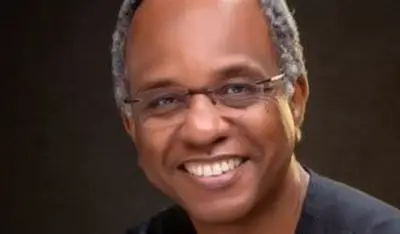
Human rights activist and African Action Congress presidential candidate Omoyele Sowore has renewed calls for Nigeria to legalise and regulate cannabis, arguing that the country is losing substantial potential revenue by criminalising its cultivation, possession and sale.
Sowore made the argument on Tuesday, November 17, 2026, in a post on X, where he compared Nigeria’s prohibition policy with the regulated cannabis markets in Canada and the United States. He said governments in countries that have legalised cannabis collect significant revenue through taxation, licensing and other charges, while Nigeria continues to spend resources arresting people and destroying cannabis farms.
The activist maintained that Nigeria should reconsider its approach and establish a regulatory system that would allow the country to benefit economically from the plant while controlling its production, distribution and use.
Sowore cited figures from Canada, California and Colorado to support his argument. He said Canada generated approximately CA$2.2 billion in government revenue from recreational cannabis during the 2023/2024 fiscal year. He also referenced about $1.067 billion collected in California in 2024 and $255.4 million in marijuana taxes and fees recorded by Colorado during the same year.
The figures formed the basis of his argument that Nigeria could develop a regulated cannabis industry capable of contributing to public finances instead of leaving the entire market outside the legal economy.
Statistics Canada independently reported that federal and provincial governments earned CA$2.2 billion from recreational cannabis in the fiscal year ending March 31, 2024. The amount included income from cannabis authorities, excise duties, retail sales taxes, other specific taxes, and licensing fees. The agency also recorded recreational cannabis sales of CA$5.2 billion during that period. Statistics Canada
Sowore estimated that Nigeria could generate between $550 million and $2.2 billion annually if cannabis were legalised and properly regulated. Using an illustrative exchange rate of ₦1,300 to the dollar, he calculated that the potential revenue could range from approximately ₦715 billion to ₦2.86 trillion each year.
However, he emphasised that these figures were hypothetical rather than guaranteed earnings. He said the actual amount Nigeria could collect would depend on the size of the legal market, the taxation structure, licensing arrangements, export opportunities and the effectiveness of regulatory institutions.
The figures have attracted attention because Nigeria continues to face pressure to expand non-oil revenue, create employment and reduce dependence on crude oil exports. A regulated cannabis industry, according to Sowore, could provide another source of government income while creating opportunities for farmers, manufacturers, researchers and other businesses.
His argument also reflects a wider debate about whether Nigeria should maintain its strict prohibition policy or consider controlled legalisation for medical, scientific and industrial purposes.
What Nigeria could learn from Canada and the United States
Canada provides one example of how a government can collect revenue from a regulated recreational cannabis market. Its federal and provincial authorities generate income through taxes, licensing and the operation of government-controlled cannabis distribution systems.
Statistics Canada’s figures show that the country’s cannabis market has continued to expand since legal recreational sales began. In the 2023/2024 fiscal year, sales reached CA$5.2 billion, while government earnings from recreational cannabis amounted to CA$2.2 billion. Statistics Canada
The United States offers another example, although cannabis laws differ between individual states and federal law. Several states permit regulated cannabis sales and collect taxes from businesses operating within their jurisdictions.
According to the US Census Bureau, 30 states and the District of Columbia collected an estimated $3.55 billion in cannabis excise taxes between July 2025 and June 2026. The figures illustrate the scale of government revenue generated through state-level cannabis taxation, even though cannabis remains illegal under federal law in the United States. Census.
California has also reported substantial revenue from its regulated market. In September 2026, the state government announced that legal cannabis sales had generated nearly $8.4 billion in tax revenue since 2018. The money supports programmes covering childcare, youth substance abuse prevention, medical research and environmental recovery.
These examples demonstrate that regulated cannabis markets can provide governments with tax income. However, the figures cannot simply be transferred to Nigeria as a reliable forecast. Population size, purchasing power, consumer behaviour, enforcement capacity, tax rates and the structure of each country’s market all influence revenue.
For Nigeria, establishing a legal market would require a clear regulatory framework covering cultivation, processing, distribution, research, product quality and taxation. Authorities would also need systems to prevent illegal operators from disguising unregulated production as legitimate business activity.
Cannabis remains illegal under Nigerian law
Despite Sowore’s renewed campaign, cannabis remains prohibited in Nigeria. The country’s Indian Hemp Act restricts activities including cultivation, possession, sale, importation, exportation and smoking of cannabis, subject to the provisions of the law.
The National Drug Law Enforcement Agency is responsible for enforcing the country’s drug laws and regularly conducts operations against cannabis cultivation, trafficking and distribution. NAFDAC has also maintained that cannabis cultivation, consumption, handling and possession remain illegal under existing Nigerian law.
This means Sowore’s proposal does not represent an existing government policy or a change in the law. Anyone involved in activities prohibited by the current legislation remains exposed to legal consequences, regardless of arguments about the potential economic value of the plant.
The NDLEA has consistently defended its enforcement activities as part of efforts to control illicit drugs and protect public health. Its position reflects concerns about substance abuse, the availability of cannabis to young people and the wider consequences of drug trafficking.
The disagreement between enforcement officials and legalisation advocates therefore involves more than the question of revenue. It also concerns public health, the protection of vulnerable groups, criminal justice and the capacity of government institutions to regulate a potentially sensitive industry.
Sowore has repeatedly challenged cannabis prohibition
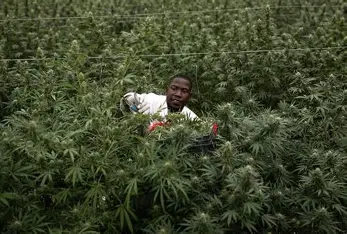
The latest statement is part of a campaign Sowore says he has pursued since 2018. In August 2026, he criticised the NDLEA after the agency destroyed two cannabis plantations in Edo State, describing the operation as a waste of economic opportunities.
The agency had reported that the two farms had an estimated combined yield of 4,628.9 kilogrammes. It also announced arrests in separate operations involving suspected drug traffickers.
Reacting to the destruction, Sowore argued that the government should stop burning cannabis farms and instead consider a regulated industry that could support research, generate employment and create government revenue.
He maintained that destroying plantations without considering their possible economic uses would not address Nigeria’s wider economic challenges.
His latest comments extend that argument by placing greater emphasis on the tax revenue collected in countries where recreational cannabis sales are permitted.
Sowore’s position also touches on the potential uses of cannabis beyond recreational consumption. He has pointed to medical research, pharmaceutical manufacturing and industrial hemp production as areas where Nigeria could explore commercial opportunities under an appropriate regulatory system.
Industrial hemp and cannabis products can have different commercial and regulatory applications. Hemp, for example, is used in the production of fibres, textiles, building materials and other industrial products. Medical cannabis research also operates under different standards from recreational retail markets.
Any Nigerian reform would therefore need to distinguish between these categories rather than treating every proposed use as part of one unrestricted market.
Potential jobs and agricultural opportunities
Sowore believes a regulated industry could create employment across several parts of the economy. Cultivation could provide opportunities for farmers, while processing and manufacturing could support investment in agricultural technology, pharmaceutical production and other industries.
A licensing system could also create opportunities for businesses involved in testing, packaging, transportation, distribution and research. Government agencies could collect revenue through approved licences, business taxes and other charges.
However, the economic benefits would depend on whether Nigeria could attract legitimate investment and develop a competitive industry. Businesses would need access to financing, technical expertise, reliable infrastructure and markets for their products.
There would also be a need for strict monitoring to ensure that licensed products do not enter illegal distribution networks. Without effective oversight, legalisation could create enforcement challenges rather than solve existing problems.
Public health safeguards would be another major consideration. A regulated system would need to address age restrictions, product standards, advertising, responsible distribution and access to treatment for people experiencing substance-related problems.
The government would also have to consider whether tax rates could support public revenue without making legal products so expensive that consumers continue to rely on illegal suppliers.
What happens next?
Sowore’s proposal puts pressure on the Federal Government to explain whether it is willing to reconsider Nigeria’s cannabis policy. However, no change to the existing prohibition framework was announced alongside his latest comments.
Any move towards legalisation would require legislative action and the development of a regulatory system capable of supervising the industry. It would also involve discussions among lawmakers, drug enforcement agencies, public health professionals, farmers, investors and other stakeholders.
For now, cannabis remains illegal in Nigeria, and the NDLEA continues to enforce the existing restrictions. Sowore’s projected annual revenue of up to ₦2.86 trillion is an estimate based on hypothetical market scenarios, not money currently available to the government.
The debate is likely to continue as Nigeria searches for additional sources of revenue and economic opportunities outside the oil sector. Whether the country eventually adopts a regulated cannabis framework will depend on political decisions, public health considerations and the willingness of lawmakers to reconsider the existing law.