|
Getting your Trinity Audio player ready...
|
Dangote refinery drives seven-fold rise in Nigeria petroleum product exports, EIA says, as fuel imports fall and Africa’s largest economy nears energy self-sufficiency
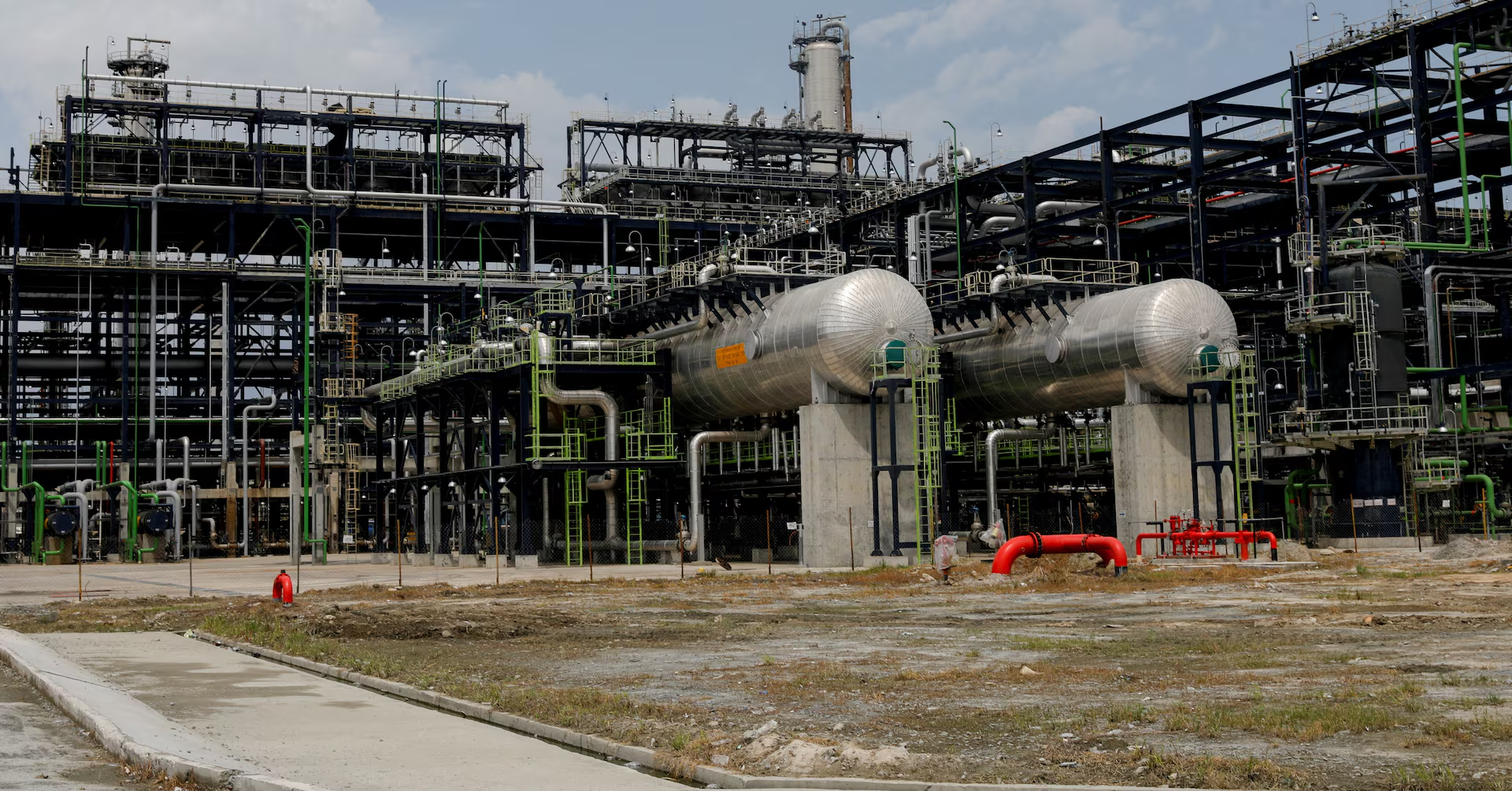
Nigeria’s position in the global fuel trade has flipped in a way few analysts predicted moving this fast. Seaborne petroleum product exports from the country have grown seven-fold since 2023, with Nigeria now playing a bigger role in international fuel markets just as supply from other regions has tightened, according to the U.S. Energy Information Administration. The shift traces back almost entirely to one facility: the Dangote Petroleum Refinery, which has gone from a much-hyped construction project to the single biggest force reshaping fuel flows across West Africa and beyond.
The numbers behind that seven-fold jump are striking on their own. Seaborne petroleum product shipments from Nigeria averaged 561,000 barrels per day in the second quarter of 2026, compared with an annual average of just 79,000 barrels per day back in 2023, according to shipping data from Vortexa cited by the EIA. Of those shipments, 350,000 barrels per day were actual exports in the second quarter of this year, up from an annual average of only 46,000 barrels per day in 2023. For a country that has spent decades as one of the world’s most import-dependent oil producers despite sitting on massive crude reserves, that’s not a minor statistical blip, it’s a structural change in how Nigeria participates in the global fuel trade.
Before Dangote came online, Nigeria’s existing state-owned refineries were shipping less than 100,000 barrels per day of seaborne petroleum products combined, a figure that puts the scale of this shift into sharp relief. The growth happened in two distinct jumps, first when Dangote refinery operations began, and again after the completion of maintenance and expansion work in February 2026, a moment that also happened to coincide with supply constraints coming out of the Strait of Hormuz. That timing turned out to be fortunate for Nigeria. As geopolitical tension disrupted flows through one of the world’s most critical oil chokepoints, buyers across Europe and Africa found themselves with a large, increasingly reliable new supplier much closer to home.
That February maintenance work lifted the refinery’s crude oil distillation capacity from 650,000 barrels per day to 700,000 barrels per day, a technical upgrade that translated directly into more product hitting the export market within months. The refinery itself, run by Dangote Group and located in the Lekki Free Zone near Lagos, began operations in 2024 and has since become Nigeria’s largest by a wide margin, dwarfing the capacity of the country’s older, long-troubled state-owned refineries that have struggled with underinvestment and inconsistent output for years.
The regional breakdown of where these exports are going tells its own story. Nigeria’s seaborne petroleum product exports to Europe averaged 130,000 barrels per day in the second quarter of 2026, up sharply from 40,000 barrels per day in 2025 and just 15,000 barrels per day back in 2023. Exports to other African countries climbed too, reaching nearly 120,000 barrels per day in the second quarter of this year, up from 89,000 barrels per day in 2025. Domestic shipments within Nigeria itself also rose substantially, hitting 211,000 barrels per day in the second quarter of 2026, compared with 81,000 barrels per day in 2025 and only 33,000 barrels per day in 2023. That domestic figure matters just as much as the export numbers, since it reflects Nigeria moving refined product internally rather than relying on foreign refiners and long, costly import chains to meet its own consumption needs.
The knock-on effects for Nigeria’s broader energy posture have been significant. With more refined product available domestically, imports have fallen and the country has become noticeably more self-sufficient in the fuels it actually consumes day to day, according to the EIA’s analysis. That’s a meaningful reversal for a country that, as recently as a few years ago, was exporting crude oil abroad only to import it back as refined fuel at a steep markup, a dynamic that drained billions of dollars a year from Nigeria’s foreign exchange reserves and left the country exposed every time global fuel prices spiked.
Dangote’s export ambitions have extended well beyond Nigeria’s own borders, too. Earlier this year, the refinery sold a batch of gasoline and diesel cargoes to buyers across Cote d’Ivoire, Cameroon, Tanzania, Ghana and Togo, positioning itself as a regional supplier at a moment when African countries have been actively searching for alternatives to Middle Eastern supply that’s been disrupted by ongoing tensions in that region. Dangote’s own public statements have framed this shift as more than just a commercial win, arguing that consistent access to higher-grade Euro 5 gasoline and diesel addresses a longstanding complaint that West Africa has historically been treated as a dumping ground for lower-quality fuel by international suppliers.
There’s also a striking milestone buried in the earlier data from this year: Nigeria briefly became a net exporter of petrol for the first time, shipping out more gasoline than it brought in during March 2026, according to figures reported at the time. That kind of turnaround, even if temporary or still fragile month to month, would have sounded almost implausible just a few years ago given how entrenched Nigeria’s dependence on imported fuel had become.
None of this means Nigeria’s energy story is fully resolved. The country still imports a meaningful share of its total petroleum product consumption, and a single refinery, however large, represents a concentration of risk that didn’t exist when supply was spread across dozens of international suppliers. Dangote Group has signaled plans to more than double the refinery’s capacity by adding a second 750,000-barrel-per-day crude distillation unit by 2028, a project that, if completed on schedule, would push Nigeria’s export potential even further and could meaningfully reshape fuel trade patterns across the Atlantic basin. Whether that expansion stays on track, and whether Nigeria can sustain this pace of export growth as global supply dynamics continue shifting, will be worth watching closely over the next couple of years. Full details on the EIA’s analysis, including its underlying shipping data methodology, are available through the agency’s official site at eia.gov. Techora will continue following how Africa’s energy landscape evolves as Dangote’s refining capacity expands further.