|
Getting your Trinity Audio player ready...
|
OpenAI Loses a Top Data Center Exec as Stream of High Profile Departures Continues
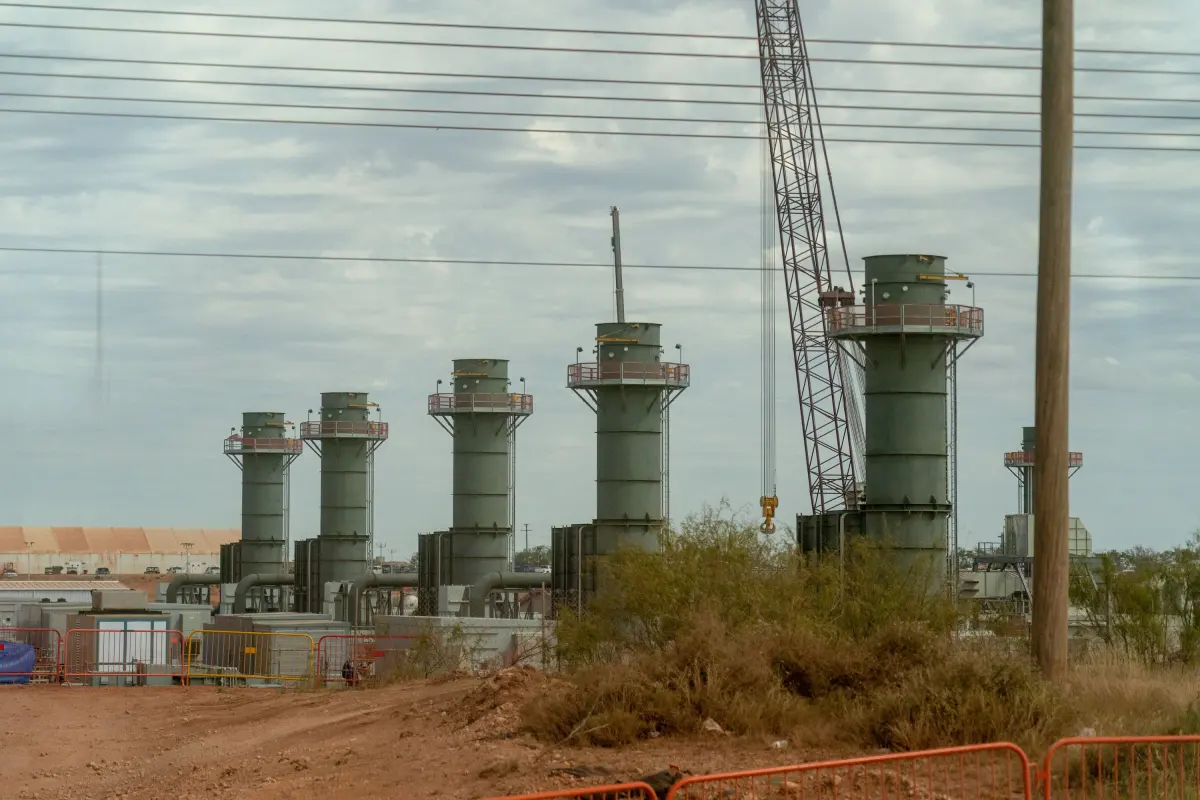
OpenAI has lost another senior leader, and the timing carries particular weight given the role this one played. Chris Malone, the executive who had been serving as OpenAI’s head of data centers, left the company last week, according to reporting from the Wall Street Journal and confirmed by OpenAI itself. His departure extends a run of high-profile executive exits at the ChatGPT maker that has stretched across nearly all of 2026, and it lands at a moment when the company’s infrastructure ambitions have never been larger or more central to its long-term strategy.
Malone’s tenure at OpenAI was relatively brief. He joined the company in March of last year after spending nearly five years at Meta and more than a decade before that at Google, where he worked as a distinguished engineer focused on data center infrastructure. His arrival at OpenAI came shortly after the announcement of the Stargate Project, a massive data center initiative backed by the Trump administration that brought together OpenAI, Oracle, Nvidia, SoftBank, and Microsoft in an effort to dramatically expand US computing capacity for AI. Malone was brought in specifically to help execute that strategy at a moment when OpenAI’s infrastructure ambitions were scaling into the hundreds of billions of dollars.
The scope of what Malone was overseeing gives some sense of why his exit is drawing attention. OpenAI has laid out plans to spend somewhere between $600 billion and $750 billion on compute infrastructure through 2030, according to different figures cited in recent reporting, a level of capital commitment that dwarfs almost anything else happening in the technology industry right now. OpenAI has stated it recently reorganized its infrastructure organization, according to a company spokesperson, and reports indicate that reorganization has shifted infrastructure operations to report directly to CEO Sam Altman rather than through the previous leadership structure Malone was part of. Several executives remain in place overseeing different pieces of the data center strategy, including Uday Ruddarraju, who leads the data center team, Brent Mayo, who runs the build and delivery program, and Spas Lazarov, a veteran of the data center and energy sectors who leads engineering for the buildout.
It’s not entirely clear why Malone specifically chose to leave, and OpenAI hasn’t offered detailed public commentary beyond confirming the departure and pointing to the recent reorganization as context. What is clear is that his exit doesn’t stand alone. Business Insider’s tally puts the total number of notable executive departures at OpenAI in 2026 at somewhere between 13 and 14, depending on how the count is compiled, and several of those departures have come within just the past month or two. These aren’t junior staff moving on to other opportunities. The list includes some of the most senior names in the company’s leadership structure.
Just two weeks before Malone’s departure became public, OpenAI replaced its chief revenue officer, Denise Dresser, after she had been in the role for only about eight months, bringing in former Wiz executive Dali Rajic to take over. Chief Operating Officer Brad Lightcap left the company in August as well. Fidji Simo, who had served as CEO of Applications and functioned as something close to a second-in-command to Sam Altman, stepped down from her full-time role in July to move into an advisory position. The departures extend across multiple functions within the company, touching product leadership through the exit of former Chief Product Officer Kevin Weil, marketing through former Chief Marketing Officer Kate Rouch, and ethics through former Head of Ethics Chloé Bakalar. Even further back, Chief People Officer Julia Villagra left the company in August of the prior year after less than six months in the role.
OpenAI President Greg Brockman has pushed back somewhat on the idea that this level of turnover is unusual or alarming, suggesting instead that the intense public scrutiny the company faces means every single departure gets magnified and analyzed in ways that wouldn’t happen at a lower-profile company. That’s a fair point to a degree, since OpenAI operates under a level of media attention that few private companies experience, and some turnover at the senior executive level is a normal feature of any fast-scaling organization. But the sheer volume and seniority of the departures this year, spanning revenue, operations, product, infrastructure, marketing, HR, and ethics, makes it harder to attribute the pattern entirely to normal organizational churn.
The timing matters because OpenAI is simultaneously preparing for what could be one of the largest public offerings in technology history. The company confidentially filed for an IPO in June, and Chief Financial Officer Sarah Friar has told employees the company is targeting a public listing by 2027, with the possibility of moving faster if growth trends support it. Companies preparing for an IPO typically want leadership stability heading into that process, both to reassure prospective investors and to maintain operational continuity through what’s usually a demanding and scrutiny-heavy transition. A steady drumbeat of senior departures in the run-up to a listing tends to invite exactly the kind of questions that are now surfacing publicly, particularly around whether OpenAI’s valuation, reportedly discussed in the range of $500 billion during recent secondary share sale talks, is fully supported by its underlying profitability given the scale of infrastructure spending it has committed to.
There’s also a competitive dimension worth noting. OpenAI is reportedly working to close ground against Anthropic in sales to business customers, an area where enterprise relationships and consistent leadership matter considerably. Losing a chief revenue officer after eight months and a chief operating officer in the same general window as a data center chief doesn’t necessarily derail that competitive push, but it does complicate the kind of continuity that typically underpins a sustained enterprise sales strategy.
For now, OpenAI appears committed to pressing forward on its infrastructure buildout regardless of the leadership churn, with reports suggesting the company is increasingly favoring leasing entire data centers outright as a way to secure computing capacity more quickly and with greater cost discipline than fully custom-built facilities would allow. Whether that strategic shift is connected to the reorganization that preceded Malone’s exit, or simply a parallel development in how OpenAI is managing its massive capital commitments, remains something outside observers will be watching closely as the company moves toward its planned public debut. For continued coverage of executive changes and major developments across the AI industry, readers can follow ongoing reporting on Techchora.
Further details on OpenAI’s infrastructure initiatives, including the Stargate Project, are available through OpenAI’s official announcements, and background on the company’s IPO preparations can be tracked through filings with the U.S. Securities and Exchange Commission.