
|
Getting your Trinity Audio player ready...
|
Explore how AI-powered tax systems in 2026 help governments automate compliance, detect fraud, and enforce tax laws globally in real time.
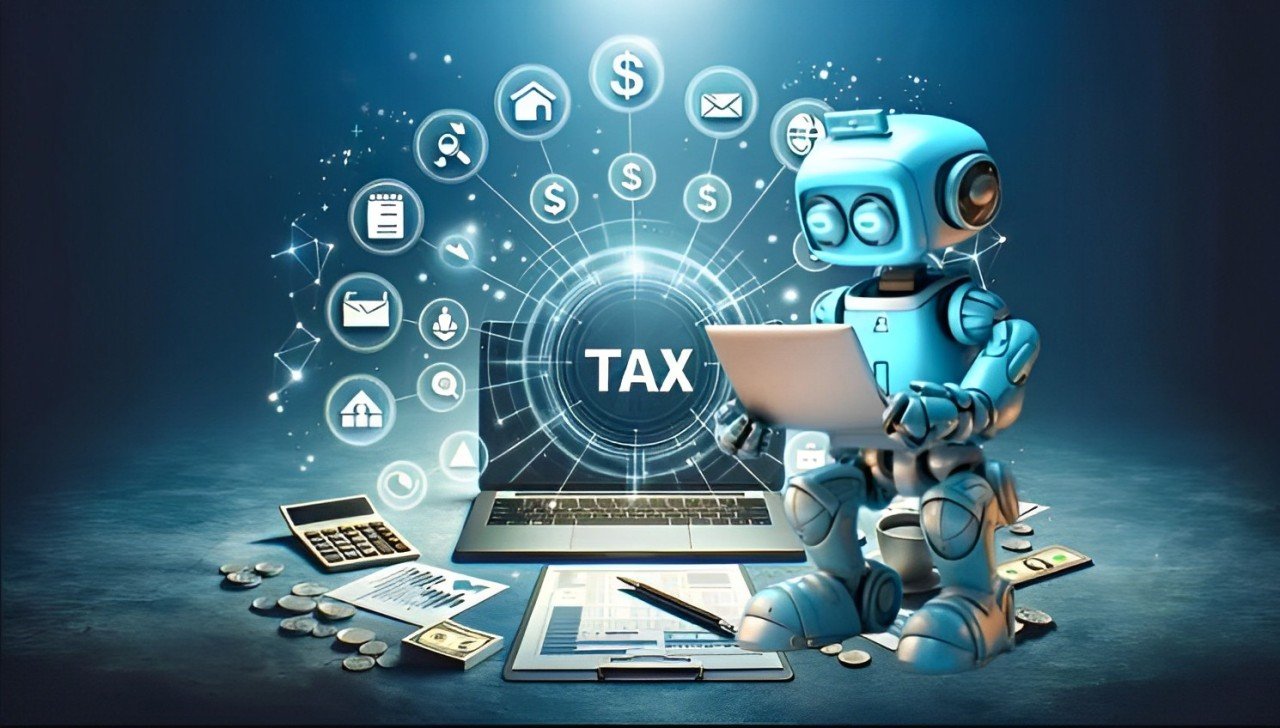
The global tax landscape in 2026 is undergoing a major transformation. AI-powered tax systems are reshaping how governments collect revenue, detect fraud, and enforce compliance across borders.
What was once a manual, document-driven process is now becoming an always-on, algorithm-driven ecosystem. Artificial intelligence now supports tax authorities and also helps make real-time decisions.
Across the United States, Europe, Asia, and emerging digital economies in Africa and Latin America, tax administrations use machine learning models. These models analyze financial transactions, business activity, payroll flows, and digital commerce patterns continuously.
The systems now predict tax liabilities before taxpayers submit filings. This allows governments to identify obligations in real time instead of after reporting cycles.
At the center of this shift is the rise of AI Tax Systems, which governments now integrate directly into national revenue infrastructure. The OECD’s latest digital taxation outlook, published through its official portal, shows that governments increasingly use predictive analytics to close the global tax gap, which costs trillions annually. Instead of waiting for taxpayers to report income, AI systems now ingest structured and unstructured data from banks, fintech platforms, e-commerce marketplaces, and even blockchain networks to construct real-time taxpayer profiles. This represents a structural shift from reactive auditing to proactive taxation.
One of the most significant developments in 2026 is the convergence of AI tax systems with automated filing ecosystems under the broader framework of Tax Compliance Automation. Countries such as the United Kingdom and South Korea have expanded their “pre-filled tax return” models into fully autonomous systems where taxpayers are increasingly passive participants. The UK’s HMRC digital transformation strategy, now incorporates AI-driven validation layers that automatically reconcile payroll data, freelance income, and platform-based earnings before users even log in. Similarly, the IRS modernization roadmap in the United States, is evolving toward real-time income reporting through employer and platform API integrations.
This automation wave is not limited to developed economies. Emerging markets are leapfrogging traditional infrastructure by adopting cloud-native tax platforms powered by AI. In parts of Africa and Southeast Asia, governments are partnering with fintech providers. Together, they deploy mobile-first tax systems. These systems automatically calculate micro-tax obligations for gig workers and digital entrepreneurs.
This shift links directly to the expansion of the digital economy. Informal labor is increasingly mediated by apps rather than physical cash transactions.
However, the most disruptive aspect of AI-driven taxation is its enforcement capability. Modern systems are now capable of detecting anomalies across massive datasets with a level of precision previously impossible. Tax authorities now use neural networks to identify underreported income, synthetic identity fraud, and cross-border tax evasion schemes. They do this by analyzing behavioral patterns instead of relying only on declared documents.
International institutions, such as the IMF, closely monitor this evolution. In its financial surveillance reports, the IMF highlights both the risks and opportunities of AI-led fiscal governance.
The integration of AI into tax enforcement has also intensified debates around privacy, algorithmic bias, and sovereign control over financial data. Critics argue that fully automated systems risk creating opaque decision-making structures where taxpayers cannot easily challenge AI-generated assessments. Tech policy analysts have warned, in coverage echoed by publications like TechCrunch, that the shift toward machine-led taxation could lead to “black box fiscal governance” unless transparency standards are enforced globally.
Despite these concerns, governments continue accelerating adoption due to the efficiency gains.
A particularly transformative application of Digital Economy Tax frameworks is the taxation of platform-based income. Governments now integrate gig economy giants, SaaS platforms, and creator economy ecosystems directly into national tax infrastructures. Platforms automatically report earnings data through secure APIs, allowing AI systems to compute liabilities instantly. This has significantly reduced the tax compliance burden for individuals while increasing enforcement accuracy for governments.
At the same time, AI is redefining audit processes. Tax authorities no longer rely on traditional audits that take months or years. Instead, they now use continuous audit models that monitor transactions in real time. Machine learning models flag irregularities instantly, triggering automated compliance requests or digital notices. This shift has effectively turned tax compliance into an ongoing process rather than an annual event.
The World Bank’s research on digital public infrastructure shows that countries adopting AI tax systems experience improved fiscal transparency and higher revenue mobilization.
However, the research also warns of a widening gap between digitally advanced economies and those lacking infrastructure. This raises concerns about global inequality in tax capacity.
As governments continue to refine these systems, private sector innovation is accelerating in parallel. Fintech companies are building intelligent tax assistants that integrate directly with accounting software, payroll systems, and banking apps. These tools not only calculate tax obligations but also optimize financial decisions in real time, effectively turning tax strategy into an automated financial service.
Ultimately, 2026 marks a turning point. Taxation is no longer a periodic obligation. It becomes a continuous, AI-managed process embedded in the digital economy.
The rise of AI-powered tax systems signals a shift in how governments operate. Governments now automate compliance, predict enforcement risks, and use data to drive fiscal policy at a global scale.