|
Getting your Trinity Audio player ready...
|
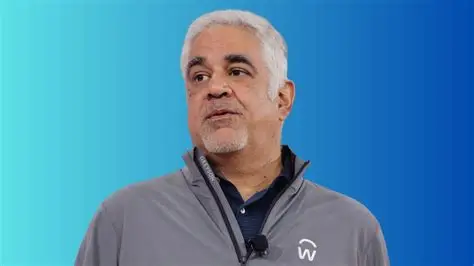
Artificial intelligence depends on computing power, much of which sits in data centres owned by companies outside Africa. Nigerian-born AI entrepreneur Alex Tsado built his recent career around this challenge. He spent years at NVIDIA helping major cloud providers deliver AI computing. He then turned to a different question: how can African students, startups and governments access the chips they need without relying entirely on foreign providers? His answer is Africa GPU Hub, a platform that lets Africans rent graphics processing units at prices designed for local markets. This biography explores his education, career and vision.
Who Is Alex Tsado?
Alex Tsado, whose full first name is Alexander, is a Nigerian-born technology entrepreneur and AI advocate. He is the founder of Udutech, the company behind the Africa GPU Hub, and a co-founder and board member of Alliance for Africa’s Intelligence, known as Alliance4AI, a nonprofit that accelerates AI adoption across the continent. He has spent more than a decade working to make AI cheaper and more accessible to innovators worldwide.
From Benin City to Columbia University
Tsado grew up in Benin City, Nigeria, in modest circumstances. He became the top student in his public secondary school, and he later won a full scholarship to Columbia University in New York after people told him that the opportunity was not meant for him. He describes his path with three words: tenacity, mentors and vision.
Education
Tsado earned a Bachelor of Arts degree in Electrical Engineering from Columbia University and a Master of Business Administration from the Kellogg School of Management at Northwestern University. The pairing matters. Electrical engineering gave him a grounding in the hardware that powers computing, and the MBA gave him the commercial tools to turn technical products into businesses.
Working at NVIDIA
Tsado joined NVIDIA, the company whose chips power most of the world’s AI systems, and became one of a small number of product managers there. He worked on cloud AI computing, which NVIDIA described as its fastest-growing business channel, and he led go-to-market efforts for it. His own account says he helped deploy the first NVIDIA AI GPUs to the largest cloud providers around the world.
He has also said that he was the only African on his team. That experience pushed him toward a conviction. If Africans did not take part in building AI, he reasoned, the technology would develop without them and fail the people it was meant to serve.
Founding Alliance4AI
In 2019, Tsado established Alliance4AI to put Africa into the conversation about artificial intelligence. The nonprofit serves three groups: governments, schools and startups. It mobilises young Africans to use AI to tackle problems in food security, healthcare and governance, and it works to make sure African innovations can reach users around the world.
Tsado has advised several African governments on AI strategy and policy, including South Africa and Rwanda. He has also helped governments operationalise national AI strategies and plan GPU clusters inside Africa.
Building Education and Workforce Tools
Tsado applies AI to learning as well as infrastructure. He co-authored the AI Empowered Guide for Teachers and Parents, a handbook for adults who guide children’s use of AI. He also built Ahura, an AI tool for workforce upskilling. The International Center for Research on Women, universities and employers have different needs, and Tsado designed Ahura to help people train for new roles.
He has spoken about these themes at the United Nations, at business school programmes and at national AI workshops. The Most Influential People of African Descent organisation named him one of its Top 100 Futurists.
The Idea Behind Udutech
Tsado works from a simple premise: you cannot build a sovereign AI ecosystem on rented infrastructure. African companies and universities that depend on foreign cloud platforms pay in dollars, accept foreign terms and face limits on access. In 2025, he moved from advocacy to action and founded Udutech to reduce the continent’s reliance on foreign compute.
The Africa GPU Hub
By mid-2025, Udutech activated the Africa GPU Hub, the first live indigenous platform that offers GPU access to African startups, universities and innovators. Prices run below one dollar per hour, set for African markets. A researcher or founder can rent time on powerful chips for a specific training task instead of buying hardware outright.
The platform also addresses the money problem. Philanthropic organisations subsidise access for universities and early-stage innovators, so a student with a good idea but no budget can still train a model. Banks and funded startups have shown strong interest in setting up GPU hubs as shared resources.
A Decentralised Model
Tsado also champions a decentralised approach. Instead of relying on a few giant data centres, he is developing smaller systems that cost less than $150,000 and that banks, telecom companies and philanthropies can deploy. His reasoning is that many local clusters can spread AI capacity across the continent and strengthen what he calls AI sovereignty.
Recognition and Partnerships
The G7 and African Union AI Hub for Sustainable Development initiative selected Udutech for its AI Infrastructure Builder Programme. Udutech has also partnered with Chipmango to develop domestic AI processors, a step toward building the chips themselves and not only renting them. Tsado describes the goal as computational self-reliance.
Why Alex Tsado Draws Attention
His profile combines an unusual mix: a former insider at the world’s most important AI chip company, a founder of a nonprofit advising governments, and a builder of the first indigenous GPU rental platform in Africa. As demand for AI computing grows faster than supply, readers search his name to learn who works to make that computing available to Africans.
What His Journey Teaches
Three lessons stand out. First, inside knowledge can become a mission. Tsado learned how AI computing works at NVIDIA and then applied it to a problem that Africa faces. Second, access to infrastructure shapes who gets to innovate. Cheap, local GPU time lets people train models that they could never afford to rent abroad. Third, sovereignty builds in steps. He began with advice to governments, moved to a rental platform and now works toward local chips, each step reducing dependence on foreign suppliers.