|
Getting your Trinity Audio player ready...
|
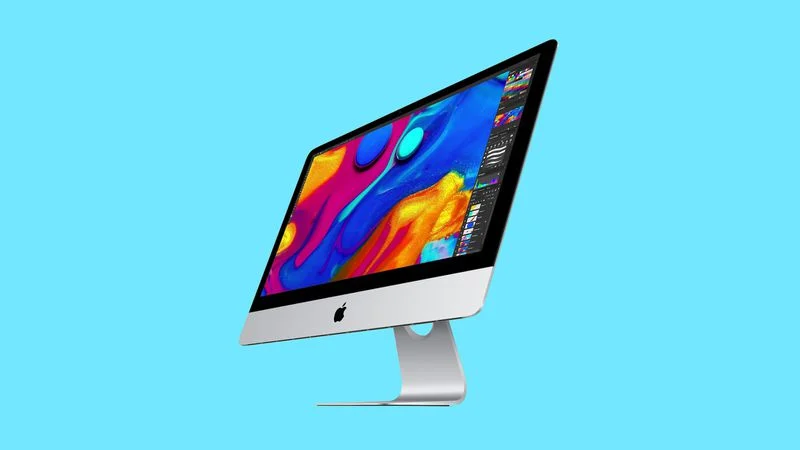
Apple has added the 2019 21.5-inch iMac with Retina 4K display to its official vintage products list, marking the effective retirement of one of the last Intel-based Macs the company ever sold in that size class. The designation, confirmed this week, means the machine can technically still be repaired at Apple Stores and by Apple Authorized Service Providers, but only if Apple happens to have the necessary parts on hand, a guarantee that grows shakier the longer any product sits on the vintage list.
Apple’s vintage and obsolete product classification system runs on a fairly predictable timeline. Devices move onto the vintage list roughly five years after Apple last distributed them for sale, and they shift again to the obsolete list at the seven-year mark. Once a product reaches obsolete status, Apple and its authorized service providers generally stop offering hardware service for it altogether, and replacement parts can no longer be ordered through official channels at all. For the 2019 21.5-inch iMac, that clock started running the moment Apple stopped selling it, and this week’s update means the machine has now crossed into the more precarious repair territory that precedes full retirement.
The 2019 model occupies a somewhat awkward place in iMac history, arriving as what amounted to a modest, almost reluctant refresh of hardware that had already begun to feel dated. Apple updated the aging Intel iMac lineup that year with eighth-generation Intel processors and new AMD Radeon graphics cards, but shipped the machine in the exact same slim aluminum chassis the company had first introduced back in 2012, seven years earlier. Apple also continued offering configuration options that already felt behind the times even in 2019, including a 1TB Fusion Drive at a moment when solid-state storage had become the clear industry standard for anyone prioritizing performance. The base model shipped with an Intel Core i3 processor, 8GB of RAM, and that 1TB hard drive, starting at $1,299.
Whatever modest appeal the 2019 refresh held at launch evaporated fairly quickly once Apple’s broader transition away from Intel began the following year. Apple Silicon arrived in 2020, and by May 2021 the company had introduced a completely redesigned Apple Silicon iMac built around the M1 chip, featuring a larger 24-inch display, a dramatically thinner enclosure, and a return to the colorful case options that had defined earlier iMac generations before Apple settled into years of plain silver aluminum. That redesign didn’t just represent a performance leap, it fundamentally repositioned the iMac as a showcase product for Apple’s own custom silicon, making the outgoing Intel model look considerably more dated by comparison than its actual age alone would suggest.
This week’s vintage designation also carries a bit of unfinished business from Apple’s own product classification history. The 27-inch iMac that Apple sold alongside the 21.5-inch model back in 2019 was already added to the vintage list back in July 2025, more than a year before its smaller sibling. That gap reflects a quirk in how long each model actually remained available for purchase, since Apple continued selling the 21.5-inch configuration for a longer stretch after the 27-inch model had already been phased out, pushing back the smaller machine’s eventual vintage classification date by more than a year even though both computers were originally announced and sold together.
The timing of this particular update carries some additional practical weight for anyone still running one of these machines day to day. Apple’s newest operating system release, macOS Golden Gate, has already ended software support for Intel-based Macs entirely, meaning owners of the 2019 21.5-inch iMac are now facing a machine that’s simultaneously losing both its software update path and, with this week’s change, its guaranteed hardware repair path as well. That combination effectively signals the end of the road for anyone hoping to keep one of these machines running as a fully supported, up-to-date computer, even if the hardware itself remains perfectly functional for everyday tasks that don’t require the latest software features.
This isn’t an isolated event either, and it fits within a broader pattern of Apple steadily working through its remaining catalog of Intel-era hardware as that product generation ages out of active support. Just last month, Apple added three separate MacBook models to its obsolete products list, the more severe classification that comes after the vintage designation and eliminates repair eligibility entirely rather than simply making it conditional on parts availability. Taken together, these moves reflect just how far Apple’s product lineup has moved since completing its transition to Apple Silicon, with the company’s own internal classification system now steadily working through the last remaining Intel-based holdouts still technically eligible for any form of official support.
For anyone still holding onto a 2019 21.5-inch iMac, the practical takeaway is fairly straightforward. The machine remains usable, and repairs remain technically possible for now, but neither guarantee is likely to last much longer given Apple’s own established timeline for moving products from vintage to fully obsolete status. Anyone depending on this specific model for daily work, particularly work that requires current macOS features or ongoing security updates, should treat this week’s classification change as a fairly clear signal that it’s time to start planning a transition to newer, Apple Silicon-based hardware, if that transition hasn’t already happened.
Further detail on Apple’s vintage and obsolete products policy is available through Apple’s official support page. For more coverage of Apple hardware and product lifecycle updates, visit Business Tech.