|
Getting your Trinity Audio player ready...
|
Broadcom to Lend Anthropic Up to $42 Billion to Help Finance Its AI Chip Leases
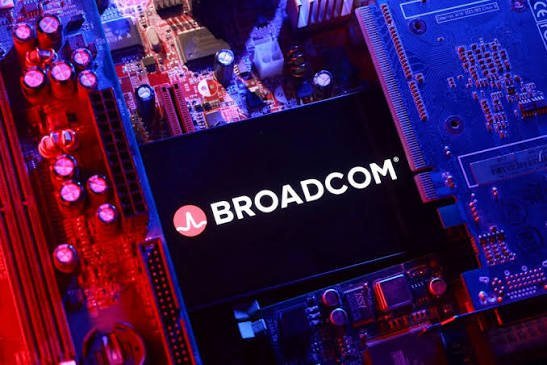
Anthropic’s initial public offering filing has pulled back the curtain on one of the more unusual financing arrangements to emerge from the AI industry’s enormous infrastructure buildout: chipmaker Broadcom has agreed to lend the AI company up to $42 billion specifically to help it pay for leasing Broadcom’s own hardware.
The arrangement, disclosed in Anthropic’s IPO prospectus and first reported by Reuters, would come through convertible notes, a form of debt that can later convert into equity. Anthropic said in its filing that it doesn’t expect any of the notes to actually be sold before the IPO iself is completed, meaning the facility functions more as a standing commitment Anthropic can draw on as needed rather than money already in hand. The scale of the loan is significant relative to what it’s meant to cover: Anthropic has committed to a five-year, $125.2 billion lease of tensor processing unit computing capacity, the custom AI chips Google and Broadcom jointly design, and the $42 billion facility would cover roughly a third of that total commitment.
The relationship between the two companies runs deeper than a single loan. Anthropic said in April that it had expanded its partnership with Broadcom and Google in a deal granting access to next-generation TPU computing capacity starting in 2027, and Reuters reported that Anthropic is expected to become Broadcom’s largest compute customer that same year. Broadcom’s role spans supplying the physical hardware, leasing it to Anthropic, and now financing much of that leasing arrangement directly, giving the chipmaker a more central and multifaceted position in Anthropic’s infrastructure strategy than other major partners occupy.
Anthropic’s own filing flagged real risk embedded in that concentration of dependence on a single partner. The company disclosed that Broadcom’s role as both hardware supplier and financing partner creates what it called potential conflicts of interest that could affect Anthropic’s ability to access the computing power its business actually needs, since Broadcom’s own pricing and hardware availability decisions carry direct influence over Anthropic’s infrastructure access. The filing also warned of a more acute scenario: if certain payment or performance defaults were triggered, a significant portion of Anthropic’s lease obligations could become immediately due all at once, while the company’s ability to draw on the $42 billion facility to cover that sudden liability would simultaneously be restricted. Both Broadcom and Anthropic declined to comment on the arrangement when reporters asked.
The $42 billion figure doesn’t exist in a vacuum either. Bloomberg reported in August that banks working on Broadcom’s behalf had begun raising more than $60 billion in debt specifically to finance AI chips for Anthropic and other customers, with the $42 billion Anthropic facility structured as a Class A senior-secured tranche within that larger financing package. In other words, Broadcom isn’t simply writing a check from its own balance sheet, it’s borrowing heavily itself in order to extend credit to one of its biggest customers, a structure that ties Broadcom’s own financial exposure directly to Anthropic’s ability to keep up with its payments.
Anthropic’s broader financial picture, laid out in the same IPO prospectus, gives useful context for why this kind of financing has become necessary. The company reported revenue of nearly $4.6 billion in 2025, alongside an operating loss exceeding $8 billion, numbers that reflect a business still spending far more on building out its AI capabilities than it’s currently bringing in through revenue. Anthropic is targeting a valuation of more than $2 trillion for the offering. Looking further ahead, the filing disclosed total infrastructure obligations of roughly $518 billion over the coming years, spanning cloud, compute and infrastructure agreements with Google, Amazon, Microsoft and Broadcom combined, with around 80 percent of those commitments reportedly non-cancellable or requiring payment regardless of how much of that capacity Anthropic actually ends up using. Separately, Bloomberg reported Anthropic is also nearing a $15 billion revolving credit facility ahead of going public, adding yet another layer of financing to an already extensive capital structure.
The arrangement mirrors a playbook Nvidia has used for years, leveraging its own balance sheet strength to help finance the AI labs buying its chips, a strategy The Economist has described as turning Nvidia into something resembling a central bank for the AI industry given how much scarce computing capacity flows through financing deals it helps arrange. Seaport Research analyst Jay Goldberg framed Broadcom’s move as a direct response to that competitive pressure, saying Nvidia is putting in place a massive amount of its own balance sheet, and Broadcom is having to follow suit to keep pace. Nvidia itself has continued pushing further in that direction, with the Financial Times reporting this week that the company has been in talks with insurers about loans backed by its own chips as collateral.
For Anthropic, the arrangement underscores just how capital-intensive building frontier AI systems has become, to the point where even a company valued at more than $2 trillion needs its hardware supplier to help underwrite the cost of the chips it’s leasing. As Semafor’s Liz Hoffman put it earlier this year, Anthropic may be one of the most important companies in the world, but deals structured like this one show that its biggest backers increasingly need to, in effect, cosign its lease. Broadcom’s fiscal third-quarter AI semiconductor revenue came in at $16.7 billion, up 221 percent year over year, a reminder of just how much demand currently exists for the exact kind of hardware this financing arrangement is designed to deliver.