|
Getting your Trinity Audio player ready...
|
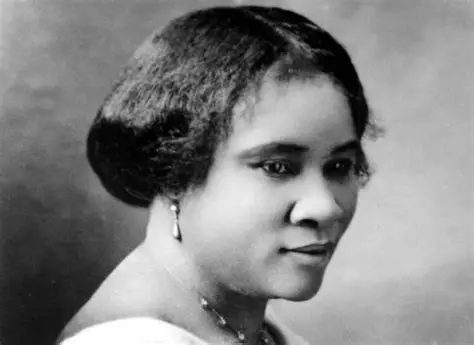
Entrepreneur Madam C. J. Walker, born Sarah Breedlove in 1867 to formerly enslaved parents, built a hair care business that made her America’s first recognised self-made female millionaire. Her parents died when she was a child, and she worked as a laundress in St. Louis before she started selling hair products. She told audiences at the National Negro Business League, the organisation of Black business owners, that she had to make her own living and her own opportunity, but she made it. She then turned that story into an instruction: “Don’t sit down and wait for the opportunities to come. Get up and make them!”
The sentence works because it comes from someone who earned the right to say it. Walker did not give advice from comfort. She spoke after decades of hard physical work, and she addressed women who faced the same limits she once did: little capital, little formal education and few employers willing to hire them. When she said that opportunity must be made, she described the only route that had worked for her.
“I Had to Make My Own Living and My Own Opportunity! But I Made It! Don’t Sit Down and Wait for the Opportunities to Come. Get Up and Make Them!” – Madam C. J. Walker
The structure of the quote carries its argument. The first half tells a story: she had to build her own living because nobody was going to hand her one. The second half turns the story into a command. The pivot comes at the word “But,” where hardship becomes proof that action works. Her final two verbs, “get up” and “make,” are physical and direct. They leave no room for waiting.
Her own timeline shows what making opportunity looked like. In 1904, she became a sales agent for Annie Turnbo Malone’s hair growing product. She then moved to Denver, took the name Madam C. J. Walker and launched her own line, Madam Walker’s Wonderful Hair Grower. In 1908, she moved to Pittsburgh and opened a factory and training school called Lelia College, where she taught women to become hair culturists. She later built a factory in Indianapolis and moved her business into Harlem. Each step came from deciding to create the next stage instead of waiting for permission.
She also measured success beyond her own wealth. In her convention speech she said she was not satisfied to make money for herself and that she wanted to provide employment for hundreds of women of her race. She trained a national network of sales agents who earned healthy commissions, which gave thousands of women a route to independent income. Her giving followed the same logic. She supported the YMCA, paid the tuition of six students at Tuskegee Institute, donated $5,000 to the NAACP’s anti-lynching campaign and left two-thirds of her future net profits to charity.
Opportunity is often built, not found
The most practical lesson in the quote is that opportunities rarely arrive finished. Walker did not discover a gap in the market labelled as such. She noticed a need, tested a product, trained people to sell it and built a company around it. In business today, that translates into a simple habit: when a door seems closed, ask what you could build to walk through a different one.
A small example makes the point. A graduate who cannot find a job in a slow market has two choices. One waits for postings. The other offers a service to local businesses, such as bookkeeping or social media, and builds references that open further doors. The second graduate creates the opportunity that the first one waited for.
Starting with what you have
Walker began with very little. She had no capital, no connections and no formal business training. What she had was a product idea, willingness to work and the skill to teach others. The quote does not demand that people wait until they have resources. It invites them to start with what is within reach and expand as the work succeeds.
Making opportunity for others
The quote also carries a second meaning that Walker lived out. Making opportunity is not only a personal act. Her company created paid work for women who had few other choices, and she used her wealth to fund education and political causes. Leaders who follow her example ask what opportunities they can create for the people around them, not only for themselves.
Why this advice still holds true today
Modern workers and founders still face closed doors: crowded job markets, limited funding and slow hiring. Walker’s sentence offers a clear response that costs nothing to try. Stop waiting for the ideal opening and start building a smaller version of it. Over a century after she spoke, the instruction remains simple enough to act on this week, and her life proves that it can work at a very large scale.