|
Getting your Trinity Audio player ready...
|
NNPC’s 2025 Books Show ₦473.8bn Gas Push and a 406% Jump in Loans to Its Own Subsidiaries
Nigeria’s state oil company funneled ₦473.8 billion into major gas infrastructure projects during 2025, according to its newly released annual financial statements, even as a separate set of disclosures shows the company’s total lending to its own subsidiaries and related companies surged by more than 400 percent over the same year.
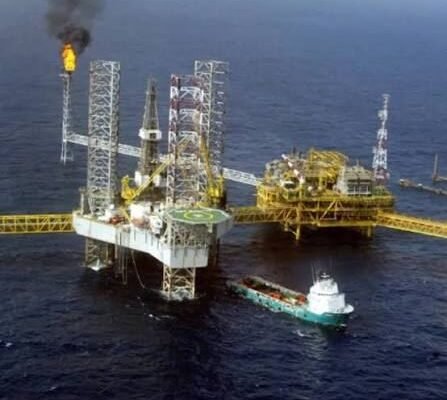
The ₦473.8 billion gas commitment was channeled through NNPC Gas Infrastructure Company Limited, a wholly owned subsidiary, and covered three specific obligations: meeting cash call commitments tied to the proposed Nigeria-Morocco Gas Pipeline, injecting equity into Anoh Gas Processing Company, and financing the long-running Ajaokuta-Kaduna-Kano gas pipeline project. As of December 31, 2025, ₦25.7 billion in interest on that facility remained outstanding, with a portion of the overall loan still undrawn at year-end.
The Nigeria-Morocco Gas Pipeline, also referred to as the African Atlantic Gas Pipeline, is the more ambitious of the two projects by far. It’s designed as a transnational corridor that would carry Nigerian natural gas through multiple West African countries en route to Morocco, a project its backers say could improve regional energy access, support industrial development across the countries it passes through, and open a new export route for Nigerian gas. Getting there, though, will require substantial additional funding and close coordination among the various governments and companies involved, a reminder that the ₦473.8 billion disclosed this year likely represents just one stage of a much longer and more expensive undertaking.
The gas infrastructure spending is only part of the picture painted by NNPC’s 2025 numbers. At the company level, loans extended to related parties jumped to ₦939.253 billion, up sharply from ₦185.544 billion in 2024, an increase of ₦753.709 billion, or roughly 406 percent year over year. That single figure represents one of the more striking details buried in this year’s financial statements, since it shows NNPC acting less like a company collecting revenue from its operations and more like an internal bank, funneling large sums of money to its own subsidiaries to keep various projects and operations running.
The breakdown of exactly where that money went tells its own story. NNPC Energy Services Limited, the company’s drilling and seismic services arm, owed the parent company ₦211.64 billion, tied to projects including the Keana drilling campaign, a re-entry into the Chad Basin, and various 3D seismic acquisition work. Nigeria’s three government-owned refineries also featured prominently: Kaduna Refining and Petrochemical Company carried a balance of ₦77.59 billion, Port Harcourt Refining Company owed ₦29.58 billion, and Warri Refining and Petrochemical Company’s balance stood at ₦113.33 billion. NNPC Gas Infrastructure Company’s own related-party loan balance came in at ₦485.17 billion, a figure notably higher than the ₦473.8 billion facility described specifically for gas infrastructure projects elsewhere in the same report, a discrepancy the financial statements did not explain.
Looking specifically at the refineries, NNPC disclosed that it extended a combined ₦220.495 billion across all three facilities during 2025 to cover maintenance work, tax obligations and other operational needs, much of it tied to what the company calls its Quick Fix Maintenance program. The Warri refinery’s situation offers the clearest example of how these loans were actually used: of its ₦113.327 billion balance, ₦104.8 billion was specifically earmarked to cover tax payments connected to its maintenance project, with part of that facility still undrawn as of the end of the year. The scale of these refinery loans underscores just how dependent Nigeria’s state-owned refining assets remain on continued financial support from the parent company, even as the broader narrative around Nigeria’s refining sector has increasingly centered on private players like the Dangote refinery.
A few smaller disclosures round out the picture. NNPC reported a ₦21.943 billion loan to the African Medical Centre of Excellence, an associate company, and confirmed that an earlier intercompany loan balance involving NIDAS Shipping Services Limited, totalling roughly ₦9.1 billion and ₦1.66 billion across two separate facilities, had been converted into an investment once legal formalities were completed, following a 2021 Technical Management Committee approval.
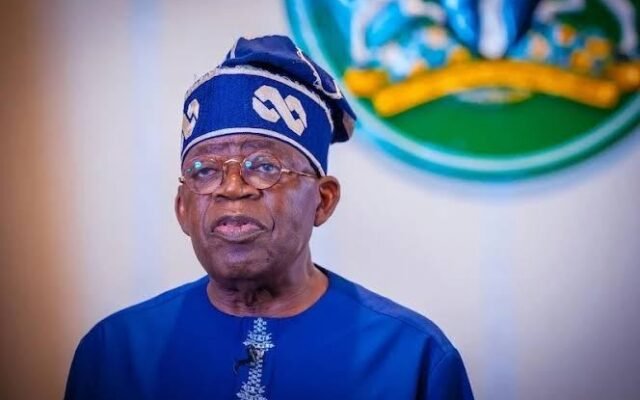
These figures don’t exist in isolation from the broader regulatory environment NNPC is currently operating under. Presidential Executive Order 9, signed by President Bola Tinubu on February 18, 2026 and titled the Presidential Executive Order to Safeguard Federation Oil and Gas Revenues and Provide Regulatory Clarity, has reportedly continued to carry financial implications for the company through the year, shaping some of how NNPC manages its revenue flows and obligations across the group.
There’s also a reverse flow worth noting alongside all this internal lending: separate disclosures show the federal government itself owes NNPC roughly ₦11.2 trillion, a sum that dwarfs the ₦939 billion NNPC has lent out to its own subsidiaries and underscores just how tangled the financial relationships between the national oil company, its units, and the government that owns it have become.
That complexity has already drawn scrutiny from at least one energy economist. Professor Wumi Iledare has publicly questioned how sustainable NNPC’s recently reported profitability actually is, a reasonable question given how much of the company’s capital appears to be flowing internally toward subsidiaries, including loss-making refineries, rather than purely reflecting strong operating performance across its core business. Whether this year’s sharp jump in internal lending represents a temporary, necessary investment phase tied to specific infrastructure projects and refinery maintenance, or a more structural reliance on parent-company support that will keep recurring in future financial statements, is likely to remain an open question until NNPC’s 2026 results give analysts another full year of data to weigh against this one.