|
Getting your Trinity Audio player ready...
|
Nigeria’s Active Oil Rigs Climb Past 70 as Tinubu Pushes Operators on Compliance and Accountability
Nigeria opened its 2026 oil licensing round in Abuja this week, putting 40 new blocks up for bid across onshore, shallow-water and deepwater territory, even as President Bola Tinubu used the same occasion to press industry operators and the country’s own upstream regulator to tighten up on compliance and accountability.
The licensing round was announced by Oritsemeyiwa Eyesan, chief executive of the Nigerian Upstream Petroleum Regulatory Commission, at an event marking the regulator’s fifth anniversary. It builds on an earlier 2025/2026 bidding exercise that awarded 37 blocks, and Eyesan framed the expanded round as part of a deliberate effort to deepen investor interest at a moment when Nigeria’s upstream sector is showing its strongest signs of life in years. She said investors go where rules are clear, processes are predictable, and data can be trusted, arguing that the Petroleum Industry Act of 2021 had replaced years of regulatory uncertainty by establishing NUPRC as an independent technical and commercial regulator. She added that presidential directives have shortened contracting cycles and given investors greater fiscal certainty, part of why she believes the industry is now attracting renewed interest after years of stagnation.
The blocks on offer are reserved for investors who can demonstrate the technical expertise, financial capacity and genuine commitment needed to actually develop Nigeria’s petroleum resources rather than simply sit on acreage. Eyesan said the bidding process will require participating investors to disclose their beneficial owners, and confirmed the commission intends to publish full evaluation results once the process concludes, a transparency commitment that lines up directly with the broader accountability message Tinubu pushed at the same event.
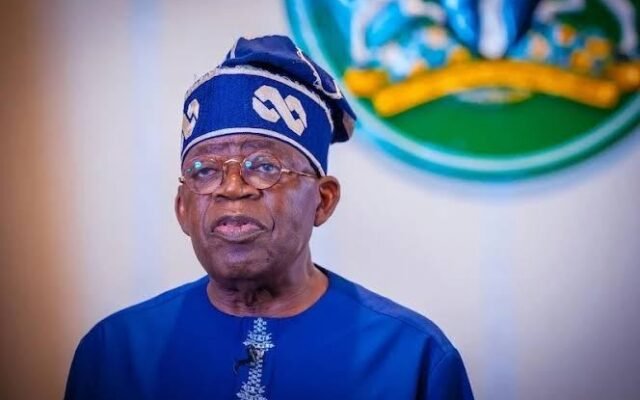
Speaking through Vice President Kashim Shettima, Tinubu urged oil and gas operators to comply fully with their agreed work programmes, local content obligations, environmental standards and commitments to host communities, a reminder that government incentives come attached to real obligations rather than unconditional support. He also directed NUPRC itself to remain transparent, fair and independent, while publicly accounting for its own performance, a directive aimed as much at the regulator as at the companies it oversees.
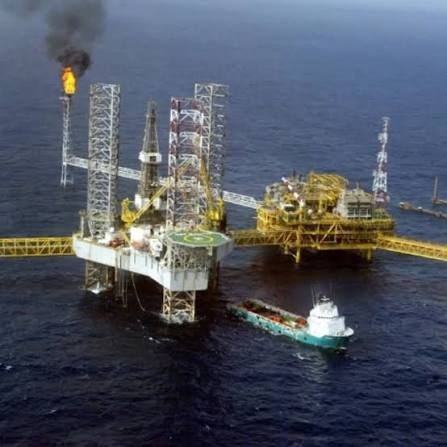
Minister of State for Petroleum Resources Heineken Lokpobiri used the same gathering to lay out the numbers behind the government’s case that its reforms are working. He said active drilling rigs have climbed from fewer than 10 when the Tinubu administration took office in 2023 to more than 70 today, describing the jump as evidence of an unprecedented drilling campaign across the upstream sector. Crude oil and condensate production, he said, has reached 1.821 million barrels a day according to NUPRC’s most recent weekly figures, representing an increase of more than 80 percent from the less than one million barrels a day Nigeria was producing before this administration began. Drilling at that scale isn’t cheap, Lokpobiri noted, pointing out that a single onshore well costs between $25 million and $30 million, while a deep offshore well runs anywhere from $80 million to $100 million, underscoring just how much capital investors have committed to drive the rig count up this far.
NUPRC’s own five-year scorecard adds further detail to that investment picture. The commission said it has approved 120 Field Development Plans and recorded $47 billion in investment commitments over its first five years of operation, figures Lokpobiri connected directly to specific projects including the Bonga North, Bonga South-West and Zabazaba fields, all of which he said moved forward on the strength of recent regulatory approvals. He also pointed to a broader structural shift in who’s actually producing Nigeria’s oil, saying international oil companies once accounted for roughly 90 percent of national production, a share that’s now flipped, with indigenous Nigerian companies responsible for about 60 percent of domestic output. On the fiscal side, he said monthly allocations distributed through the Federation Account Allocation Committee have climbed from less than ₦600 billion before Tinubu’s administration to more than ₦2 trillion currently, a figure he presented as direct evidence of the sector’s revived contribution to government finances.
Not everyone is taking the government’s self-reported progress at face value, though, and the accountability theme Tinubu raised at the event cuts both ways. The Socio-Economic Rights and Accountability Project has formally urged the president to order an investigation into more than ₦94.4 billion in public funds it alleges were diverted, unremitted, unaccounted for or irregularly spent by the Midstream and Downstream Gas Infrastructure Fund and by NUPRC itself. In a letter signed by its deputy director, Kolawole Oluwadare, the group called on Tinubu to direct Nigeria’s anti-corruption agencies to investigate the allegations, prosecute anyone found culpable where sufficient evidence exists, and recover and remit any affected funds back to the treasury. Separately, opposition figure Atiku Abubakar has demanded a full public accounting of the ₦11.2 trillion that NNPC Limited has recorded as owed to it by the federation for advances and operational costs, including spending tied to protecting Nigeria’s oil and gas assets, a sum that dwarfs most of the other figures circulating in this week’s reporting and raises its own separate questions about how cleanly money moves between the government and its national oil company.
Taken together, this week’s events capture both sides of where Nigeria’s oil sector currently stands: a genuinely significant recovery in drilling activity, production and investment that officials are eager to showcase, alongside unresolved questions from civil society groups and political opponents about whether the money flowing through the sector’s institutions is being tracked and accounted for as rigorously as the government’s own rhetoric about compliance and transparency suggests it should be.