|
Getting your Trinity Audio player ready...
|
“Waste No More Time Arguing What a Good Man Should Be. Be One” is a comfortable kind of conversation that never actually costs anything: discussing what good leadership looks like, debating what integrity means, arguing over the definition of fairness. These conversations can go on indefinitely, and feel productive while they’re happening, without a single real action ever following from them.
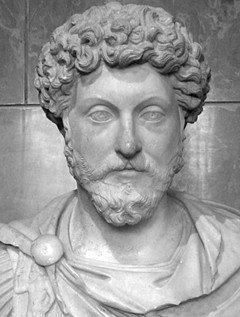
Marcus Aurelius, the Roman emperor who wrote Meditations as a private journal rather than a book meant for an audience, had little patience for that pattern. The quote is addressed as much to himself as to anyone else. Theorising about virtue is easy. Practicing it, in the actual decisions of an actual day, is the only part that matters.
Here’s the distinction worth sitting with. Discussing what good character requires can feel like progress, because it engages the mind and produces something to say. But a well-formed opinion about integrity has never, on its own, made anyone more honest in the moment that honesty was actually required.
Picture two managers who both care deeply about treating their teams fairly. One spends real time thinking and talking about what fairness means in the abstract, reading about it, discussing it with peers, forming careful opinions. The other spends less time discussing it and more time simply doing it, giving credit where it’s due, having the difficult conversation instead of avoiding it, admitting a mistake instead of deflecting it. Both managers likely hold similar values. Only one of them is actually being what the other is still describing.
Instead of only asking “what does good character look like,” it helps to ask the sharper, less comfortable question: what would it actually require me to do differently right now? The first question can be answered from a chair. The second one usually can’t be, and that gap is exactly where most good intentions quietly stall.
Marcus Aurelius wasn’t describing character as something proven in rare, dramatic moments. For him, it showed up in ordinary decisions, how a person responded to frustration, kept a promise, or treated someone who couldn’t offer anything in return. Those small, often unwatched choices are where character is actually built, far more than in the big public moments people tend to associate with integrity.
Trying to live by a standard and occasionally failing it isn’t proof the standard is pointless, or that the person trying is a fraud. Meditations itself reads, in places, like a man reminding himself of standards he kept falling short of and returning to anyway. The value isn’t in never failing, it’s in continuing to act rather than retreating into discussion about why the failure happened.
This isn’t a decision made once and then settled permanently. Acting with integrity is a choice that has to be remade constantly, in situations large and small, often when no one else would ever know the difference. People known for strong character usually aren’t the ones who passed one big test, they’re the ones who kept choosing, quietly, in situations nobody was watching.
How to Put This Into Practice
You don’t need to become a philosopher to live by this idea, you just need to notice the moments where talking about a value quietly replaces practicing it.
At work: when a colleague is treated unfairly, are you discussing what should happen, or actually doing something about it?
In business: when you set a standard for how customers or staff should be treated, is it mostly discussed in meetings, or actually visible in how decisions get made day to day?
In personal life: when you admire a quality in someone else, patience, honesty, generosity, are you mainly noticing it in them, or actively practicing it yourself? The description of a good person costs nothing. Being one costs something every single time.
The Bottom Line
Marcus Aurelius’ quote challenges a habit that feels productive but often isn’t: treating conversation about character as a substitute for character itself. In reality, the conversation can go on forever without changing a single outcome.
Choosing to act doesn’t mean abandoning reflection altogether. It means making sure reflection eventually turns into something done, which is likely why a private journal written by a Roman emperor nearly two thousand years ago still reads like it was written for right now.