|
Getting your Trinity Audio player ready...
|
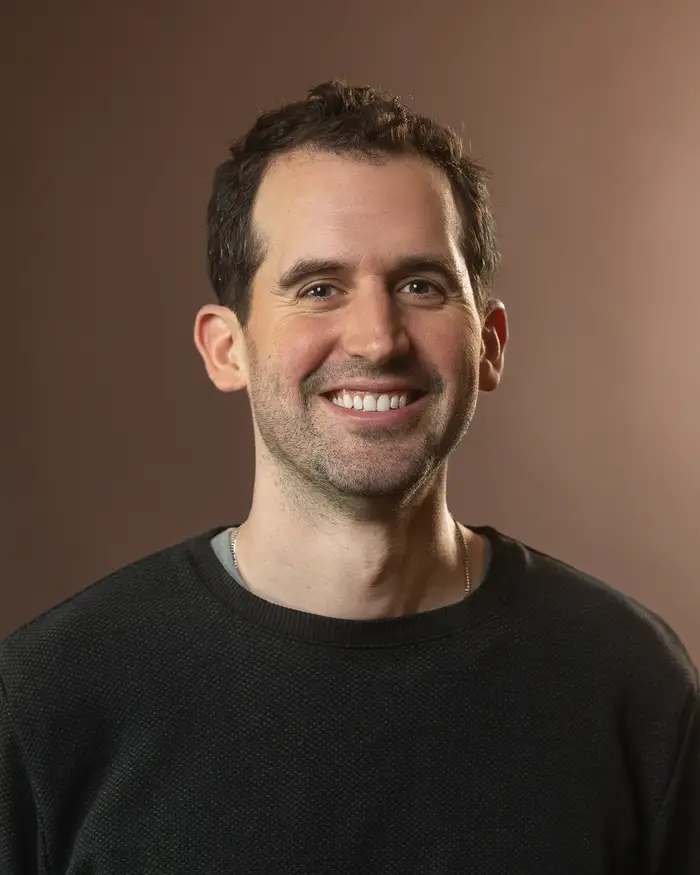
Artificial intelligence companies depend on enormous amounts of computing power, and the people who secure that power rarely appear in headlines. Tom Brown is one of them. He is a co-founder of Anthropic, the company behind the Claude family of AI models, and he serves as its Chief Compute Officer, which means he leads the team that finds, buys and runs the chips and data centres that train and operate its models. Before that, he led the engineering effort behind GPT-3 at OpenAI. His path shows how a startup engineer became a central figure in the AI industry. This biography covers his education, career and what his role involves.
Who Is Tom Brown?
Tom Brown is an American engineer, AI researcher and technology executive based in San Francisco. He co-founded Anthropic in 2021 with six former colleagues from OpenAI, and he leads its compute organisation. He is not the same person as other public figures who share his name, so his Anthropic role and his work on GPT-3 are the clearest way to identify him.
Tom Brown’s Education
Brown studied at the Massachusetts Institute of Technology, where he earned a Master of Engineering degree in 2010. His coursework combined computer science with brain and cognitive sciences. That mix explains his later interest in machine learning, which asks how software can learn the way minds do. As a child, he developed an interest in computers, and MIT gave him the technical base for the career that followed.
Early Startup Career
After graduating, Brown skipped the usual route into big technology companies and joined a friend’s startup, Linked Language, a company that taught languages. In 2011, he became a founding engineer at MoPub, a mobile advertising network that Twitter later acquired. At MoPub, he helped build the early server systems that handled large volumes of ad requests, which taught him how to keep software running under heavy load.
In 2012, he co-founded Grouper and served as its Chief Technology Officer. Grouper came out of the Y Combinator accelerator’s Winter 2012 batch and arranged social evenings between two groups of three friends. The company ran for several years before he moved on.
A Deliberate Turn Toward Machine Learning
Brown made an unusual career move after Grouper. He had spent about a decade as a startup engineer, and he chose to become a beginner again in machine learning. He taught himself the field and reached out to OpenAI, the newly formed research lab, where he joined as an early technical employee. Profiles place him among its first twenty staff.
His early work at OpenAI focused on engineering systems for training models. He also contributed to research on learning from human preferences and built an open-source reinforcement learning tool called RL-Teacher.
Google Brain and the Return to OpenAI
Brown spent roughly a year at Google Brain, Google’s AI research group, before he returned to OpenAI in late 2018. The move gave him a second view of how large research teams run, and he came back to lead more ambitious projects.
Leading the Engineering of GPT-3
His best-known work came next. Brown led the engineering effort behind GPT-3, the language model that showed how larger models could handle many tasks with only a few examples. He was the first author of the 2020 paper that introduced it, titled “Language Models are Few-Shot Learners.” He also co-authored “Scaling Laws for Neural Language Models,” which showed that performance improves in predictable ways as models receive more compute, data and parameters.
That second paper explains why his later job matters so much. If model quality rises with compute, the company that secures the most reliable supply of computing power gains a real advantage.
Founding Anthropic
In 2020, Brown left OpenAI with six colleagues, including Dario and Daniela Amodei, to start a new company with a stronger focus on AI safety. They incorporated Anthropic in 2021 as a public benefit corporation. Brown became a co-founder and took charge of compute, a role that carried the titles of head of core resources and later Chief Compute Officer.
What the Chief Compute Officer Does
Brown leads the technical organisation responsible for securing, scaling and effectively using the compute behind Claude. Training and running large AI models requires specialised chips, vast data centres and reliable power, and few suppliers can provide them at the scale Anthropic needs.
His team takes a multi-supplier approach. Anthropic trains and runs Claude on several kinds of hardware, including NVIDIA GPUs, Google’s Tensor Processing Units and Amazon’s Trainium chips. Using several platforms reduces dependence on any single provider and lets the company match each workload to the best-suited hardware. He has also helped negotiate infrastructure and government-policy agreements for the company.
Scaling the Infrastructure
The size of the commitments shows how fast the job has grown. In October 2025, Anthropic announced plans to use up to one million Google TPUs, worth tens of billions of dollars. Weeks later, it announced a $50 billion data centre programme in Texas and New York. In May 2026, the company closed a $65 billion funding round that valued it at $965 billion.
The numbers place Brown among the most influential infrastructure leaders in the industry. Decisions about where to build, which chips to buy and how to schedule training runs shape what Claude can do and how quickly the company can release new models.
Brown’s Place on the Wealth Rankings
Anthropic’s rapid growth has changed his personal circumstances as well. In 2026, Brown appeared on a global billionaire ranking for the first time, a result of his stake as a co-founder of one of the world’s most valuable private companies.
Why Tom Brown Draws Attention
Interest in him has grown with the company. Readers search his name to understand who built the compute backbone of a leading AI lab, how a former startup engineer became a central figure in AI, and what his role means as demand for computing power keeps rising.
What His Journey Teaches
Three lessons stand out. First, reinvention is possible even after a decade in a different field. Brown left successful startup work to learn machine learning from scratch. Second, engineering skills carry across domains. The systems thinking he developed at MoPub and Grouper shaped how he handled training infrastructure at OpenAI and Anthropic. Third, the supply of computing power has become a strategic asset. His career follows the rise of that idea, from a research paper on scaling to a company-wide mission to secure enough compute.