|
Getting your Trinity Audio player ready...
|
Every video call, mobile payment and cloud application depends on physical things: towers, fibre cables and buildings full of servers. Wole Abu has spent more than two decades building and running those things in Nigeria. This Wole Abu biography follows a telecom executive who started inside a major mobile network, built a tower company from scratch, led the construction of Nigeria’s largest data centre and now heads Equinix’s business across West Africa. His career offers a clear view of how digital infrastructure gets built and why it matters for the continent’s growth. This article covers his education, career and the thinking behind his work.
Who Is Wole Abu?
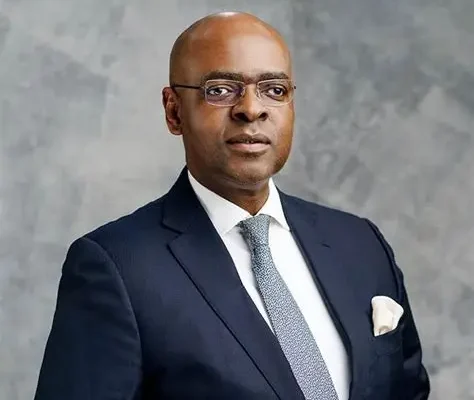
Wole Abu is a Nigerian telecommunications and digital infrastructure executive. Since November 2024, he has served as Managing Director for West Africa at Equinix, the global digital infrastructure company, where he leads its business in Nigeria, Ghana and Côte d’Ivoire. He has more than 20 years of experience in the Nigerian telecom industry, with roles across human resources, engineering, operations, finance, legal, and sales and marketing.
Wole Abu’s Education
Abu holds an engineering degree and an MBA from Lagos Business School. In 2012, he earned a certification in business administration and management from the Indian Institute of Business Management in Ahmedabad. In 2020, he completed a professional programme at the Massachusetts Institute of Technology in digital transformation, covering artificial intelligence, the Internet of Things, blockchain, cloud and cybersecurity.
The progression shows a leader who keeps adding skills. Engineering gave him the technical base, the MBA gave him management tools and the later courses kept him current as telecoms shifted toward cloud and data. He is also a member of the Project Management Institute.
Building a Career at Airtel Nigeria
Abu joined Airtel Nigeria in 2010 and spent about a decade inside the company. He worked in human resources, engineering, operations, finance, legal and marketing departments before becoming Vice President of Sales. The variety of those roles gave him a rare understanding of how a large mobile operator functions end to end.
Most telecom executives specialise early in one function. Abu moved through many, which later helped him run entire businesses where a leader must understand every department.
Founding the Tower Business at Pan African Towers
Abu then took on his first chief executive role at Pan African Towers, a telecom infrastructure company that he built into one of Nigeria’s leading tower companies. A tower company, known in the industry as a towerco, builds and owns the masts that carry mobile network equipment, then rents space to operators. Operators save money because they share towers instead of building their own.
Under his leadership, the company operated in Nigeria and Ghana and won four significant awards in its first two years, including Telecoms Infrastructure Company of the Year at the 2020 Nigeria Business Leadership Awards. He framed the company’s mission around reaching remote areas with broadband and filling Nigeria’s infrastructure gap, which he estimated at $136 billion. He also argued strongly for 5G, calling it a golden opportunity because technologies such as artificial intelligence, cloud and the Internet of Things would sit on top of it.
Leading Liquid Intelligent Technologies Nigeria
Abu next became Chief Executive Officer of Liquid Intelligent Technologies Nigeria and of Africa Data Centres in Nigeria. Liquid is a pan-African technology group that provides connectivity, cloud and data centre services to businesses.
He played a central role in building the Africa Data Centre in Lagos, the largest data centre in Nigeria. He also led Liquid Nigeria to deliver more than 150 kilometres of metro fibre in Lagos, which gave businesses faster and more reliable connections in the country’s commercial capital.
Why Data Centres Matter
Many readers wonder what a data centre does. It is a secure building that houses the servers, storage and networking equipment that run websites, apps, banking systems and cloud services. Banks, telecom operators, government agencies and technology companies all need places to keep their data safe and connected. Without enough local data centres, companies store data abroad, which raises costs, slows services and creates regulatory problems. A large local data centre lets organisations keep data close to their users and connect quickly to other networks.
Joining Equinix
In November 2024, Equinix appointed Abu as Managing Director for West Africa. He succeeded Funke Opeke, the founder and CEO of MainOne, which Equinix acquired for $320 million. His mandate covers driving growth, strengthening regional connectivity and overseeing Equinix’s expansion and integration efforts across Nigeria, Ghana and Côte d’Ivoire.
The role places him at the centre of one of Africa’s most important digital infrastructure stories. Equinix is one of the world’s largest data centre operators, and the MainOne purchase gave it an established presence in West Africa, with data centres and submarine cable connectivity. Abu works with local businesses and multinational companies that need reliable connections and secure hosting.
He said he was thrilled to join Equinix and help bring advanced digital infrastructure across Africa, because expanding digital access is vital for bridging the digital divide and providing life-enhancing services. The appointment came soon after Equinix opened a new data centre in Johannesburg, which underscores the company’s push into the continent.
Awards and Industry Leadership
Abu has received recognition for his contributions to Nigeria’s telecom sector. The Association of Telecommunication Companies of Nigeria presented him with a Nigeria Tech Innovation and Telecom Award. Members of the association also elected him as Publicity Secretary.
He regularly speaks at conferences on digital transformation and infrastructure. He also supports community initiatives that protect families and empower local communities.
The Thread Through His Career
Three layers of infrastructure define his work. Towers bring mobile signals to people. Fibre carries large volumes of data between buildings and cities. Data centres store and process that data. Abu has led businesses in each layer, which gives him a view of how the pieces connect. A tower is useful only if its traffic reaches a network, and a network is useful only if the data it carries has somewhere to go. His career follows that chain from the edge of the network to the centre.
Why Wole Abu Draws Attention
His profile combines unusual strengths: an executive who built a tower company, ran Nigeria’s largest data centre operation and now leads a global infrastructure company’s regional business. Readers who search for a Wole Abu biography want to understand how a telecom insider became a leading voice in West African digital infrastructure and what his work means for the region.
What His Career Teaches
Three lessons stand out. First, breadth builds leadership. Moving through human resources, engineering, finance and sales at Airtel prepared him to run whole companies. Second, infrastructure is a long game. Towers, fibre and data centres take years to build, and leaders who commit early shape the market. Third, local roots matter when global companies enter. Equinix chose a Nigerian executive with deep telecom experience to lead its West African growth, which shows the value of knowing the market from the inside.