|
Getting your Trinity Audio player ready...
|
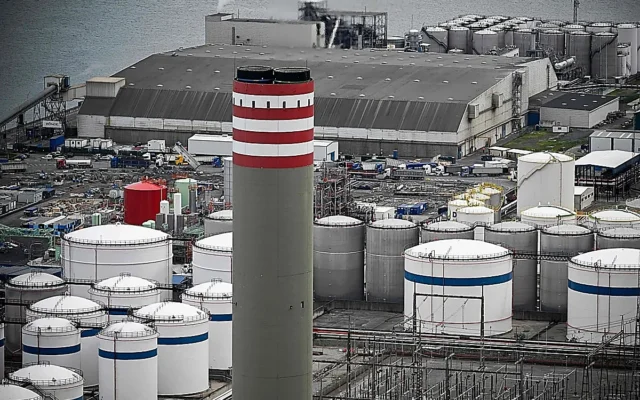
Germany’s gas storage operators have picked up the pace of injections in recent days, according to the country’s economy ministry, as easing liquefied natural gas prices and a cooling of demand from Asia give European buyers more breathing room ahead of winter.
Speaking at a regular government press briefing in Berlin on Friday, an economy ministry spokesperson said national storage sites had reached just over 51 percent of capacity, adding that operators had injected notably higher volumes over the past several days. The spokesperson pointed to two developments behind the shift. The seasonal gap between summer and winter gas prices, which had discouraged companies from booking storage capacity earlier this year, has narrowed. At the same time, a heatwave in parts of Asia that had been pulling LNG cargoes away from Europe has subsided, freeing up shipments that are now being redirected toward European buyers instead.
“The winter-summer price spread has improved a bit, which may be one factor,” the spokesperson said, noting that Asian buyers were no longer competing as aggressively for the same cargoes.
The update matters because Germany entered this year’s injection season in an unusually weak position. The country holds the largest gas storage capacity in Europe, but by early July its facilities were only around 41 percent full, the lowest level recorded for that point in the calendar since the 2021-22 energy crisis. Storage had dropped as low as roughly 20 percent earlier in the year after a cold winter forced heavy withdrawals, and the slow start to refilling left German storage trailing well behind the broader European average for much of the summer.
That gap has narrowed somewhat, but it remains a live concern. As recently as mid-August, storage sites were just above 48 percent full, compared with a European average closer to 59 percent at the time. Germany is aiming to reach 70 percent capacity by the start of November, a target the energy industry association BDEW has described as achievable but difficult given how far behind the country started. Uniper’s chief executive said this month that the target was still within reach, though he stressed that market prices would need to move in a direction that makes filling storage commercially attractive for operators, rather than something they do at a loss.
That commercial incentive has been the central obstacle all year. Storage economics depend heavily on the spread between what gas costs in summer, when it is injected, and what it can be sold for in winter, when it is withdrawn. When that spread turns negative, meaning winter gas is cheaper than summer gas, there is little financial reason for companies to pay for storage space and inject supply. Analysts at the energy monitoring group INES have pointed to exactly this problem throughout 2026, warning that while Germany’s pipelines, terminals, and storage caverns have more than enough physical capacity to hit the government’s targets, price signals alone were not strong enough to guarantee it would happen. Unlike some neighbors, Germany has opted not to intervene directly in the market to correct that imbalance. Italy introduced a compensation scheme this year to offset unfavorable summer-winter spreads, and France’s regulated storage system effectively guarantees full sites regardless of pricing, but Berlin has said repeatedly it does not intend to follow either approach this cycle, preferring to let market conditions play out.
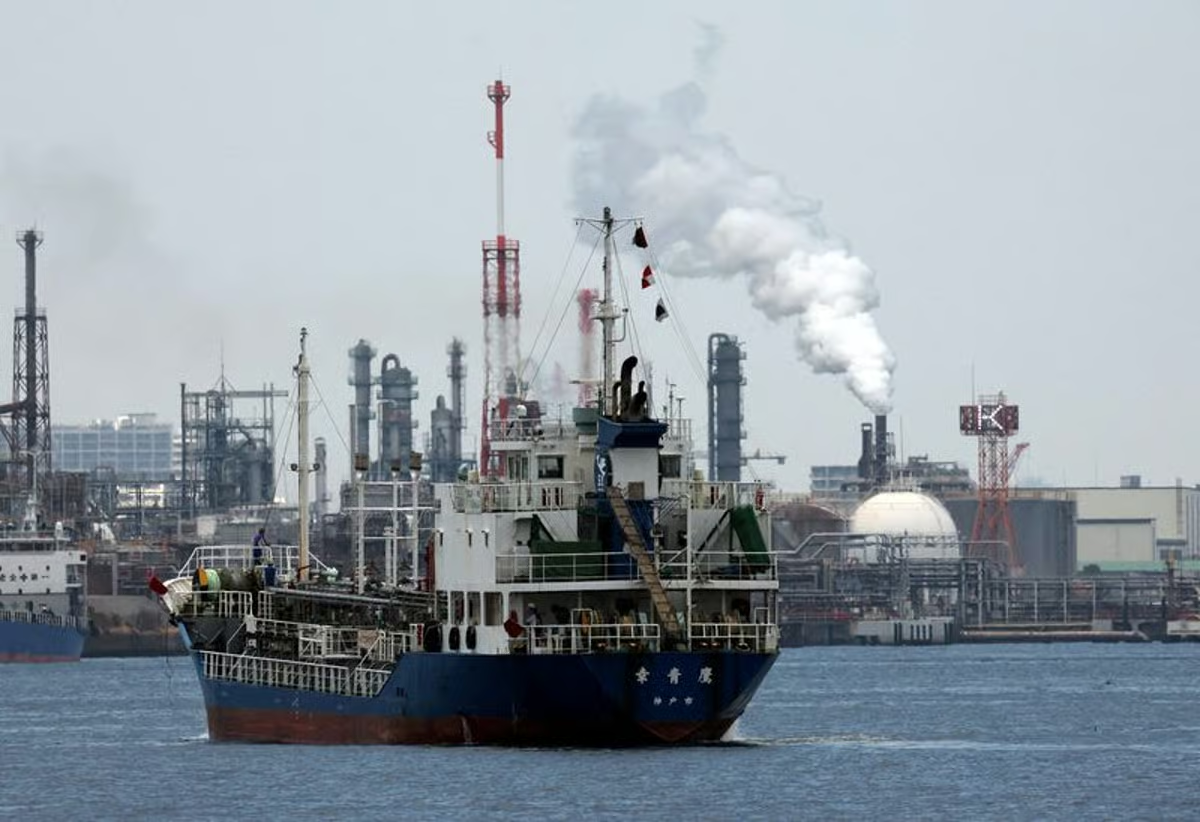
Global LNG supply is a big part of why those conditions are now shifting. The International Energy Agency has projected that global LNG production will grow by more than 7 percent this year, its fastest pace since 2019, with North America accounting for the large majority of new supply as additional export capacity in the United States, Canada, and Mexico comes online. That extra supply matters directly for Europe, which has leaned heavily on LNG imports to offset the loss of Russian pipeline gas in recent years. When new cargoes hit the water and Asian demand eases at the same time, more of that gas tends to flow toward European terminals, which is broadly what German officials described happening over the past week.
The picture earlier this year looked far more precarious. Tensions between the United States and Iran, along with concerns about potential disruption to shipping through the Strait of Hormuz, a route that carries roughly a fifth of global LNG including exports from Qatar, had pushed European gas futures higher through the first quarter and complicated the outlook for summer injections. Germany’s own storage levels bottomed out around that period, and forecasters at the time were openly questioning whether the country could avoid entering winter with dangerously thin reserves. The current pickup in injections, while welcome, still leaves Germany with ground to make up before November, and the government’s own language on Friday reflected that caution. The spokesperson said the ministry was continuing to monitor the situation closely and expects market participants to keep filling facilities as conditions allow, rather than declaring the issue resolved.
For households and businesses, the practical stakes are straightforward. Fuller storage going into winter generally means less exposure to price spikes if a cold snap or supply disruption hits later in the year, since operators can draw on stored gas rather than scrambling for spot cargoes at short notice. Thinner storage, by contrast, tends to leave prices more sensitive to weather forecasts and geopolitical headlines, a pattern that played out repeatedly earlier in 2026 as wind generation shortfalls and Middle East tensions each pushed German gas futures higher in quick succession. The next several weeks of injection data will likely be watched closely by traders and policymakers alike, since Germany’s ability to close the gap with the rest of Europe before the November deadline will shape how exposed the region’s largest gas-consuming economy is to price swings once heating season begins in earnest.