|
Getting your Trinity Audio player ready...
|
Nine Days After Disaster, Two Pulled Alive From Nepal Hydropower Tunnel
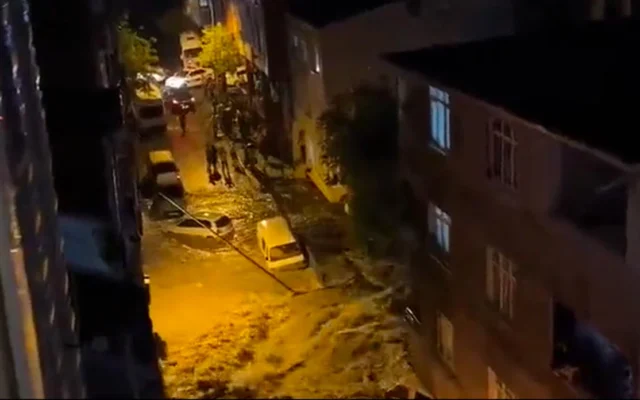
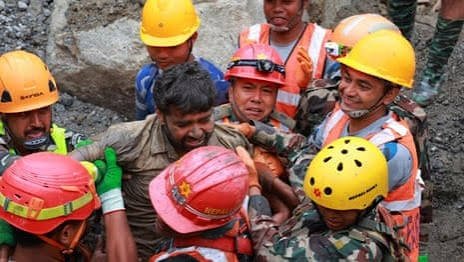
Rescuers in Nepal pulled two workers alive from a hydropower tunnel on Friday, offering a rare moment of hope in a search and rescue operation that has stretched on for more than a week following one of the deadliest natural disasters the country has faced in years. The men were freed from the Upper Trishuli 3A tunnel nine days after floods, believed to have been triggered by a glacier collapse, tore through the Trishuli River valley on August 26, sweeping away entire villages and killing more than a thousand people.
The two survivors were identified as a mechanical foreman and a mechanical supervisor working at the hydropower site. Nepal Army spokesperson Brig. Gen. Raja Ram Basnet confirmed the first rescue, and Nepali lawmaker Shri Ram Neupane shared news of the second rescue on his Facebook page shortly afterward. Local television footage showed one of the men covered in mud, being carried from the site on a rescuer’s shoulder, while videos released by Nepali authorities showed the other survivor, identified as Sanjay Sah, being pulled from a hole in the ground to cheers from onlookers before being carried to a rescue tent. Army doctors attended to him there, fitting an oxygen mask and checking his vital signs before he was flown to a hospital in Kathmandu. Officials said both men were in stable condition.
The scale of what triggered this rescue operation is difficult to overstate. Nepal’s disaster management agency has confirmed at least 1,259 deaths from the floods, with more than 5,000 people still listed as missing across the affected region. On the Chinese side of the border, Tibetan authorities have reported 21 deaths and 541 people missing as of this week. The disaster struck towns and villages near the border with China’s Tibet region, destroying homes, roads and schools as the flood surge moved through the valley.
At the center of the ongoing rescue effort is the Trishuli River, along which several hydropower construction projects were underway when the floods hit. According to the Independent Power Producers Association of Nepal, at least 557 workers remain missing from the Trishuli 3A project alone, with roughly 115 of them believed to be trapped somewhere inside the main tunnel. Zooming out further, Nepali authorities estimate that around 900 workers are missing across 12 hydropower projects in the region, with approximately 500 of them believed trapped inside various tunnel systems. Friday’s rescue marked the first time anyone has been pulled out alive from these hydropower sites since the disaster occurred, which is part of why officials and rescue teams are treating it as a significant, cautiously hopeful development rather than an isolated event.
Rescue personnel at the site said they believe additional people may still be alive deep within the tunnel network. According to reporting from the ground, rescue teams have reported hearing voices further inside the tunnels, raising the possibility that dozens more survivors could still be found as the search continues. Nepal’s Communication Minister Bikram Timilsina echoed that cautious optimism in a public statement, writing that officials remain hopeful more workers will be rescued and that teams are actively working toward that outcome.
The technical challenge facing rescue crews is significant. The tunnel systems tied to hydropower projects like Trishuli 3A are not simple, single-passage structures. They form part of a larger engineered system running alongside the river, built to channel water for power generation, and the flood damage has left an unclear picture of which sections remain passable, which have collapsed, and where trapped workers might have found pockets of safety as water and debris moved through. Nepal Army personnel have been using heavy drilling equipment to work through blocked sections, a slow and methodical process similar to tunnel rescue operations seen elsewhere in the region, including previous high-profile incidents in India’s Himalayan tunnel construction projects where trapped workers were eventually freed after extended periods underground.
The cause of the initial disaster appears to be tied to a glacial event in the upper reaches of the Trishuli River, an increasingly common trigger for catastrophic flooding in high-altitude Himalayan regions as glacial ice and rock formations become more unstable. Rock, ice and mud swept downstream with enough force to devastate everything in its path along the valley, a pattern consistent with glacial lake outburst floods that have become a growing concern across the Himalayas as climate patterns shift. The floods didn’t just affect construction sites either. Entire residential communities in the path of the flood were destroyed, which explains why the death toll and missing-persons count extend so far beyond the hydropower workers specifically.
For Nepal, a country where hydropower represents a critical piece of both domestic energy infrastructure and economic development strategy, the disaster carries implications well beyond the immediate human toll. Hydropower projects along rivers like the Trishuli have been central to Nepal’s efforts to expand electricity generation and reduce dependence on imported energy, often built with significant foreign investment and technical partnership. The disruption to multiple projects simultaneously, combined with the loss of skilled workers and the damage to tunnel infrastructure that likely took years to construct, represents a substantial setback that will take considerable time and resources to address even after the immediate rescue and recovery phase concludes.
As of Friday, search and rescue operations remained active and ongoing at the Trishuli site and at other affected hydropower locations along the river. Officials have not provided a timeline for when the broader search effort might wind down, and given the number of people still unaccounted for, both at the hydropower projects and across the wider flood-affected region, the operation appears likely to continue for some time yet. The rescue of the two workers on Friday doesn’t change the scale of the tragedy that has unfolded in Nepal over the past nine days, but for rescue teams who have spent more than a week searching through collapsed and flood-damaged terrain, it offers tangible evidence that survivors may still be found, and a reason to keep searching.
This is an ongoing and rapidly developing situation, and casualty figures, the number of people still missing, and details about ongoing rescue operations may continue to change as more information becomes available from Nepali authorities and international relief organizations working in the region.