|
Getting your Trinity Audio player ready...
|
Oil prices jumped more than 3 percent on Monday after fresh Houthi strikes on Saudi Arabia and Iranian attacks on vessels in the Gulf added another layer of anxiety to a market already rattled by the shutdown of a critical Saudi pipeline days earlier. Brent crude futures climbed $3.21, or 3.1 percent, to $107.82 a barrel by mid-morning trading in Asia, while WTI futures gained $3.17, or 3.2 percent, to $103.22, according to Reuters reporting from Colleen Howe and Jeslyn Lerh in Singapore. The moves capped an eight percent surge for the week overall, pushing crude above $100 a barrel for the first time since July.
At the center of the disruption sits Saudi Arabia’s East-West pipeline, a critical piece of infrastructure that lets the kingdom route its crude exports away from the Strait of Hormuz entirely, sending oil overland to terminals on the Red Sea coast instead. That workaround matters enormously given how tense the Strait itself has become amid the ongoing standoff between Iran and the United States. The pipeline was knocked offline last Thursday after a drone strike, with Saudi officials confirming the shutdown but declining to say how badly the line was damaged or how long repairs might take. Analysts at ING described the situation plainly, noting the latest attacks followed an escalation targeting Saudi energy infrastructure specifically, including the crucial pipeline itself, while cautioning that the true scope of the damage remained unclear.
The stakes tied to that single pipeline are considerable. Capable of carrying up to 7 million barrels of crude a day, the line links Saudi production fields near the Persian Gulf directly to Red Sea export terminals, and its loss threatens as much as 4 percent of global oil supply according to industry estimates. Making matters more urgent, the Yanbu export terminal that depends on the pipeline reportedly has only five to seven days of inventory on hand to keep exports flowing before supply actually runs dry, according to three people familiar with Saudi Arabia’s export operations. Saudi Aramco chief executive Amin Nasser had previously described the pipeline as playing a more important role in stabilizing oil markets than even the large-scale release of strategic petroleum reserves led by the United States, a comment that underscores just how central this single piece of infrastructure has become to keeping Gulf oil flowing during the current conflict.
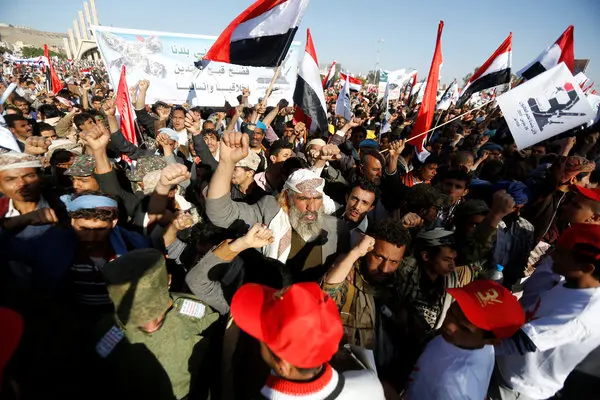
Sunday’s violence added fresh urgency to an already fragile situation. Saudi state media released video footage showing damage to homes and a mosque in the country’s southern Jazan province, attributing the strike to Houthi forces based in Yemen. The Houthis, for their part, claimed responsibility for that attack and said they had also hit a Saudi military base in a neighboring province. Reports over the preceding week described Houthi strikes on energy facilities and civilian sites across the kingdom injuring more than 70 people, according to Saudi state media.
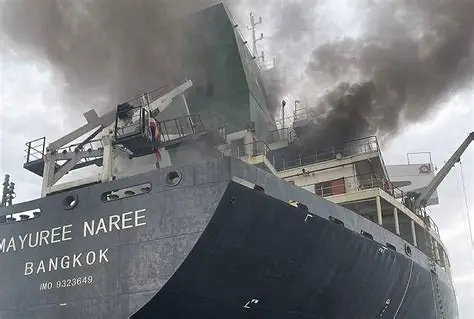
Shipping lanes in the Gulf came under direct threat as well. The British maritime security agency UKMTO confirmed that a vessel in the Strait of Hormuz was struck by a projectile on Sunday, sparking a fire and forcing the crew to evacuate. Iran separately reported that one person was killed and four crew members wounded when an Iranian commercial vessel was struck off its own coast, an incident that adds Iranian-flagged shipping to the growing list of targets caught up in the broader regional conflict.
Compounding the pressure further, Yemen’s Iran-aligned Houthi forces reportedly seized the strategic island of Perim on Friday after previously taking the port city of Mokha along Yemen’s western coast. Control over Perim gives the group a stronger position from which to threaten shipping through the Bab el-Mandeb Strait, another vital oil transit corridor that has carried an estimated 4 to 5 percent of global crude supply in recent months. With both Hormuz and Bab el-Mandeb now facing simultaneous pressure, traders are confronting a scenario where two of the world’s most important oil chokepoints are under threat at the same time.
Diplomatic efforts aimed at de-escalating the crisis suffered a setback of their own. A planned meeting between Iran and Gulf Arab states, originally scheduled for Monday in Oman specifically to address rising tensions around the Strait of Hormuz, was abruptly postponed following the pipeline attack. Oman’s foreign minister cited the need to build consensus among participants before the talks could proceed, though no new date has been announced. That postponement removed what had been one of the few concrete near-term opportunities for reducing tension through negotiation rather than continued military escalation, leaving markets with even less visibility into how or when the situation might calm down.
Market strategists have been fairly direct about what happens next if the situation doesn’t improve soon. IG market analyst Tony Sycamore warned that unless this week’s Oman talks produce something operationally meaningful, or the East-West pipeline comes back online quickly, crude prices risk extending their climb toward the $119.48 high reached back in early March, a level that would represent a significant further escalation from where prices currently sit. That kind of warning reflects just how tightly oil markets are now watching two parallel tracks simultaneously, the pace of physical infrastructure repairs on one hand, and the fate of stalled diplomacy on the other, with either track capable of moving prices sharply depending on which direction it breaks.
For consumers and businesses far removed from the Gulf, the practical consequences of this latest escalation will likely show up gradually through higher fuel and energy costs, particularly if the pipeline outage drags on or the diplomatic standoff continues without resolution. Given how much of this week’s price action has been driven by supply fears rather than confirmed, lasting damage, the situation remains genuinely fluid, and prices could ease just as quickly if repairs move faster than expected or talks resume on more promising terms.
For more coverage of global energy markets and geopolitical risk, visit Business Tech.