
|
Getting your Trinity Audio player ready...
|
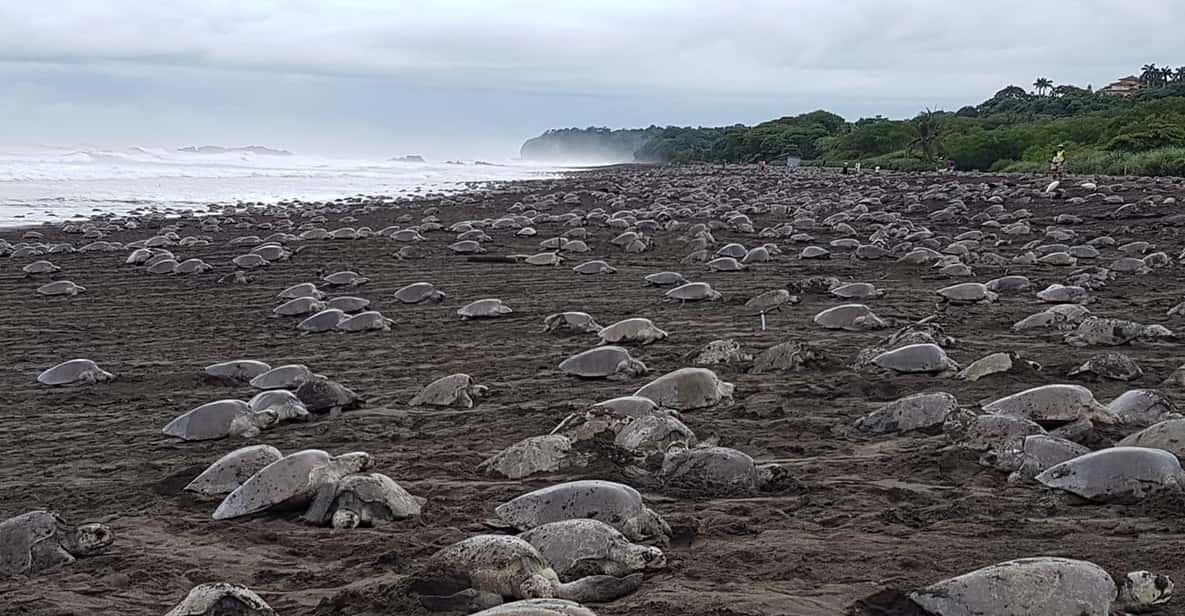
More than 300,000 olive ridley sea turtles surged onto a beach in southern Mexico within a 48-hour window this week, according to Al Jazeera reporting and footage from the scene, in the latest edition of one of nature’s most extraordinary and least understood reproductive spectacles. The event, known in Spanish as an arribada, or “the arrival,” saw the golfinas, as locals call them, crawl ashore in overwhelming numbers to dig nests and lay eggs almost simultaneously, a synchronized ritual that scientists still can’t fully explain despite decades of study.
Mexico’s arribadas center almost entirely on the state of Oaxaca, where the Playa Escobilla sanctuary exists specifically to protect the phenomenon. This latest surge marked the sixth wave of the nesting season, which began back in March and typically continues into February of the following year, with major arribadas occurring roughly once a month during that stretch. Mexico’s national commission for protected areas, known as CONANP, opened this season’s monitoring at Playa Escobilla in May, counting 11,290 nesting females over a five-day observation window at the very start of the cycle, a modest opening compared to the hundreds of thousands that can arrive during the season’s larger events.
What makes an arribada genuinely remarkable isn’t just the raw numbers, it’s the underlying behavior itself. Scientists define the onset of an arribada as the point where at least 100 turtles are simultaneously present on a beach, though the true scale typically balloons dramatically once the event actually begins, sometimes climbing into the hundreds of thousands within a single 48-hour stretch, exactly what appears to have happened this week. Researchers still don’t have a definitive explanation for what triggers turtles to synchronize their nesting so precisely, though leading theories point to a combination of lunar cycles, offshore wind patterns, and pheromone signals released by the first turtles to arrive, effectively calling in the rest of the population.
The strategy behind this mass synchronization appears to be a defensive one, built around overwhelming predators through sheer numbers rather than relying on stealth. When hundreds of thousands of hatchlings emerge from their nests around the same time weeks later, the sheer volume acts as a kind of predator satiation tactic, so many baby turtles racing for the ocean at once that predators simply can’t consume a meaningful percentage of them, dramatically improving each individual hatchling’s odds of survival compared to a solitary nesting strategy where a lone clutch of eggs might be far more vulnerable to being wiped out entirely.
Oaxaca’s beaches rank among the most significant olive ridley nesting sites on the planet. Nearby Playa Escobilla saw its annual nest count climb roughly fivefold since the 1990s, rising from around 200,000 nests per year to more than a million by the year 2000, a figure that has remained relatively stable since, with roughly nine major arribada events now occurring there annually. The neighboring beach at Morro Ayuta hosts a similarly massive population, with more than a million nests recorded there each year as well, making this stretch of Oaxaca’s coastline one of only five major arribada sites recognized globally, each hosting more than 100,000 nests annually.
The species’ recovery in Mexico stands out as a genuine conservation success story, even though olive ridleys remain officially classified as endangered along this particular stretch of coast. Conservationists credit both legal protections and a significant generational shift in local attitudes for the turnaround. Mexico banned the fishing and harvesting of sea turtles back in 1990, a critical turning point after decades during which turtle eggs were harvested industrially, eaten locally, and sold on the belief that they functioned as an aphrodisiac, a practice that had pushed olive ridley populations toward serious decline throughout the twentieth century. Today, community-based nest relocation programs and multi-agency monitoring efforts during each arribada help protect eggs from both human interference and natural predation, allowing the population along this coast to rebound substantially compared to where it stood decades earlier.
That recovery, however, now faces a genuinely different kind of threat, one that legal protection alone can’t solve. Olive ridley sex determination, like that of many sea turtle species, depends entirely on the temperature inside the nest during incubation rather than on genetics. According to research cited by NOAA, eggs incubating below roughly 27.7 degrees Celsius tend to produce males, while those incubating above about 31 degrees Celsius tend to produce females, with a narrow band in between yielding a mix of both sexes. As global temperatures climb and Mexico’s Pacific coast experiences hotter, drier conditions, nests are increasingly skewing toward producing overwhelmingly female hatchlings, a demographic imbalance that, if it continues unchecked over successive generations, threatens to undermine the very reproductive success that makes arribadas possible in the first place. Beyond the sex-ratio problem, rising sand temperatures also directly reduce hatchling survival rates more broadly, since eggs incubating at the upper extremes of viable temperature ranges face higher mortality regardless of the sex they eventually produce.
The stakes here extend well beyond the fate of a single species. Olive ridleys play a genuinely important role in marine and coastal ecosystems, helping regulate the jellyfish and invertebrate populations they feed on as adults, while their nesting activity on beaches contributes organic material that supports dune vegetation and broader coastal ecosystem health. Losing a healthy, reproductively balanced population along Oaxaca’s coast wouldn’t just mean fewer turtles, it would ripple outward into the broader coastal food web these turtles have helped shape for millions of years.
For now, this week’s arribada offers a genuinely hopeful snapshot, hundreds of thousands of turtles returning to the same stretch of Mexican coastline their ancestors have used for generations, protected today by legal frameworks and community cooperation that didn’t exist decades ago. Whether that hard-won recovery can withstand the slower, less visible pressure climate change is placing on the species’ basic reproductive biology remains one of the more consequential open questions facing marine conservationists working along Mexico’s Pacific coast in the years ahead.