|
Getting your Trinity Audio player ready...
|
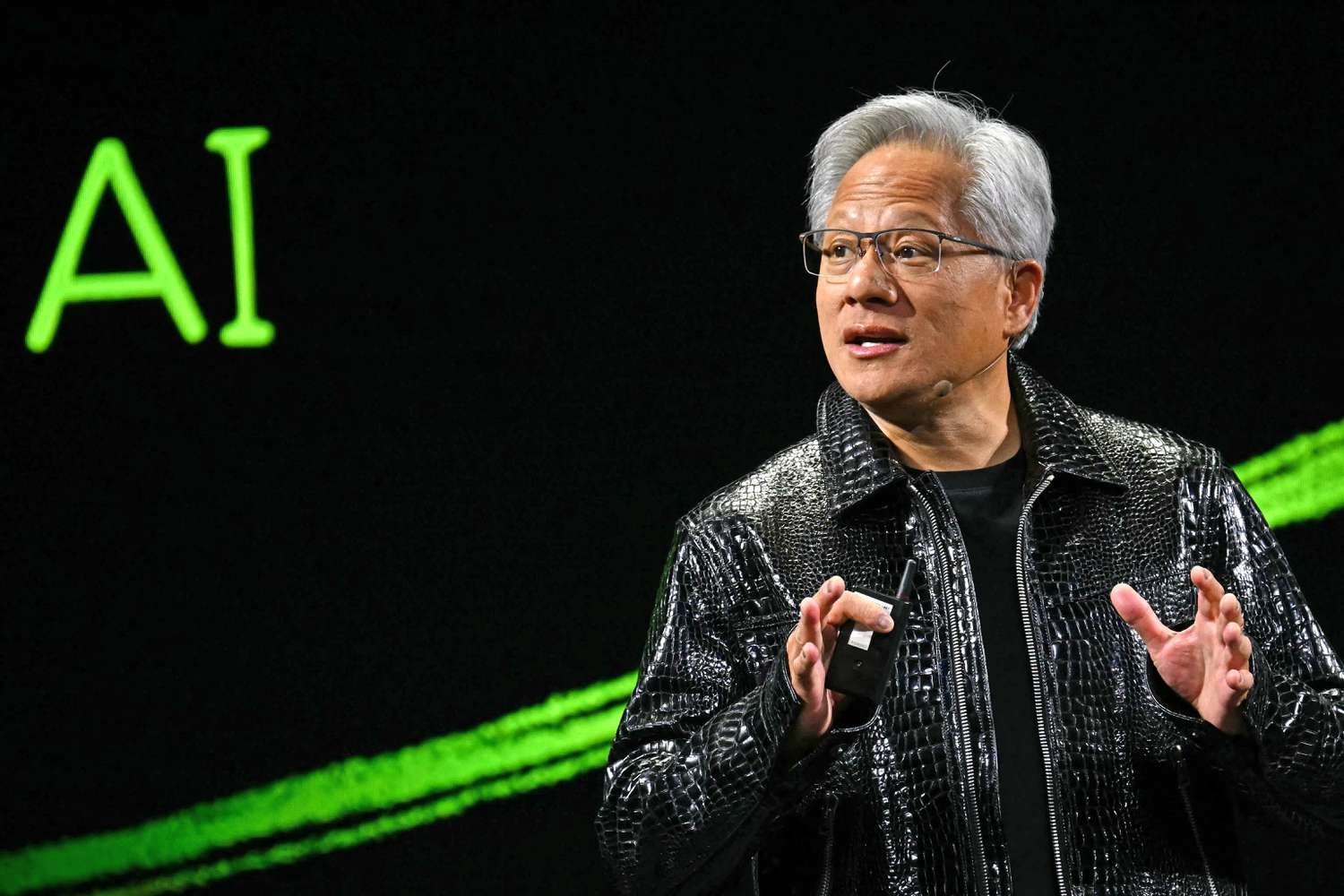
Nvidia CEO Jensen Huang delivered his most direct rejection yet of the AI extinction warnings that have swept through the tech industry in recent weeks, telling CBS News there is a “0% chance” artificial intelligence brings about the end of the world by 2030. Speaking with CBS senior business and technology correspondent Jo Ling Kent in an interview that aired Sunday on CBS Sunday Morning, Huang dismissed the warnings circulating among AI researchers as doomsday narratives that are not grounded in science, arguing that stoking fear about AI’s risks is both unnecessary and irresponsible.
Huang’s comments arrived as a direct response to a wave of public statements from current and former researchers at leading AI labs who have voiced increasingly urgent concerns about the pace of AI development. Just days earlier, former Anthropic researcher Jacob Coxon resigned and published widely shared posts warning that people building the technology privately believe it could kill everyone by the end of the decade. Evan Hubinger, an alignment researcher still working at Anthropic, publicly estimated a greater than 10 percent probability of catastrophic AI outcomes within the next ten years, a figure Huang was specifically rebutting when he offered his own zero percent counter-estimate. According to Moneywise’s reporting, OpenAI Chief Scientist Jakub Pachocki had separately written just weeks earlier that no AI company can yet reliably keep its models under human control, adding another prominent industry voice to the growing chorus of caution Huang’s comments pushed directly against.
Huang was notably blunt about what he believes motivates these warnings. According to IBTimes UK, he suggested the people making extinction-risk claims must be doing so for ulterior reasons, floating possibilities including political motivation or simple attention-seeking, and insisted flatly that 2030 will not mark the end of the world. He argued that existing US laws covering cybersecurity, product liability and unauthorized system access already provide sufficient legal tools to address AI-related risks without requiring new regulation specifically targeting the technology, a position that aligns closely with his broader argument that the AI industry should keep advancing at its current pace rather than voluntarily slowing down.
That stance puts Huang in direct opposition to the “pacing” proposal Anthropic CEO Dario Amodei published earlier this month, which called for AI companies to deliberately slow the rate at which they improve model capabilities and to bring in independent evaluators with deep, employee-level access inside frontier labs. Where Amodei, Altman and Musk had each publicly signaled agreement with that call for coordinated caution, Huang has instead argued that the industry should move as fast as possible, framing rapid development itself as compatible with safety so long as companies never ship products that are genuinely unsafe.
The political dimension of Huang’s comments became especially visible when President Donald Trump called into the event Huang was speaking at and was put on speakerphone in front of the audience. According to Inkl’s reporting, Trump dismissed AI takeover concerns outright, telling Huang directly that the robots will not be taking over, and separately characterized growing fears about AI as a hoax, while arguing that slowing down US AI development would primarily benefit China in the broader technology race. Huang responded in agreement, affirming that such an outcome would not be allowed to happen. That exchange highlighted a growing alignment between the Trump administration and Nvidia’s leadership on both the safety debate and the broader question of whether the US should prioritize speed over caution to maintain its competitive edge against Chinese AI development.
Huang’s commercial position adds an important layer of context to his public stance. Nvidia remains the dominant supplier of the specialized processors that power the vast majority of AI systems being trained and deployed globally, a position that has helped push the company’s market valuation as high as $4 trillion. Any regulatory slowdown in AI development, or any broad industry shift toward voluntary pacing, carries direct commercial implications for Nvidia’s chip sales, a reality market analysts have been quick to note when weighing how much of Huang’s public position reflects genuine technical assessment versus commercial self-interest. As InvestingLive noted, markets are likely to treat his comments as sentiment rather than as a hard data point, since Huang, as the head of the industry’s largest AI chip supplier, has an obvious financial stake in the outcome of this debate.
The broader industry split Huang’s remarks reflect has become increasingly pronounced in recent weeks, extending well beyond individual public statements into formal legal territory. The same Friday Huang’s CBS interview was recorded, four paying AI subscribers filed a federal antitrust lawsuit in San Francisco against Anthropic, OpenAI, Google and Elon Musk’s SpaceXAI, alleging the companies illegally coordinated to slow AI development following the public exchange of agreement that followed Amodei’s pacing essay. None of the named companies had responded in court as of the most recent reporting. That lawsuit, combined with Huang’s public rebuttal of the safety warnings driving the pacing debate in the first place, illustrates just how contested and consequential the question of AI development speed has become across the industry, spanning boardrooms, courtrooms and now, directly, a sitting president’s phone call onto a conference stage.
Huang has not been dismissive of every AI-related concern raised in recent months. He has separately acknowledged that AI will meaningfully affect employment, saying that while some jobs will be lost and others created, he hopes the resulting productivity gains ultimately lift society broadly rather than concentrate benefits narrowly. That more measured position on labor market disruption stands in contrast to his flat rejection of existential risk claims, suggesting Huang draws a clear distinction between AI’s economic disruption, which he treats as a real and manageable challenge, and AI’s supposed extinction risk, which he continues to characterize as an unfounded and irresponsible narrative. Continuing coverage of how AI safety debates are dividing industry leaders is available on Business Tech. Additional detail on Huang’s comments is available through CBS News’ original interview, and further reporting on the broader industry safety debate can be found through Tom’s Hardware’s coverage of the story.