|
Getting your Trinity Audio player ready...
|
Just 7,000 Humanoid Robots Were Actually Sold Worldwide Last Year, Despite the Billions in Hype
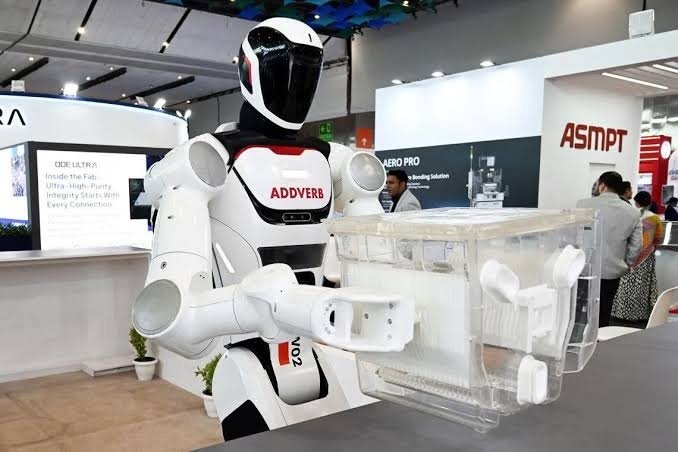
For all the viral videos of humanoid robots running, boxing and doing backflips, the actual commercial reality behind the technology looks a lot smaller than the demo reels suggest. New figures compiled by the International Federation of Robotics show that around 7,000 humanoid robots were sold worldwide in 2025 for industrial and professional service use, a genuinely modest number given how much money and attention the sector has attracted over the past couple of years.
The Frankfurt-based IFR, which has compiled robotics statistics for three decades, is tracking humanoid sales for the first time alongside its much larger figures for conventional industrial and service robots. To qualify as a humanoid under the group’s criteria, a robot needs a human-like appearance and the ability to operate autonomously in an environment built for people, though notably, legs aren’t actually required to meet that definition. The tally draws on data from robot suppliers and national industry associations, and it excludes both consumer-grade and military humanoid robots, while medical robots are tracked as their own separate category entirely.
Put next to the rest of the robotics industry, 7,000 units barely registers. Around 542,000 conventional industrial robots, the kind that weld car parts or move goods around warehouses without any human resemblance, were installed globally in 2024 alone. Add in an estimated 199,000 service robots sold that same year for uses like transportation, hospitality and cleaning, and humanoid robots come out to a genuinely tiny slice of the overall robot population. IFR Secretary General Susanne Bieller put it plainly to Reuters, describing humanoids as still representing just a fraction of the global robot count. The organization’s full 2025 data covering conventional industrial and service robots is due out September 24, which should give an even clearer sense of just how lopsided the comparison really is.
Perhaps the more telling detail in the IFR’s findings is what those 7,000 humanoids are actually being used for. According to Bieller, a substantial share of last year’s sales weren’t going toward productive, revenue-generating work at all. Instead, research institutions and companies were buying them specifically to generate training data that could help improve the AI systems meant to eventually control these robots more capably, essentially treating the hardware as a data-collection tool for AI development rather than a functioning worker in its own right. Carmakers, often cited as the most promising early adopter industry for humanoid robots, are indeed running pilot programs, but Bieller described the actual scale of those deployments as involving single-digit or, at best, double-digit numbers of robots per plant, a far cry from the assembly-line-scale deployment that industry forecasts have been promising for years.
None of this is stopping the projections from staying wildly optimistic. Bank of America Global Research has forecast that humanoid robot shipments could jump to roughly 90,000 units in 2026, and climb all the way to 1.2 million units annually by 2030. That 2026 projection alone works out to roughly thirteen times the IFR’s 2025 tally, though it’s worth noting the bank and the IFR don’t necessarily count units using identical methodologies, which makes a direct comparison somewhat imperfect even if the general gap in scale is clearly enormous either way.
China looms large over almost every version of this story, and for reasons that go beyond just enthusiasm. The country is already the world’s largest market for conventional industrial robots, and its share of global industrial robot installations has grown from roughly one-fifth to more than half over the past decade, according to IFR figures, a dominance built through years of aggressive manufacturing investment. That same momentum is now being redirected toward humanoids specifically. Just last month, China staged a public robot games event featuring humanoid robots running and boxing against each other, the kind of viral, attention-grabbing demonstration that’s become almost a genre of its own on social media over the past year. Behind the spectacle sits real state backing too. China’s National Development and Reform Commission has announced a state-backed venture fund dedicated to robotics and AI, expected to attract close to 1 trillion yuan in investment over the next 20 years, a sustained, long-horizon commitment that suggests Beijing is treating humanoid robotics as a genuine strategic priority rather than a passing trend to chase.
Whatever the eventual outcome, the IFR’s numbers offer something the industry hasn’t really had until now: an actual measured baseline rather than pure speculation and investor enthusiasm. The gap between 7,000 real units sold in 2025 and a forecast of 1.2 million annual units by 2030 is enormous, and closing it will require humanoid robots to clear some genuinely difficult hurdles that have nothing to do with viral marketing, including dramatically reducing hardware costs, improving dexterity to the point where robots can reliably handle the kind of varied, unpredictable physical tasks a real workplace demands, and developing AI control systems capable of operating safely around actual people rather than just performing choreographed demonstrations. Until those problems get solved at scale, humanoid robots look set to remain exactly what this year’s numbers suggest they currently are: an expensive, closely watched experiment rather than a workforce that’s actually showing up to work.