|
Getting your Trinity Audio player ready...
|
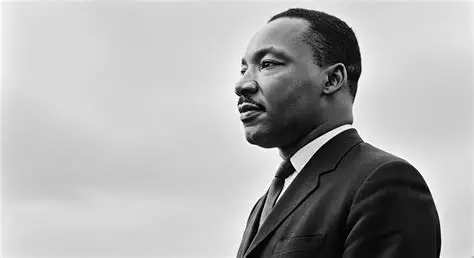
Baptist minister and civil rights leader Martin Luther King Jr. spent much of his public life arguing against one common excuse: that the moment is not yet right. By the time he spoke at Oberlin College in October 1964, he had led the 381-day Montgomery bus boycott and had won the Nobel Peace Prize. Press accounts of that visit report him telling students, “The time is always right to do what is right.” A very close wording appears a year earlier in his Letter from Birmingham Jail, where he wrote that the time is always ripe to do right.
The line has lasted because it answers a thought almost everyone has had. People rarely say they refuse to act on a principle. They say now is not a good time. The economy is uncertain, the audience is not ready, the boss is under pressure, or the issue is too big to fix this month. King’s sentence removes that cover. It does not claim that acting is easy. It claims that waiting for a perfect moment is itself a choice, and usually a poor one.

“The Time Is Always Right to Do What Is Right” – Martin Luther King Jr.
The thinking behind the quote is spelled out in the Birmingham letter. King rejected the idea that time alone heals injustice. In his view, time is neutral. It can be used constructively or destructively, and he observed that people committed to harm had often used it more effectively than people of good will. Progress, he argued, does not arrive on a schedule of its own. It comes through steady effort from people willing to work for it.
Read that way, the quote is less a slogan than a correction to a habit of mind. The belief that things will improve if everyone is patient feels reasonable in the moment. King’s answer is that patience without action leaves the situation in the hands of whoever is willing to act, and that may not be the people you would choose.
Consider an employee who notices that a sales team is describing a product in a way that misleads customers. Raising the issue before the end of the quarter feels awkward, because targets are tight and everyone is busy. Each week of delay seems harmless, and yet the practice continues, customers keep paying for it and the problem grows. The employee who speaks up in week one has a short, uncomfortable conversation. The one who waits until the quarter closes often discovers there was never a better moment.
Waiting is a decision, not a neutral act
The most useful lesson in the quote is that delay has consequences. When people postpone the right action, they often tell themselves they are staying out of it. In practice, they are choosing the status quo. In a business, that can mean tolerating a poor supplier, ignoring a safety concern or leaving an unfair policy in place because changing it is inconvenient.
A simple test helps. Ask what would be different if you acted today instead of next quarter. If the honest answer is that nothing would improve by waiting, the delay is probably a form of avoidance.
Doing what is right does not mean doing everything at once
It would be unfair to read the quote as demanding reckless speed. King was a careful strategist who planned campaigns, trained volunteers and chose his moments with care. The point is not to skip preparation. It is to avoid using preparation as a reason to never begin. The first step can be small: a private word with a colleague, a written concern, a policy review, a decision to stop doing something that is plainly wrong.
There is also a caution built into the word “right.” The quote assumes the person has thought honestly about what is right, not merely what is convenient or popular. Urgency without judgment can do harm, which is why King paired his call to act with discipline and a commitment to nonviolence.
Why this advice still holds true today
Every era has its own version of “not yet.” Organisations postpone hard decisions until the next review. Individuals postpone honest conversations until a calmer time that rarely comes. King’s sentence is useful because it is short enough to remember at the moment of hesitation. When the urge to wait appears, it offers a plain question: if this is the right thing to do, what exactly is the reason to delay? Often there is none, and the discomfort that remains is a cost worth paying.