|
Getting your Trinity Audio player ready...
|
Zeal Akaraiwe, Managing Director and Chief Executive of FMDQ Group, has told regulators and market institutions to build deeper hedging markets now, while the naira is relatively steady, instead of waiting for another shock to force their hand.Nigeria’s foreign exchange market is calm, and the head of its biggest financial market infrastructure group thinks that is exactly the time to prepare for the next storm. He made the case at an investor meeting in Singapore, as reported by Nairametrics on Friday, and his central image was simple: nobody builds during a storm.
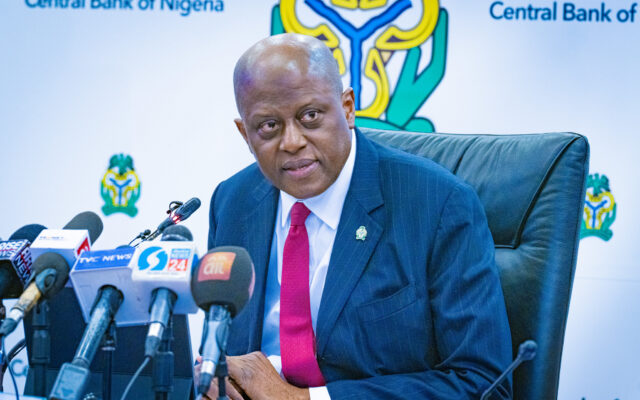
The setting gives the remarks extra weight. The meeting was part of a dialogue organised by the Central Bank of Nigeria (CBN) in partnership with J.P. Morgan, the Nigerian Exchange Group (NGX) and FMDQ, bringing together investors, financial institutions and Nigerians living and working across Asia. It forms part of CBN Governor Olayemi Cardoso’s wider outreach to the region, which includes talks with the Monetary Authority of Singapore, a memorandum of understanding with the Global Finance & Technology Network and planned engagements in Beijing. Cardoso disclosed on Thursday that Nigeria’s net foreign reserves have reached $46 billion and gross reserves $55 billion, and the Singapore event was part of the effort to turn that improved position into longer-term investor interest.
Akaraiwe credited the central bank with building credibility and predictability in the market over the past few years, but argued that stability should be a platform for new products, not a reason to stand still. He distinguished between stability and a static market, and said Nigeria’s next phase should focus on depth. In his view, the country trades large volumes of bonds and foreign exchange but offers a narrow range of instruments. He asked how the market will introduce forwards, cross-currency swaps and eventually options, tools that let businesses and investors fix the price of future currency exchanges or swap one currency’s cash flows for another’s. He also said foreign investors need confidence that they can exit the market under predictable conditions, and he called for technology-driven monitoring of exchange controls and stronger professional competency among market participants.
The figures from FMDQ’s own data show why he is pressing the point. For the week ended October 2, spot transactions accounted for 96.19 percent of total foreign exchange turnover, or $1.632 billion, while derivatives made up only 3.81 percent, or $64.73 million. Total turnover fell 35.41 percent to $1.697 billion that week, but derivatives volume rose 65.09 percent, which suggests interest in hedging is growing from a small base. The same report put the naira at about N1,330 to the dollar and noted that gross reserves remain near an 18-year high. In plain terms, almost all currency trading in Nigeria is immediate buying and selling, with very little of the forward-looking risk management that large markets rely on.
To see why that matters, consider what hedging does. A company that has to pay a supplier in dollars in six months can lock in an exchange rate today through a forward contract, so a sharp fall in the naira does not wreck its budget. A foreign investor who buys naira bonds can protect the dollar value of the return. Without such tools, businesses either absorb the risk or avoid commitments, and investors demand higher returns to compensate. Nigeria experienced the cost of that gap when the currency swung violently in recent years and reserves sank, as Cardoso recalled this week, to a net level below $1 billion at the worst point of the crisis.
FMDQ has been building a foundation, and Akaraiwe’s remarks extend it. The group introduced the cleared USD/NGN non-deliverable forwards market in 2016, which let participants hedge the naira-dollar rate without physically delivering the currency. In 2023 it launched exchange-traded derivatives, including bond futures and naira-settled foreign exchange futures. Akaraiwe took office in June 2026, succeeding Bola Onadele Koko, the founding chief executive who retired after 12 years, and his comments suggest he intends to carry the derivatives agenda forward under the new leadership. The reports reviewed do not say whether FMDQ has timelines or draft rules for forwards, swaps or options, so the proposals remain at the level of intent.
There are reasons for cautious optimism and for caution. On the optimistic side, the central bank has been receptive, and Akaraiwe described it as aggressive in supporting market development. Stronger reserves give policymakers room to experiment with new instruments without immediate pressure on the currency. On the cautious side, deep derivatives markets depend on many participants with different views, and Nigeria’s market is still dominated by a limited set of banks and large investors. Building liquidity requires more corporate users, clear rules on accounting and tax treatment, and regulators willing to allow positions that can go wrong. Options and swaps are powerful tools, but they can also cause losses when misunderstood, which is why Akaraiwe stressed professional competency.
The timing links to wider market nerves. Nairametrics reported that a sell-off on the Nigerian Exchange on Wednesday wiped N1.33 trillion from investors’ wealth in a single day, a reminder that domestic markets can move sharply even when the currency is steady. Reserves have also been supported largely by portfolio inflows, according to the World Bank’s latest Nigeria Development Update, and portfolio money can leave quickly if global conditions change. With the US Federal Reserve raising rates in September and Treasury yields above 5 percent, investors have more choices elsewhere. A market that offers reliable ways to hedge and exit is better placed to keep that money in Nigeria when sentiment turns.
What should businesses and investors take from this? First, hedging is a risk management tool rather than a bet, and companies with foreign currency costs or debts should ask their banks about the instruments available today, including the forwards and futures that already trade. Second, the volumes will show whether the conversation is turning into practice: if the derivatives share of turnover climbs from under 4 percent over the coming months, it will indicate that users are adopting these tools. Third, regulators and infrastructure providers will need to publish details on new products, eligibility and rules, since no business will hedge with instruments it cannot understand or trust.
FMDQ publishes market data and product information on its FMDQ Group website, and Nairametrics has a detailed account of the Singapore remarks in its report on Akaraiwe’s call. Readers who follow Nigeria’s markets, economy and technology stories can find more coverage at BusinessTech Nigeria.
The point of Akaraiwe’s warning is easy to grasp even without market jargon. Nigeria has a rare stretch of calm, strong reserves and a cooperative central bank, and the best moment to build protection is before it is needed. Whether the country uses the window will be visible in the data long before the next shock arrives.