|
Getting your Trinity Audio player ready...
|
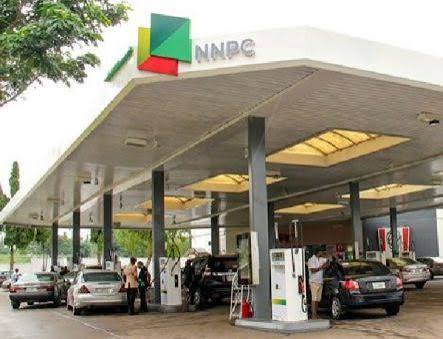
Presidency Says NNPC Stations Will Sell Petrol at Landing Cost for 30 Days
Nigeria’s Presidency announced on Thursday that the Nigerian National Petroleum Company Limited has agreed to give up its retail profit margin on petrol for the next 30 days, a move officials say is meant to ease the strain on households from a global spike in crude oil and fuel prices.
In a statement, presidential spokesperson Bayo Onanuga said the national oil company agreed to forgo its petrol retail margin and sell to Nigerians at cost, to cushion vulnerable households from global price shocks and volatility. He gave a simple illustration of how the arrangement works: if NNPC’s landing cost is ₦1,300 a litre, it will sell at ₦1,300, with commercial vehicles singled out as the main beneficiaries. The measure was detailed at a briefing in Abuja by Taiwo Oyedele, the Minister of Finance and Coordinating Minister of the Economy, who said the discount would first target public transport operators nationwide. The Presidency also confirmed that President Bola Tinubu approved the arrangement.
The announcement lands at a politically charged moment. Fuel prices have climbed sharply this year, and former Vice President Atiku Abubakar has been promising to bring pump prices down by restoring the petrol subsidy. Labour and opposition voices were quick to question whether the new scheme is a subsidy under another name, and the Presidency moved just as quickly to shut that reading down. Oyedele said NNPC selling at a discount must not be misread as a return of the subsidy, which ended on May 29, 2023. In his words, the government is simply selling at cost and not subsidizing consumption. A Presidency statement added that the measure is neither a subsidy nor a price control, but is designed to smooth prices over time rather than suppress them, and that none of the interventions restores a blanket subsidy, which it argued would do longer-term harm for a short-term cure.
The second piece of the package is a proposed price ceiling. Oyedele said the government is negotiating a ceiling of ₦1,350 a litre on the ex-gantry or landing cost of petrol, the price at which fuel leaves refineries and import terminals. He was careful to say that this number is not what motorists will pay at the pump. Under the plan, where costs rise above the ceiling, refiners and importers would absorb the shortfall and recover it later, when crude prices or the exchange rate allow, without breaching the ceiling. Oyedele also said he hoped other marketers would follow NNPC’s lead, noting that the sharp rise in crude and petrol prices is not expected to last long.
The Presidency listed several other measures aimed at shielding pump prices from global swings. Forward sales of crude to domestic refineries are meant to free up committed volumes as production rises, and the government is investing in a National Strategic Fuel Reserve, from which refined products would be released under published rules during a global disruption or when hoarding threatens supply and price stability. On the revenue side, authorities said an excess profit tax will be considered for operators along the energy value chain who take undue advantage of consumers, with proceeds earmarked solely for transport support or vouchers for urban minimum-wage workers. The government also plans to work with the National Assembly on enhanced tax relief for low-income earners under the 2027 Finance Bill, and described a wider package of fiscal measures aimed at bringing inflation down to single digits in the near term. A reform of the 2025 tax law was also listed among the steps.
For drivers, the numbers show how far prices have already moved. According to NNPC’s most recent price list, petrol sells for ₦1,355 a litre in Lagos and Rivers states and ₦1,370 in Abuja, down from a range of ₦1,420 to ₦1,450 before the latest reductions, which followed a cut in Dangote Refinery’s gantry price. If landing cost stays near the ₦1,300 level used in the Presidency’s example, the discount would amount to a modest further reduction rather than a dramatic one, which helps explain why officials stressed targeted relief for transporters rather than a headline price drop for everyone.
Several details remain unsettled. The announcement did not say how NNPC will verify its landing cost, how quickly other retailers will respond, or what happens to the policy once the 30 days end. It also leaves open how the ₦1,350 ceiling would be enforced against importers and refiners who haven’t formally agreed to it, a negotiation that is still ongoing according to the minister. And while the Presidency says the oil price spike should be temporary, global markets have repeatedly swung on developments in the Middle East this year, so the 30-day window could end in either a calmer or a more expensive market than it started in.
What the announcement does establish is a clear political line. The government is trying to offer relief without reopening the fuel subsidy it spent three years defending, using NNPC’s retail margin as the lever. Whether that distinction holds up in the eyes of consumers, unions and opposition parties will be tested by the next round of pump prices.