|
Getting your Trinity Audio player ready...
|
Tinubu Government Announces 30-Day Petrol Discount At NNPC Stations, Prioritises Public Transporters
The Federal Government has announced a 30-day petrol discount at filling stations operated by the Nigerian National Petroleum Company Limited (NNPC), with public transporters given first priority across the country. The announcement is aimed at easing the weight of high fuel costs on commuters, commercial drivers and households.
Finance Minister and Coordinating Minister of the Economy, Taiwo Oyedele, broke the news on Thursday, October 8, 2026, at a press briefing in Abuja. The briefing was called to address growing public concern over petrol prices and the persistent questions about whether the government has quietly brought back the subsidy it removed in 2023.
Oyedele did not dodge that question. He told journalists the discount is not a subsidy. According to him, government is simply arranging for NNPC to sell the product at cost for the period, and the 30 days apply “in the first instance,” which leaves room for the window to be extended if conditions demand it. No extension has been announced, so for now the clock is set at one month.
For millions of Nigerians who depend on buses, tricycles, taxis and other forms of public transport, the focus on transporters is the most important part of the announcement. Fuel is the biggest running cost for commercial operators. When pump prices climb, drivers raise fares almost immediately, and that burden lands on workers heading to offices, traders going to markets and students trying to get to school. By putting transporters at the front of the queue, the government appears to be betting that cheaper fuel for operators will translate into steadier fares for passengers.
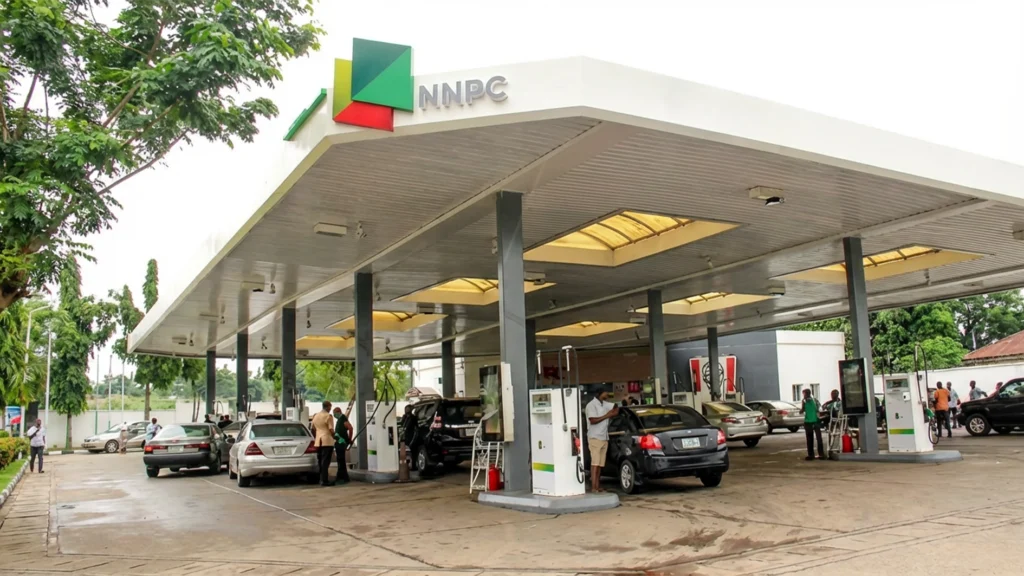
The petrol discount was not the only measure Oyedele unveiled. He also said the government is negotiating a ceiling of ₦1,350 per litre on the ex-gantry, or landing, cost of petrol. Many readers will want to be clear on one point. This does not mean petrol will sell for ₦1,350 at filling stations. The landing cost is the price at which the product leaves the depot, before marketers add their margins, transport and other charges. The ceiling is meant to act as a buffer, so that sharp jumps in global crude oil prices or the exchange rate do not immediately push pump prices through the roof.
The minister described the arrangement as neither a subsidy nor price control. In his explanation, it is a smoothing mechanism designed to flatten out price movements over time. He added that the ceiling would be reviewed every month and that the figures would be published, a promise of transparency that analysts will be watching closely.
A third element of the package is the plan for forward sales of crude oil to domestic refineries. The idea is to let refiners lock in crude prices in advance, so they can plan their operations around agreed figures instead of reacting to every swing in the international market. If it works as intended, that certainty should eventually reach consumers in the form of more predictable petrol prices.
Oyedele also pointed to what government has already done on the tax side. He said petrol has been granted a full waiver of taxes and duties, worth more than ₦3.3 trillion for the year up to September 30, 2026. That waiver, he suggested, shows government is already carrying part of the cost of keeping fuel within reach, even without a formal subsidy.
To understand why this announcement matters, it helps to look at how Nigerians got here. President Bola Tinubu declared on the day of his inauguration in May 2023 that the petrol subsidy was gone. Within hours, long queues formed at stations across Lagos, Abuja, Port Harcourt, Kano and other cities. Pump prices that had hovered around ₦195 per litre in many places shot past ₦500 and ₦600 almost overnight. Transport fares doubled in many routes, and the cost of food and other goods followed.
The government defended the decision then as necessary. Officials argued that the subsidy was draining public finances at an unsustainable rate and that the money would be better spent on infrastructure, education, health care and jobs. Since then, petrol prices have moved up and down with the exchange rate and global crude prices, and the debate over whether the reform has helped or hurt ordinary Nigerians has never really stopped.
The Presidency has maintained that selling petrol below its real cost simply moves the bill somewhere else. In a recent statement, presidential spokesman Bayo Onanuga said that if fuel is sold below its economic cost, which he put at roughly ₦1,200 to ₦1,300, someone has to absorb the difference. He also noted that the old arrangement left NNPC with huge unrecovered costs and, at one point, owing suppliers billions of dollars. That background explains why Oyedele was so careful to say the new discount is not a return to the old system.
The current pump prices show how heavy the pressure still is. NNPC’s latest reported price list puts petrol at ₦1,355 per litre in Lagos and Rivers, and ₦1,370 per litre in Abuja. Those are painful numbers for a commuter who buys fuel every day or a small business owner running generators and delivery vehicles.
Not everyone is impressed by the announcement. Presidential candidate of the African Democratic Congress (ADC), Atiku Abubakar, has rejected the 30-day petrol discount. The reaction fits into a wider political argument that has been building for weeks. In August, Atiku said he would restore some form of petrol subsidy if elected president in 2027. His camp has described the proposal as targeted and temporary, and has said it does not amount to reviving what it calls the open-ended subsidy of the past. The Presidency has pushed back hard, accusing him of shifting positions and challenging him to explain the cost, the beneficiaries and the funding source for any such plan. Atiku’s side has also questioned the government’s handling of petroleum-sector finances, including the large energy-security expenses recorded in NNPC’s accounts.
With the 2027 election season approaching, every fuel price decision is now being read through a political lens. Supporters of the government will say the discount shows it is listening and acting without abandoning reform. Critics will say it is an admission that the pain of high pump prices has become too big to ignore. Both readings are likely to dominate conversations in the coming days.
There are also practical questions that the announcement has not answered, and they will decide whether the discount actually delivers relief. The minister did not say how large the discount will be, what the new pump price at NNPC stations will be, or which outlets will take part. It is also not yet clear how public transporters will qualify, whether they will need to register, or how they will access the lower price at the point of purchase.
Those details matter. Nigeria has a long history of discounted or price-controlled fuel leaking into the open market. When a product is cheaper at one point of sale, middlemen and hoarders are quick to exploit the gap. Analysts say the government will need a clear system to make sure the discounted petrol reaches the drivers it is meant for, and not the black market. That may require identification of transport operators, unions or park managers, as well as monitoring at the stations themselves.
Another question is what happens when the 30 days run out. If the discount ends abruptly and pump prices jump back up, the relief could prove short lived, and fares might spike again. If it is extended, government will have to explain how it plans to fund the arrangement without calling it a subsidy. The minister’s wording leaves both possibilities open, and the monthly review of the landing-cost ceiling suggests officials expect to adjust the plan as they go.
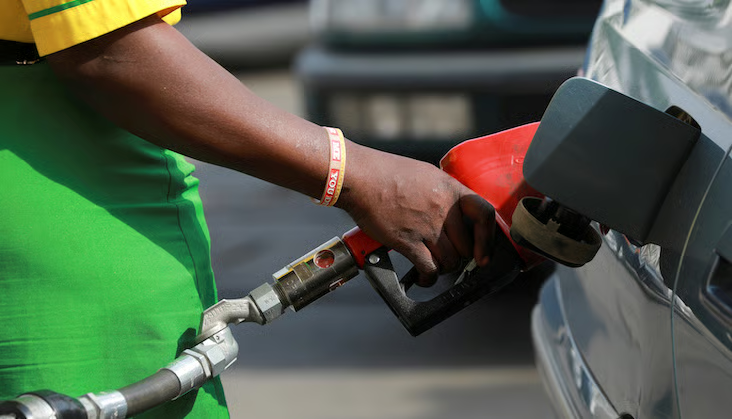
For transport unions and commuters, the immediate hope is simple. Drivers want to see lower prices on the NNPC dispensers, and passengers want to see that reflected in fares. Many operators have been struggling with thin margins, rising spare parts costs and the daily uncertainty of fuel prices. A month of cheaper petrol will not fix all of that, but it could offer a short breathing space if it is implemented smoothly.
Market watchers will also keep an eye on how private marketers and depot owners respond. If NNPC stations sell at a discount while independent stations hold higher prices, motorists will naturally gravitate toward NNPC outlets, which could create new queues and put pressure on supply. The Dangote refinery and other domestic refiners are also part of the picture, given the plan for forward crude sales, and their reaction to the proposed landing-cost ceiling will say a lot about how workable the arrangement is.
For now, the announcement is a clear signal that the government feels the heat from rising living costs and wants to be seen responding, while holding on to its position that the subsidy era is over. Whether the 30-day petrol discount becomes a real turning point or a short-term measure with limited impact will depend on how quickly the details are released and how well it is carried out at the pump.
This is a developing story. NNPC and the relevant government agencies are expected to provide more information on the size of the discount, the new pump price and the process for public transporters to benefit. This report will be updated as those details become available.