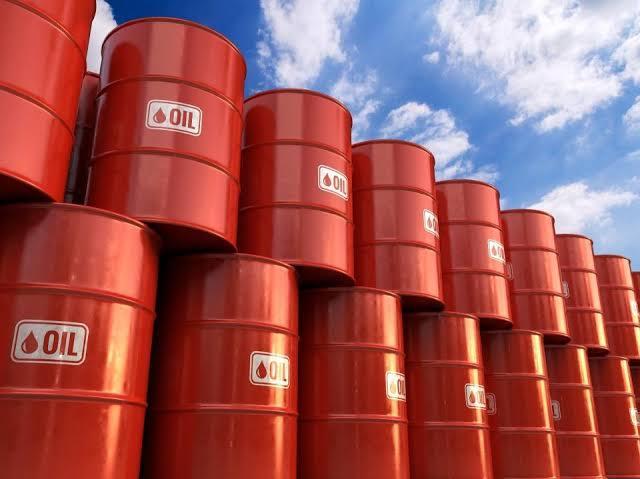
Nigeria Pumps 450.17 Million Barrels of Oil in Nine Months, Averaging 1.65 Million Barrels a Day
Nigeria produced about 450.17 million barrels of crude oil and condensate between January and September 2026, a volume that works out to an average of roughly 1.65 million barrels a day over the 273 days, by simple arithmetic. The total shows how much steadier output has become, yet it also falls short of what the government assumed when it wrote this year’s budget.
The nine-month figure rests on a year that started unevenly. According to the Nigerian Upstream Petroleum Regulatory Commission, January’s average of 1.627 million barrels a day dropped to 1.483 million in February, a 9 percent fall that analysts linked to ageing facilities and theft in the Niger Delta. Output then recovered to 1.564 million in March and climbed to a year high of 1.735 million barrels a day in June, before easing to 1.671 million in July, 1.678 million in August and 1.717 million in September. The September average rose 2.34 percent from August, and the best single day reached 1.84 million barrels, the regulator said this week.
Those monthly figures include condensate. For the quota measured by OPEC, which counts only crude oil, Nigeria produced 1.53 million barrels a day in September, or 102 percent of its 1.5 million barrel allocation, and has stayed at or above the allowance for five straight months, from May through September.
Set against the budget, the nine-month total looks smaller. The 2026 federal budget assumed an oil production benchmark of 1.78 million barrels a day. Applied to 273 days, that implies roughly 486 million barrels for the period, so actual output of 450.17 million is about 36 million barrels, or around 7 percent, below the assumption. That comparison is my own arithmetic, and it includes condensate on both sides. The gap matters because crude sales supply foreign exchange and federal revenue. It was somewhat cushioned this year by oil prices that have often stayed above $100 a barrel during the Iran conflict, so the revenue shortfall from lower volumes was partly offset by higher prices, though that relationship is not guaranteed to hold.
How did the production pattern change over the year? The regulator credits the September improvement to stable operations across most producing assets and the absence of any major pipeline outage, which supported uptime and evacuation of crude. Forcados Terminal led with an average of 320,320 barrels a day, followed by Bonny Terminal at 303,270. The February slump is a reminder that single disruptions can pull the average down sharply, and that unscheduled maintenance, theft and vandalism remain risks.
The longer view is more encouraging. The government says active rigs have risen from fewer than ten in 2023 to more than 70, and crude output excluding condensate hit a then-record 1.35 million barrels a day in September 2023, so this year’s crude-only average is clearly higher. Yet official targets remain far above current volumes: 2 million barrels a day by the end of 2027 and 3 million by 2030. Reaching them would mean sustained gains of around 300,000 barrels a day or more beyond September’s pace, even counting condensate.
For readers, the figures offer three takeaways. First, the volume is real and fairly consistent, with most months between 1.56 and 1.74 million barrels a day. Second, the headline totals depend on how condensate is counted, so always check whether a number includes it. Third, targets and budgets assume far higher output than the regulator has recorded this year, so planning built on those assumptions carries risk. The next signals are October’s production data and whether the new licensing round and dormant-block enforcement translate into additional barrels.