|
Getting your Trinity Audio player ready...
|
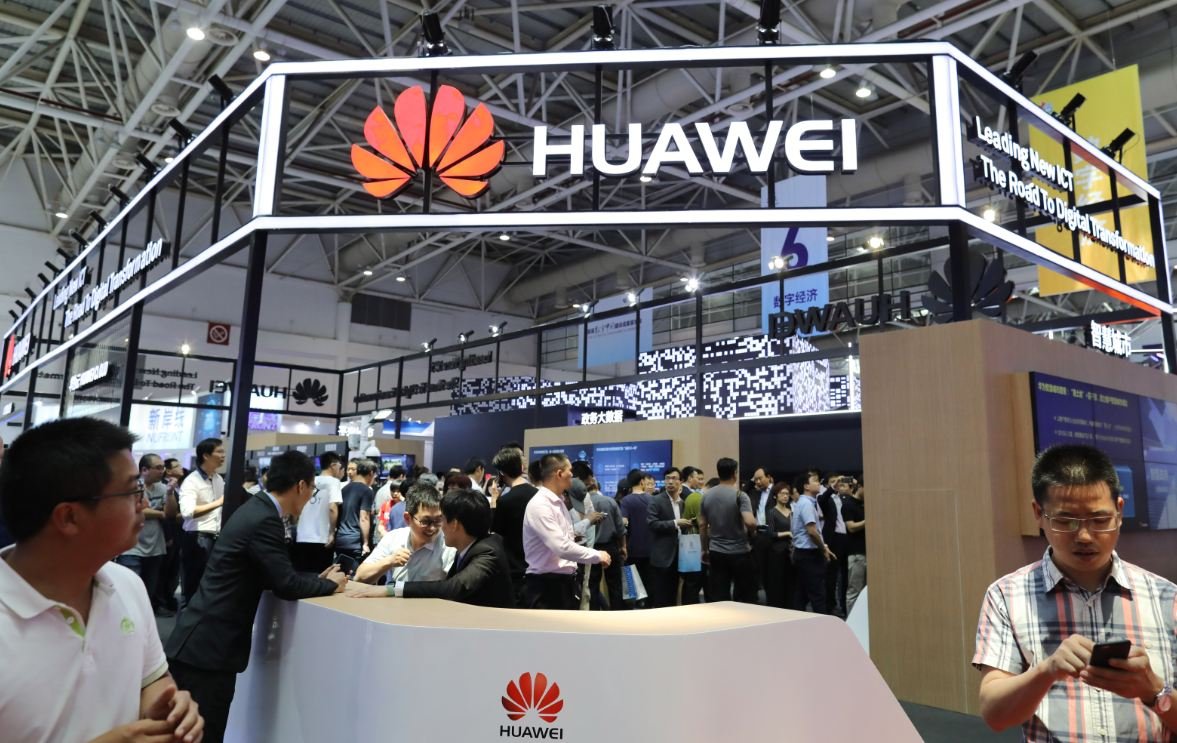
Huawei says it cannot manufacture enough of its Ascend AI processors to meet demand inside China, a supply constraint so severe the company says it has no plans for any major international expansion of chip sales in the near term. Rotating chairman Eric Xu delivered the update at Huawei Connect, the company’s annual conference held this week in Shanghai, laying out an unusually detailed multi-year roadmap aimed at closing the performance gap with Nvidia even as Huawei openly acknowledges its individual chips still trail their American counterparts substantially.
The scale of the demand Huawei is describing reflects just how constrained China’s domestic AI compute market has become. Morgan Stanley estimates that market could reach 646 billion yuan, roughly $96 billion, by 2030, and Nvidia’s most advanced Blackwell processors remain unavailable in China under current US export restrictions, leaving Chinese AI developers with a narrower field of viable domestic alternatives than global competitors enjoy. Huawei has responded to that squeeze partly through pricing, recently raising the cost of its Ascend 950DT chip by 60 percent, citing tight component supply directly to customers rather than absorbing the cost pressure internally.
Rather than simply trying to outmuscle Nvidia chip for chip, a fight Huawei openly concedes it’s currently losing, the company’s strategy leans heavily on system-level engineering. Bernstein analysts estimate Huawei’s next-generation Ascend 950 delivers only around 6 percent of the raw computing power of Nvidia’s upcoming VR200 superchip, a gap that would be disqualifying on its own if individual chip performance were the only thing that mattered. Huawei’s bet is that it doesn’t have to be. The company has built what it calls a SuperPod architecture capable of linking as many as 15,488 Ascend processors into a single connected cluster using proprietary UnifiedBus networking technology, which Huawei claims moves data between chips considerably faster than Nvidia’s competing NVLink interconnect. At Huawei Connect, the company unveiled an even more ambitious follow-up architecture called Peerium, designed to connect up to one million processors as a single coordinated system, a scale that, if actually realized, would dwarf anything currently running on Nvidia’s competing infrastructure.
That system-first philosophy extends into how Huawei is framing its product roadmap going forward. Xu confirmed the company has pulled forward its next-generation Ascend 960DT chip to a Q1 2027 launch, three full quarters ahead of its original schedule, while also laying out plans for Ascend 970 in 2028 and further iterations in 2029, with each new generation targeting roughly double the computing power of its predecessor. Xu specifically predicted that by 2028, the Ascend 970 could deliver interconnect speeds more than double what Nvidia’s current technology offers, a claim that, if it holds up, would represent a genuine reversal in at least one specific technical dimension even as raw single-chip performance likely remains behind for years to come. Huawei is also addressing a separate, less glamorous bottleneck: the company says roughly 40 percent of AI training time currently gets consumed by communication overhead between chips rather than actual computation, meaning faster interconnects and better cluster design could meaningfully boost effective training throughput without requiring a single additional Ascend chip to roll off the production line.
Morgan Stanley analyst Charlie Chan captured the underlying logic driving this approach, noting that system-level competitiveness now matters more than raw chip specifications, with the effective performance gap narrowing through multi-die design, advanced packaging, rack-scale system architecture, optical networking, and tighter software-hardware co-optimization working together. Bernstein analysts led by Qingyuan Lin offered a complementary read, suggesting Huawei’s willingness to publicly detail such a specific multi-year roadmap signals genuine confidence in the resilience of its domestic foundry supply chain, a notable statement given how much US export controls have specifically targeted Chinese access to advanced chipmaking equipment.
Software remains Huawei’s most stubborn disadvantage, and one that raw hardware roadmaps alone can’t fully solve. Nvidia’s CUDA platform has spent nearly two decades becoming the default software layer AI developers build and train models on, and Huawei’s competing Cann platform reportedly still struggles to match CUDA’s ease of use and overall developer efficiency, according to industry insiders cited by the Financial Times. Huawei has responded by dispatching its own engineers directly to major Chinese AI developers, including Baidu, iFlytek, and Tencent, to help those companies actively migrate existing workloads from CUDA over to Cann, a hands-on approach that reflects just how much friction remains in getting developers to switch platforms even when the underlying hardware becomes more competitive.
On the international sales question, Xu was fairly direct about where Huawei currently stands. The company does supply a limited number of overseas markets where demand for its chips remains strong, but volumes to those markets stay deliberately low given how tightly domestic Chinese demand already consumes available production capacity. That constraint effectively means Huawei’s near-term competitive battle with Nvidia is playing out almost entirely within China’s own borders for now, rather than in the broader global AI infrastructure market where Nvidia continues to dominate largely unchallenged. Huawei claims its Ascend chips already hold a larger share of China’s domestic AI chip market than Nvidia does, a milestone made easier to reach given how severely US export restrictions have already limited Nvidia’s access to that same market in the first place.
For China’s broader AI industry, Huawei’s supply constraints carry consequences that extend well beyond one company’s balance sheet. Even aggressive estimates suggest China’s domestic AI compute production is growing at a roughly linear pace, while the underlying demand for AI compute continues expanding exponentially as models grow more sophisticated and data-hungry, according to analysis from the Council on Foreign Relations. That mismatch means China’s overall compute constraint is likely to deepen over time rather than ease, regardless of how quickly Huawei manages to scale Ascend production or how cleverly it engineers around individual chip limitations through clustering and interconnect innovation. Whether Huawei’s system-level strategy proves sufficient to meaningfully close that gap, or whether it simply becomes the best available option within a market still fundamentally starved for compute capacity, will likely become clearer as the company’s accelerated Ascend 960DT launch and its more distant Peerium architecture move from roadmap announcements into actual deployed hardware over the coming two to three years.
For more coverage of AI chip manufacturing and the global semiconductor industry, visit Business Tech.