
|
Getting your Trinity Audio player ready...
|
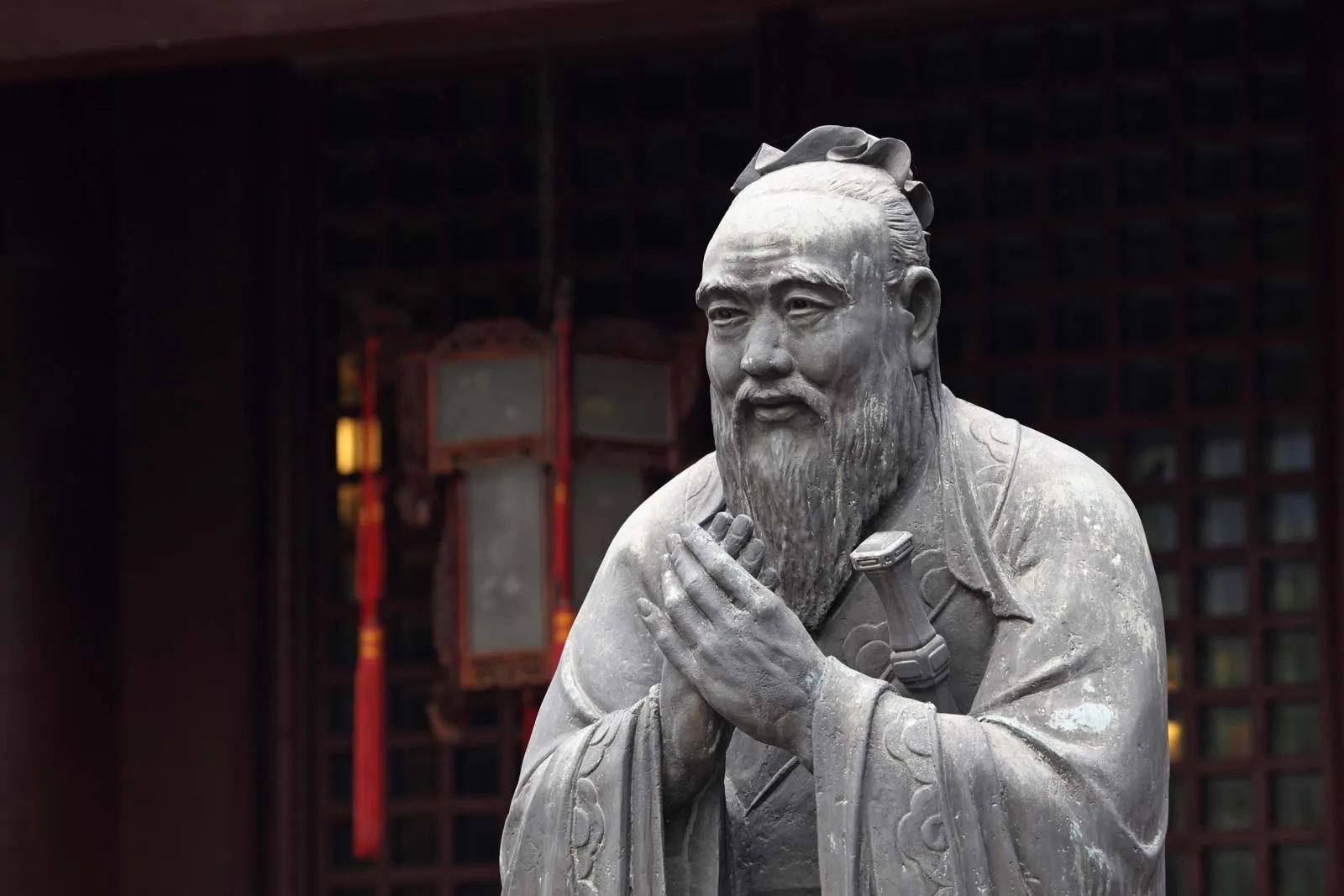
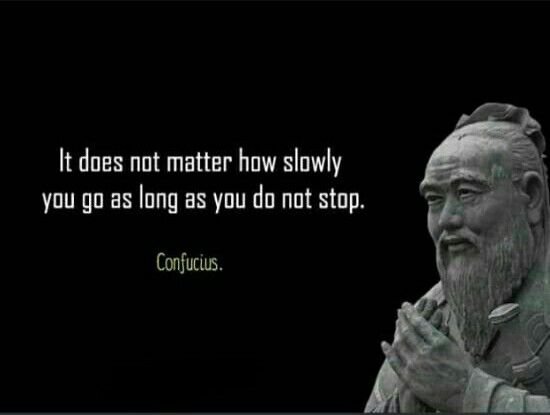
The line is everywhere: “It does not matter how slowly you go as long as you do not stop.” It shows up on gym walls, in graduation speeches, and at the bottom of a thousand social media posts, always credited to Confucius. The exact modern wording is a paraphrase rather than a direct translation, but it is not invented out of nothing. It traces back to a real passage in the Analects, where Confucius mourns his finest student, Yan Hui, who died young, saying that he had only ever seen the young man advancing and never once seen him stop.
That original context matters, because it changes what the quote is really about. It is not a comfortable reminder that slow progress is fine. It is a teacher’s grief over a student whose entire identity, in his master’s eyes, was built on the fact that he never stopped moving forward, even when that movement was gradual and largely invisible to everyone else.
Slowness and seriousness are not opposites
There is a common assumption that speed signals commitment and slowness signals a lack of it. Confucius’ observation about Yan Hui pushes against that. What he noticed and admired was not how quickly his student moved, but the fact that the direction never reversed. A person can advance slowly and still be taking their goal more seriously than someone sprinting toward it in short, inconsistent bursts.
Consider two people learning a new skill for their business, say, digital marketing. One studies intensely for a week, gets overwhelmed, and quits for a month before starting again from scratch. The other studies for twenty minutes most evenings, learns less in any single week, but never has a month where they are back at zero. A year later, the second person is almost always further ahead, not because they moved faster, but because they never had to restart.
The quote is often misapplied as comfort for anyone who feels behind, when its sharper use is as a warning against stopping altogether. It is worth being honest about the difference between genuinely slow progress and a pattern of starting and quitting disguised as slow progress. If a goal has been abandoned and picked up again multiple times, the issue is rarely speed. It is usually the stopping.
Yan Hui’s advancement was apparently unremarkable to watch day by day, which is exactly the point. Confucius did not praise a dramatic leap. He praised a pattern sustained over time. In business, a slow but uninterrupted improvement, a slightly better process each month, a small addition to savings each quarter, a modest gain in a skill each week, tends to produce results that occasional intense effort rarely matches, because compounding requires continuity more than it requires intensity.
Keep moving even when the progress feels too small to matter
One of the harder parts of applying this idea is that slow movement rarely feels significant in the moment it happens. It is tempting to judge a week or a month in isolation and conclude that nothing meaningful occurred. Confucius’ praise of Yan Hui was only possible in hindsight, looking back over a longer stretch of consistent effort. The lesson is less about feeling motivated on any given day and more about protecting the habit of continuing, even on days when the movement is too small to notice.
This does not mean treating every slow month as automatically acceptable. It means separating deliberate, if gradual, progress from the pattern of quietly giving up and calling it a pause. At work, this might mean protecting a small, repeatable habit, one difficult conversation had per week, one process improved per month, rather than waiting for a large block of time to tackle everything at once. In personal development, it can mean measuring progress over a year rather than a week, since a slow but unbroken pattern often looks unremarkable at close range and only becomes visible from a distance. In relationships, small consistent effort, checking in regularly rather than making one grand gesture, tends to build trust in the way Confucius seemed to value most: not the size of the step, but the fact that it was never followed by a full stop.
Why this advice still holds true today
Confucius was not offering comfort to people who felt behind. He was describing what actually distinguished his best student from everyone else, not speed, but the complete absence of stopping. That distinction has not aged. In a world that often rewards visible bursts of effort over quiet consistency, the harder and more valuable discipline remains the one Confucius noticed almost twenty-five centuries ago: movement that never fully halts is rare, and it is usually the thing that separates people who eventually arrive somewhere meaningful from people who simply tried very hard for a while.