
|
Getting your Trinity Audio player ready...
|
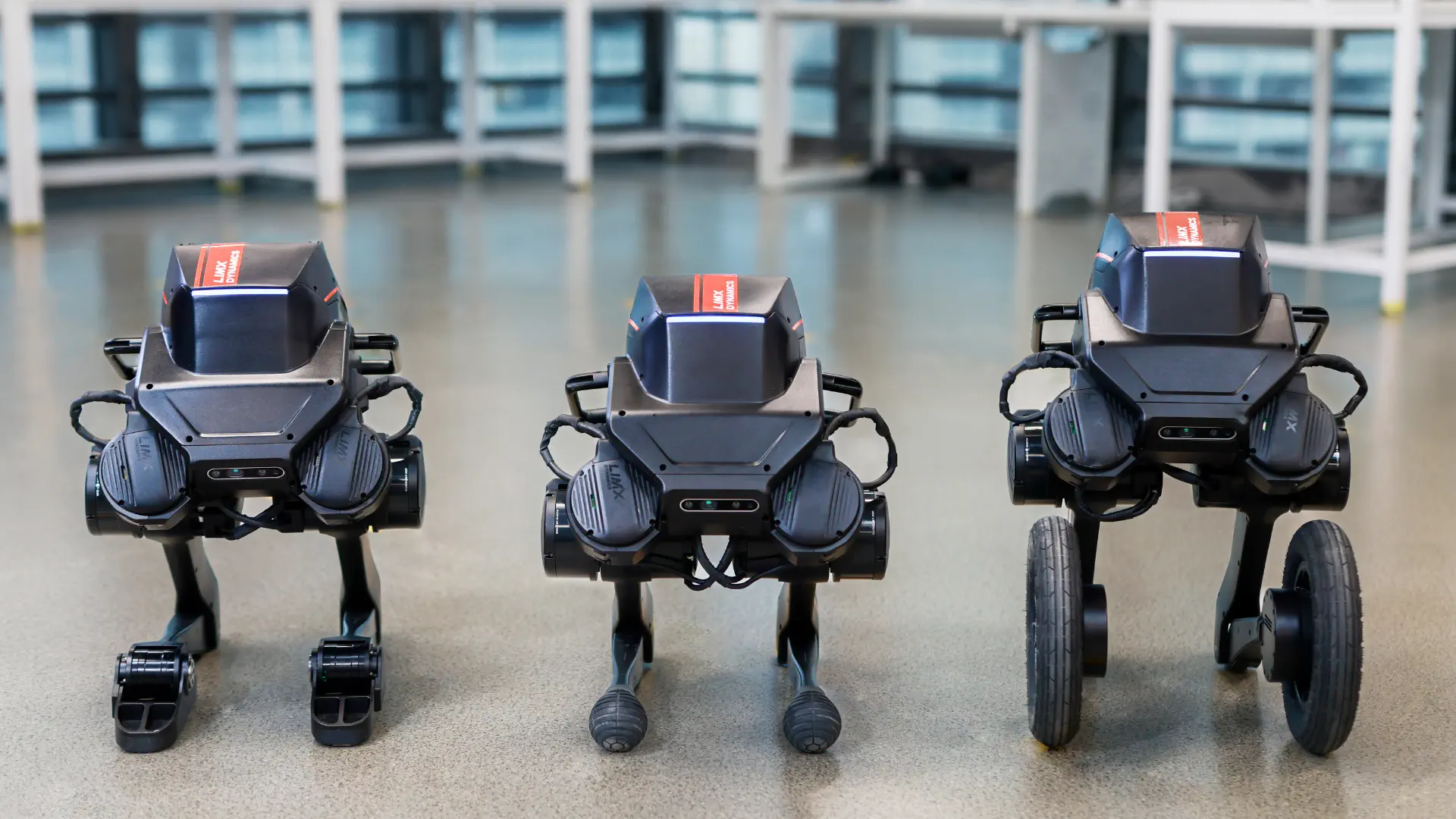
A small, two-legged robot from a Shenzhen-based robotics company has been drawing comparisons to one of science fiction’s most recognizable machines, and once you see it move, the resemblance is hard to unsee. LimX Dynamics’ Tron 1 biped robot has a squat, forward-leaning stance, a rounded sensor-equipped head and a walking gait that closely echoes the AT-ST walker from Star Wars: Return of the Jedi, the imperial “chicken walker” that stomped through the forest moon of Endor decades before real-world robotics caught up to the design.
Unlike the fictional AT-ST, which existed purely as movie-making effects work from Industrial Light & Magic, the Tron 1 is a real, commercially available machine, priced at roughly $25,000. LimX Dynamics demonstrated the robot’s mobility at CES earlier this year, where reviewers noted that its out-of-the-box capabilities were largely limited to preprogrammed movements and remote-control operation rather than fully autonomous behavior, a reminder that even robots with striking sci-fi looks are still working through the same practical limitations facing the broader humanoid and legged robotics industry.
LimX Dynamics is part of a wave of Chinese robotics companies that has expanded rapidly over the past few years, working across a range of form factors that includes biped walkers, full humanoids and wheeled quadrupeds. The company’s product lineup extends beyond the Tron 1 into more agile platforms as well. Its P1 Biped robot, also heavily inspired by the AT-ST’s distinctive silhouette, has been shown in demonstration footage absorbing repeated physical impacts without losing its footing, while the company’s W1 quadruped robot takes a different approach entirely, standing up from a four-legged wheeled stance to walk upright on two feet when the terrain calls for it. A separate model has demonstrated the ability to hop over low fencing, climb stairs and clear obstacles, according to coverage from New Atlas, showing a level of dynamic agility that has become something of a competitive benchmark among Chinese robotics firms racing to outdo one another in viral demonstration videos.
That race has become increasingly public and increasingly theatrical. LimX Dynamics operates in a competitive landscape alongside better-known Chinese robotics names like Unitree, which has built a reputation for releasing viral videos showcasing its own machines performing feats such as parkour vaults, martial arts routines and all-terrain movement that regularly leave social media audiences questioning whether the footage has been digitally enhanced. China’s state broadcaster leaned into that momentum directly this year, featuring humanoid robots from companies including Unitree performing choreographed martial arts routines during the country’s Spring Festival Gala, an event that reportedly drew 23 billion views across all platforms and reflects just how central robotics has become to China’s broader industrial and cultural messaging heading into its current five-year economic plan.
The AT-ST comparison specifically has followed legged robotics for years, long before Chinese companies entered the space so aggressively. Researchers at Oregon State University famously dressed their bipedal research robot Cassie up as an AT-ST for Halloween in 2018, leaning into the same visual similarity between a compact, top-heavy walking machine and the fictional imperial walker. Hobbyists have taken the resemblance even further, with at least one mechanical engineer building a fully walking, unlicensed AT-AT replica using 3D printing, and another builder constructing a life-sized AT-ST from scrap metal complete with a working cockpit and sound effects. The persistence of that comparison across nearly a decade of robotics projects suggests the resemblance isn’t a coincidence of marketing but a fairly natural convergence, since a compact walking robot balancing its weight over two or four legs tends to land on broadly similar proportions regardless of who builds it.
What separates the Tron 1 and its LimX Dynamics siblings from earlier hobbyist AT-ST tributes is that these are genuine commercial products aimed at research labs, robotics developers and companies looking to prototype legged locomotion applications, not novelty builds designed purely to reference a movie. The company markets its platforms as modular tools for studying bipedal and quadrupedal movement, with the Tron 1’s design specifically built to allow its foot ends to be swapped between walking and rolling configurations depending on the task, giving researchers flexibility that a purpose-built movie replica was never designed to offer.
Broader industry context suggests this kind of visually striking, easily shareable robot demonstration has become a deliberate strategy across the Chinese robotics sector, not just an accidental byproduct of engineering choices. With homegrown robotics firms racing for both domestic market share and international attention amid intensifying competition with Western companies like Tesla and Boston Dynamics, videos that generate immediate visual comparisons, whether to Star Wars, kung fu films, or viral internet moments, tend to travel further and faster than dry technical demonstrations ever could. That dynamic helps explain why a company like LimX Dynamics might not mind the AT-ST comparisons at all, given how much free attention the resemblance has generated across social media and tech coverage alike.
For now, the Tron 1 remains a genuinely capable but still limited research and prototyping platform rather than anything approaching the autonomous, weaponized walker of science fiction. Its resemblance to the AT-ST is a visual coincidence rooted in the practical mechanics of bipedal balance rather than an intentional design homage, even if the internet has been more than happy to draw the connection anyway. Continuing coverage of how Chinese robotics companies are shaping the global humanoid and legged robot market is available on Business Tech. Additional detail on the Tron 1’s specifications and pricing is available through LimX Dynamics’ official site, and a hands-on look at the robot’s capabilities can be found through CNET’s coverage of the platform.