|
Getting your Trinity Audio player ready...
|
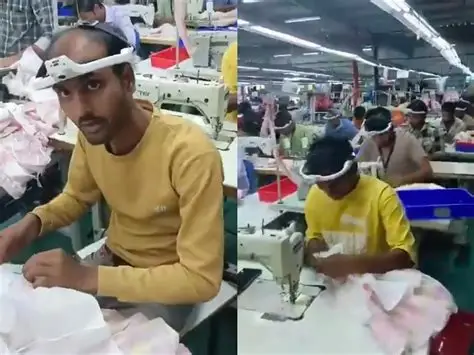
Across factories, homes and roadside stalls in India, thousands of workers have begun strapping cameras to their foreheads and wrists to record the small, precise movements of everyday physical labor, from folding towels to slicing mangoes to stringing flower garlands. The footage is not for social media or personal archives. It is being sold to AI companies racing to build humanoid robots capable of navigating the physical world with the same dexterity as a human worker, and the industry built around collecting it has grown quickly enough that it now touches hundreds of thousands of informal workers across the country.
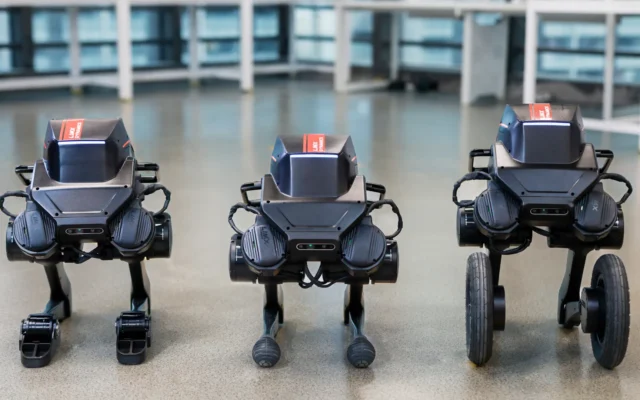
The underlying technical problem driving this effort is straightforward to explain even if it is difficult to solve. AI chatbots and image generators have been trained on enormous volumes of digital text and images scraped from the internet, but teaching a robot to physically manipulate objects in the real world requires an entirely different kind of data, first-person video showing exactly how a human hand grips, twists, folds or lifts something, known in the industry as egocentric data. Developers believe that feeding enough of this footage into specialized AI models will eventually allow robots to copy human physical behavior with the same fluency that language models copy human writing.
The scale and specificity of the work involved is considerable. In an industrial town in southern India, a 28-year-old named Naveen Kumar spends his workday folding hand towels hundreds of times, following a precise, regimented sequence designed to generate exact point-of-view footage for a client. According to reporting picked up by Yahoo from the Los Angeles Times, Kumar must pick up each towel from a basket using only his right hand, shake it straight with both hands, fold it neatly in three specific steps, and place it in a designated corner of the desk, all within a set time limit, restarting the entire sequence if he takes too long or misses a step. His employer, a data labeling company called Objectways, sent 200 towel-folding videos captured this way to a client in the United States.
Similar work is happening in home settings as well. Al Jazeera documented workers like Nagireddy Sriramyachandra, who records herself slicing mangoes in her Chennai kitchen while wearing a smartphone mounted on her head, sending the footage through a specialized app to an AI data company. Her device alerts her when her hands drift out of frame, prompting her to reposition herself mid-task. She told Al Jazeera she earns roughly 250 rupees an hour, about $2.60, for the work, and joked that she may end up with a robot of her own in the future built partly from footage like hers.
The companies coordinating this labor have expanded well beyond a single factory or app. According to reporting from explainx.ai, Objectways runs structured data collection operations recruiting workers through local networks and briefly training them on how to keep their hands properly in frame throughout a recording session. Pronto, a Bengaluru-based home services platform, has launched pilot programs equipping service workers with outward-facing body cameras, treating the data collection as an add-on to existing gig work rather than a separate job entirely. The recorded tasks are not chosen randomly. They cluster around physical activities that map directly onto the environments where humanoid robots from companies including Figure AI, Agility Robotics and 1X Technologies are currently being piloted, suggesting the footage feeds a fairly direct pipeline from human labor to robotic training data.
This pattern is not unique to India. Similar efforts have taken root in Los Angeles, where gig work platform Instawork and startup Sunain have recruited hundreds of contributors to wear headsets and wrist cameras while cooking, cleaning and performing other household tasks, according to reporting from the Los Angeles Times. Sunain’s approach differs somewhat from the highly scripted Indian factory model, encouraging contributors to record natural behavior, including interruptions like pausing a cooking task to turn off a running tap, on the theory that robots eventually need to handle exactly that kind of unscripted real-world interruption rather than only following a fixed sequence of steps. Scale AI, backed by Meta, has reportedly gathered 100,000 hours of similar footage for robotics training, while competitor Micro1 employs people internationally to record themselves performing household duties.
The rapid growth of this industry has not gone unnoticed by Indian policymakers, and it has surfaced genuine concerns about who ultimately benefits from the work. NITI Aayog, the Indian government’s policy think tank, has noted that most public discussion of AI’s effect on employment focuses narrowly on white-collar professionals, with comparatively little attention paid to how the technology intersects with India’s roughly 490 million informal workers, who form a substantial share of the country’s overall economy. That gap matters because much of the physical data collection work described above falls squarely within the informal labor sector, often paying by the hour with little job security or long-term structure, even as the footage it produces feeds directly into products that could eventually automate similar tasks altogether.
That irony has not been lost on workers or online observers. Viral posts documenting the practice have drawn pointed reactions, with commenters noting the strange loop of workers being paid to document their own labor in enough detail that a machine could eventually replace them. Whether that outcome actually materializes, and on what timeline, remains genuinely uncertain, since building a humanoid robot capable of reliably performing the full range of tasks captured in this footage is a considerably harder engineering problem than collecting the training data itself. For now, the data collection economy continues expanding largely because the underlying labor is inexpensive and the resulting footage remains in high demand from robotics labs racing to solve the physical dexterity problem that has, so far, proven far more stubborn than teaching AI to write or generate images.
For workers like Kumar and Sriramyachandra, the arrangement offers straightforward, if modest, income in the present, even as it quietly builds the technical foundation for a robotics industry that some participants openly acknowledge could eventually compete with the very tasks they are being paid to demonstrate. Continuing coverage of how AI training methods are reshaping global labor markets is available on Business Tech. Additional reporting and photography from inside these operations is available through Al Jazeera’s coverage, and further detail on similar practices in the United States can be found through the Los Angeles Times’ reporting on the industry.