Unihertz Titan 2 Elite Brings Back the Physical QWERTY Keyboard on a Real 5G Smartphone
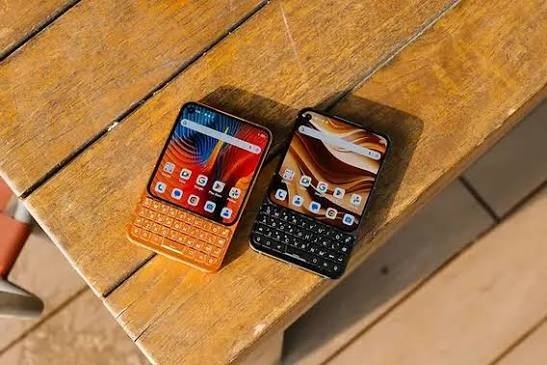
For anyone who’s spent the past decade quietly missing the tactile click of a physical keyboard on their phone, Unihertz has built something that finally takes that nostalgia seriously rather than treating it as a novelty. The Titan 2 Elite is a genuine 5G Android smartphone with a full, built-in QWERTY keyboard, not a snap-on case, not an accessory, but a keyboard baked into the hardware from the ground up, running alongside specs that actually hold up against modern mid-range phones rather than feeling like a compromise you accept for the sake of physical keys.
Unihertz is marketing the device as the world’s smallest 5G smartphone with a QWERTY physical keyboard, and the compact footprint backs that claim up. The Titan 2 Elite measures 117.8 by 75 by 10.4 millimeters and weighs 163 grams, noticeably lighter and more pocketable than earlier entries in Unihertz’s Titan lineup, which had leaned toward ruggedized, field-ready builds rather than something meant for everyday carry. That shift in priorities shows up in the materials too. The phone’s mid-frame is built from aerospace-grade aluminum, finished through more than twenty separate precision manufacturing steps that include six CNC machining passes and two rounds of anodizing, a level of build detail that’s unusual for a niche keyboard phone and suggests Unihertz is positioning this as a premium device rather than a budget curiosity.
Up front, the Titan 2 Elite pairs a 4.03-inch AMOLED display running at 1080 by 1200 pixels, working out to 401 pixels per inch, with a 120Hz refresh rate for smoother scrolling and animation than you’d typically expect on a phone this size. Below the screen sits the actual keyboard, which Unihertz describes as a more classic, phone-style QWERTY layout designed to feel immediately familiar to anyone who used a BlackBerry or similar device during that era, while also being tuned to help people type faster and more accurately with real tactile keys rather than a glass surface. The keyboard isn’t limited to basic typing either. Each letter key supports customizable short-press and long-press shortcuts, the entire keyboard surface doubles as a capacitive touchpad for scrolling and moving the text cursor without touching the screen, and there’s a dedicated mouse mode for finer touchpad control. A long slide gesture across the keyboard turns on backlighting for typing in low light, and the keyboard supports input across ten languages, including English, French, German, Italian, Spanish, Portuguese, Russian, Dutch, Japanese and Chinese.
Under the hood, Unihertz is offering the Titan 2 Elite in two configurations. The standard Elite runs on MediaTek’s Dimensity 7400 5G chipset paired with 12GB of RAM and 256GB of storage, while the higher-tier Elite Pro steps up to the more powerful Dimensity 8400 5G chipset with the same 12GB of RAM but doubled storage at 512GB. Both versions ship with Android 16 out of the box and come with a commitment to five years of software updates, a notably long support window for a device coming out of the crowdfunding and niche-hardware space rather than a mainstream flagship line. Camera-wise, both models carry a dual 50-megapixel rear camera setup, and connectivity is thoroughly modern despite the retro-inspired form factor, including Bluetooth 6.0, NFC, an infrared blaster for controlling other devices, dual-band GPS with support for GLONASS, BeiDou and Galileo satellite systems, USB Type-C with OTG support, fingerprint unlock, and FM radio. There’s no 3.5mm headphone jack and no wireless charging, trade-offs that seem reasonable given how much hardware Unihertz has packed into a chassis this compact. On the network side, the Titan 2 Elite supports an extensive list of 5G NR bands alongside legacy 4G, 3G and 2G bands, positioning it as a phone that should work across a wide range of carriers internationally rather than being tied to a specific region.
The Titan 2 Elite follows Unihertz’s earlier Titan 2, a related but distinct device that launched with a 4.5-inch square screen, a single 50-megapixel camera, a secondary rear display for selfies, and a considerably larger 5,050mAh battery, running on Android 15 rather than 16. The Elite variant trades some of that battery capacity and screen real estate for a smaller, lighter build with a sharper AMOLED panel and a more refined keyboard layout, suggesting Unihertz is using the Elite branding to signal a step up in build quality and display technology rather than simply iterating on battery size or raw specs.
Unihertz itself isn’t a newcomer improvising its way into keyboard phones. The company was founded in 2006 as an independent design house before launching its own consumer smartphone brand in 2016, and it has spent years specifically refining the QWERTY keyboard phone format through its original rugged Titan devices before arriving at this more mainstream-friendly Elite version. That history matters in a market segment that’s largely been abandoned by major manufacturers. BlackBerry stopped making its own hardware years ago, and outside of niche crowdfunded projects, physical keyboard phones have mostly disappeared from the market entirely, leaving a small but persistent community of people who prefer tactile typing with essentially nowhere to turn for a modern device.
The Titan 2 Elite is currently being offered through a Kickstarter campaign, with early backer pricing reportedly starting around $389, well below what a comparable flagship-tier Android phone with this level of build quality would typically cost at retail, though crowdfunding pricing often shifts once a device moves to general retail availability. For a certain kind of user, particularly people who do a lot of messaging, note-taking or quick text-heavy work on their phone and have grown tired of software keyboards eating into screen space, the Titan 2 Elite represents one of the few genuinely modern options left that doesn’t ask them to give up 5G connectivity, a recent Android version, or reasonably current camera hardware just to get real keys back under their thumbs. More details on specifications and current availability are listed directly on Unihertz’s official product page for the device.