|
Getting your Trinity Audio player ready...
|
Nigerian Banks Adjust MPR-Linked Loan and Deposit Rates After CBN Rate Cut: What Customers Need to Know
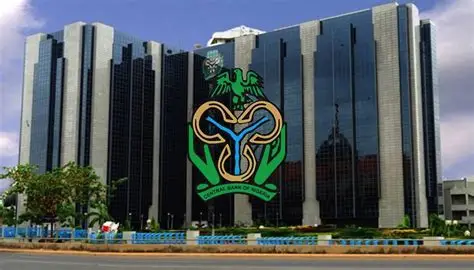
Some Nigerian banks have started telling customers how the Central Bank of Nigeria’s rate cut will change what they pay on loans and earn on deposits, and the answer depends heavily on how each product is priced. Stanbic IBTC Bank has said it is repricing every product tied to the Monetary Policy Rate downwards, effective September 22, the day the central bank cut the benchmark by 350 basis points to 23 percent from 26.5 percent. Other lenders have been quieter, and at least one large bank official has said there are no immediate plans to lower loan rates. The result is a patchwork, and customers who read their notices carefully will find out sooner what applies to them.
The key phrase in the Stanbic IBTC notice is “linked to the MPR.” Banks do not lower every rate when the policy rate falls. They adjust only the products whose pricing is contractually tied to the benchmark, such as variable-rate loans quoted as the policy rate plus a margin, and savings accounts whose minimum rate is set as a share of the policy rate. Fixed-rate loans signed before the cut keep their agreed rate. A fixed deposit already running keeps its agreed return until maturity, unless the terms say otherwise. For many customers, the difference between a variable and a fixed product explains why a friend at another bank sees a change and they do not.
On the savings side, the numbers are clearer. Under central bank rules, the minimum savings deposit rate is 30 percent of the policy rate. That figure was 7.95 percent when the benchmark stood at 26.5 percent and is 6.90 percent at the new level, a drop of 1.05 percentage points. Ecobank Nigeria has already cut rates on four naira savings products, with its All Savings Account moving to 6.90 percent from 7.95 percent. For someone holding N2 million in a savings account at the minimum rate, annual interest falls from about N159,000 to about N138,000, a loss of roughly N21,000 a year. With inflation at 15.39 percent in August, the real return on that money was already negative and is now more so.
The pressure extends beyond ordinary savings. The central bank lowered the rate it pays banks on overnight deposits, the Standing Deposit Facility, to 20 percent from 22 percent. The Financial Market Dealers Association has said that banks and fund managers now have less reason to pay generous rates for very short-term money when they can park it at the central bank at a risk-free rate. That points to lower returns over time on call accounts, fixed deposits and money market funds, and Stanbic IBTC’s notice listed variable-rate savings, fixed deposits and call accounts among the products customers might see affected. Existing fixed deposits are generally safe until maturity, but the rate offered at renewal is likely to be lower.
The picture for borrowers is more cautious. In principle, the new benchmark should bring down the cost of variable-rate loans. Before the cut, prime lending rates at many banks were around 27 to 30 percent, and the Manufacturers Association of Nigeria has warned they could stay near those levels. Central bank figures cited in market reports show the average maximum lending rate eased to about 29.19 percent in August from 33.16 percent in July, so some easing was under way even before the decision. A simple example shows what repricing would mean. If a loan were priced at the policy rate plus four percentage points, its rate would have been 30.5 percent before the cut and would be 27 percent after it. On a N10 million loan, that is a drop of about N350,000 in annual interest. That illustration is for explanation only and does not describe any particular bank’s pricing.
Why might some banks move more slowly on loans than on savings? The main reason is that a bank’s cost of lending is not only the policy rate. It also reflects what it pays for deposits, its operating costs, the chance a borrower will not repay and the returns it can earn from government securities. The 182-day OMO bill cleared at 16.92 percent on October 6 and the one-year Treasury bill’s true yield is close to 18.8 percent, so banks have attractive alternatives to lending. Reserve requirements of 45 percent for commercial banks also reduce the amount available to lend. These factors mean a bank can lower a benchmark-linked rate where it must, while holding firm on products where it has discretion.
Customers can take several practical steps. Start by reading any notice from your bank about rate changes, since many are sent by email or text message and some are posted on the bank’s website. Check your loan agreement to see whether the rate is fixed or variable, how it is calculated and whether the bank must notify you before changing it. If your loan is variable and the rate has not changed, ask in writing why not and when the next review is due. Compare offers from several lenders before taking a new loan, because the gap in pricing between banks can be wide and fees can change the total cost. The central bank has also started publishing lending rates for deposit money banks, which gives borrowers a reference point when negotiating. Rates and policy notices are available on the Central Bank of Nigeria website, and customers of Stanbic IBTC Bank can check the bank’s customer notice and product pages for the repriced terms.
Savers should compare what their money earns against alternatives, while recognising that higher returns usually come with trade-offs such as lock-in periods, fees or price risk. Moving funds out of an account earning the minimum rate and into a fixed deposit, a money market fund or a government security may raise income, but each has different rules on access and risk. This is general information and not financial advice, and readers who are unsure should speak to a licensed adviser.
The next few weeks will show how many banks follow the same path as Stanbic IBTC and Ecobank, and whether lenders extend repricing to a wider range of loans. The central bank’s next Monetary Policy Committee meeting is on November 23 and 24, and a further change to the benchmark would set off another round of notices. For now, the cut has done more to lower the earnings of savers than the costs of most borrowers, and customers who act on the notices they receive will fare better than those who wait. More coverage of banking and personal finance is available on Business Tech.