|
Getting your Trinity Audio player ready...
|
Nigerian Billionaire Dangote Launches Oil Refinery IPO, Africa’s Biggest Share Sale to Fund Refinery Expansion
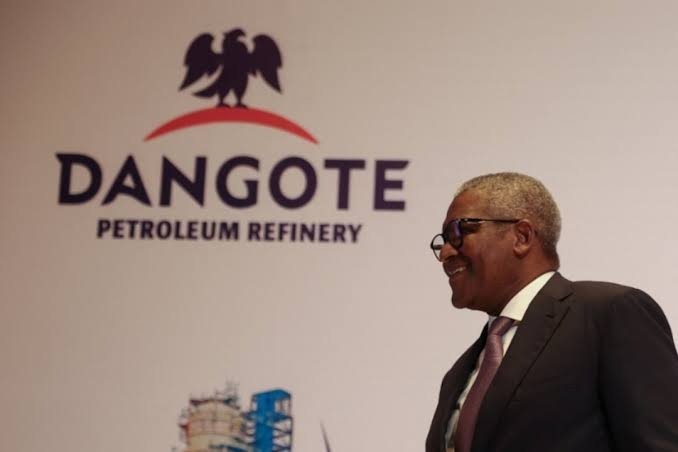
Aliko Dangote, Africa’s richest man, opened subscriptions on Monday for what is now the largest share sale in the continent’s history, putting a stake in his sprawling Lagos oil refinery within reach of ordinary Nigerian investors for the first time. The initial public offering of Dangote Petroleum Refinery and Petrochemicals opened at 8am local time and will run through October 13, with the stock expected to begin trading on the Nigerian Exchange in November.
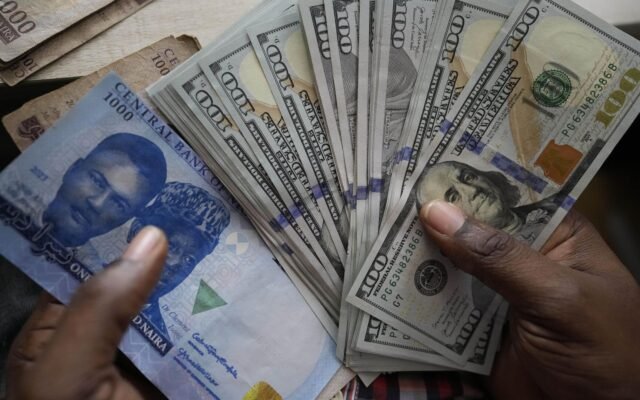
The offer covers 4.1 billion new ordinary shares priced at 525 naira each, roughly 40 US cents at current exchange rates, and is targeting gross proceeds of about 2.15 trillion naira, or approximately $1.63 billion. If the 30 percent greenshoe option built into the deal is exercised in response to strong demand, that figure could climb closer to $2.1 billion. At the offer price, the refinery carries a post-offer valuation of somewhere between $47 billion and $50 billion, depending on which reference exchange rate is applied, making it one of the largest single corporate valuations to come out of an African IPO.
What sets this offering apart from most large share sales isn’t just its size but who it’s aimed at. Dangote has structured the IPO specifically to court retail investors rather than lean primarily on institutional capital, setting the minimum subscription at just 10 shares, or roughly 5,250 naira, low enough that ordinary workers across Nigeria can participate through fintech apps and other digital investment platforms rather than needing a traditional brokerage relationship. At the signing ceremony for the offer documents in Lagos earlier this month, Dangote told investment bankers and the public that he’s hoping to add as many as 10 million African retail investors to the refinery’s shareholder base by the time the transaction closes, a scale of retail participation rarely attempted in African capital markets.
Early anecdotal signs suggest that appetite exists. Reuters reported that at least one Nigerian retail investor, a journalist planning to commit to roughly 2,850 shares, said he considered the refinery essentially guaranteed to succeed given its scale and importance to the country’s fuel supply. That kind of sentiment matters because Dangote has explicitly said he expects public interest in this offer to mirror a private placement completed in July, which raised $2.5 billion at an implied valuation near $40 billion and ended up 3.7 times oversubscribed.
The money raised isn’t going toward paying down debt or rewarding existing shareholders. It’s earmarked for an ambitious expansion plan that would nearly double the refinery’s processing capacity, from its current 700,000 barrels of crude per day to 1.4 million barrels per day by 2029, at an estimated cost of $14.3 billion. Dangote has said publicly that he wants the facility to become the world’s largest single-train refinery by 2028, a title that would put the plant ahead of far larger, more established refining hubs in the Middle East and Asia in terms of unified processing capacity, even if not in total industry output.
The refinery itself, built at a cost of roughly $20 billion on the outskirts of Lagos, has already reshaped Nigeria’s domestic fuel market since it began operations, ending decades of reliance on imported refined petroleum products for Africa’s most populous country. It has also expanded its footprint well beyond Nigeria, exporting jet fuel and other refined products across Africa and into Europe. Financially, the timing of the IPO looks favorable. After posting losses the previous year, the refinery swung to a net profit of $1.82 billion in the first half of 2026 on revenues exceeding $13 billion, a turnaround partly driven by supply disruptions tied to conflict involving Iran, which tightened global refining margins and rewarded facilities with functioning capacity able to fill the gap.
Vetiva Advisory Services is serving as lead issuing house for the transaction, working alongside a group of joint issuing houses that includes First Cap, Chapel Hill Denham, Absa Capital Markets, Afrinvest Capital and Stanbic IBTC Capital. The company has also already secured a $400 million underwriting commitment ahead of the offer opening, giving it a cushion against weaker-than-expected demand even before retail subscriptions began rolling in.
Beyond Nigeria, Dangote’s ambitions for the stock extend across the continent. The company is working toward a cross-border listing on the Johannesburg Stock Exchange, Africa’s largest bourse by market capitalization, and is reportedly considering additional listings in Egypt, Kenya, Ghana and Rwanda. If those cross-listings materialize, it would give the refinery one of the broadest multi-market shareholder bases of any African company, reinforcing Dangote’s stated goal of framing this IPO as a continent-wide wealth-building opportunity rather than a purely domestic Nigerian transaction.
Not everyone views the offer’s impact on Nigeria’s broader stock market as straightforwardly positive. Some market analysts have suggested that existing equity holders may sell down other Nigerian stocks to free up capital for the Dangote offer, potentially pressuring the broader market lower in the short term as money gets reallocated. Others argue that any resulting dip wouldn’t necessarily signal investors abandoning Nigerian equities altogether, but rather a temporary shuffling of capital that could create buying opportunities elsewhere once the IPO settles.
Applications require a valid Bank Verification Number for anyone submitting through Nigeria’s electronic application channels, a standard identity verification step tied to the country’s banking system. Investors interested in the offer can find full prospectus details and application procedures through the Nigerian Exchange, where the shares are expected to list in November, or directly through Dangote Group’s corporate channels.
For Dangote personally, who built his initial fortune in cement before expanding into sugar, salt and now petroleum refining, the IPO represents both a capital-raising exercise and a legacy move, converting a single, privately controlled megaproject into a widely held public company with millions of small shareholders across the continent. Whether that bet pays off will become clearer once the order book closes on October 13 and trading begins on the Nigerian Exchange in November, but for now, Africa’s biggest share sale is officially underway.