|
Getting your Trinity Audio player ready...
|
Dario Amodei: The Hardest Week of His CEO Career
Dario Amodei co-founded Anthropic after leaving OpenAI over concerns about the pace and safety of AI development. He built the company around a safety-first philosophy that has been central to its public identity and its regulatory positioning. This week tested that identity severely.
For context, Intel has generated less revenue since its founding in 1968 than that figure. Regardless of the projection’s accuracy, it signals a clear trend: AI compute is becoming a multi-trillion-dollar permanent infrastructure category, a reality even Nvidia’s competitors now account for in their pricing.
Anthropic accidentally published 500,000 lines of Claude Code’s source code to the public npm registry on March 31. The leak was caused by a misconfigured debug file bundled into a routine update. Within hours, millions of people had accessed the exposed code. The most significant technical finding in the leak was Claude Code’s three-layer memory architecture, a design detail that competitors and researchers are now studying.
Separately, a leaked internal blog post about Claude Mythos, Anthropic’s next-generation model, described a system the company itself says could enable cyberattacks at a scale the world has never seen. Amodei’s team is now privately briefing government officials about these risks while simultaneously preparing for a public launch that will create commercial pressure to move quickly.
And yet: Anthropic is approaching $19 billion in annualized revenue. Claude Code reached $1 billion in run-rate revenue within six months. The $30 billion Series G at a $380 billion valuation closed successfully. By every commercial metric, Amodei is running one of the most successful companies in the history of the AI industry. The challenge he faces is that success at this scale makes every security failure more visible and every capability advance more consequential.
Jensen Huang: The Man Who Built a $4.5 Trillion Company
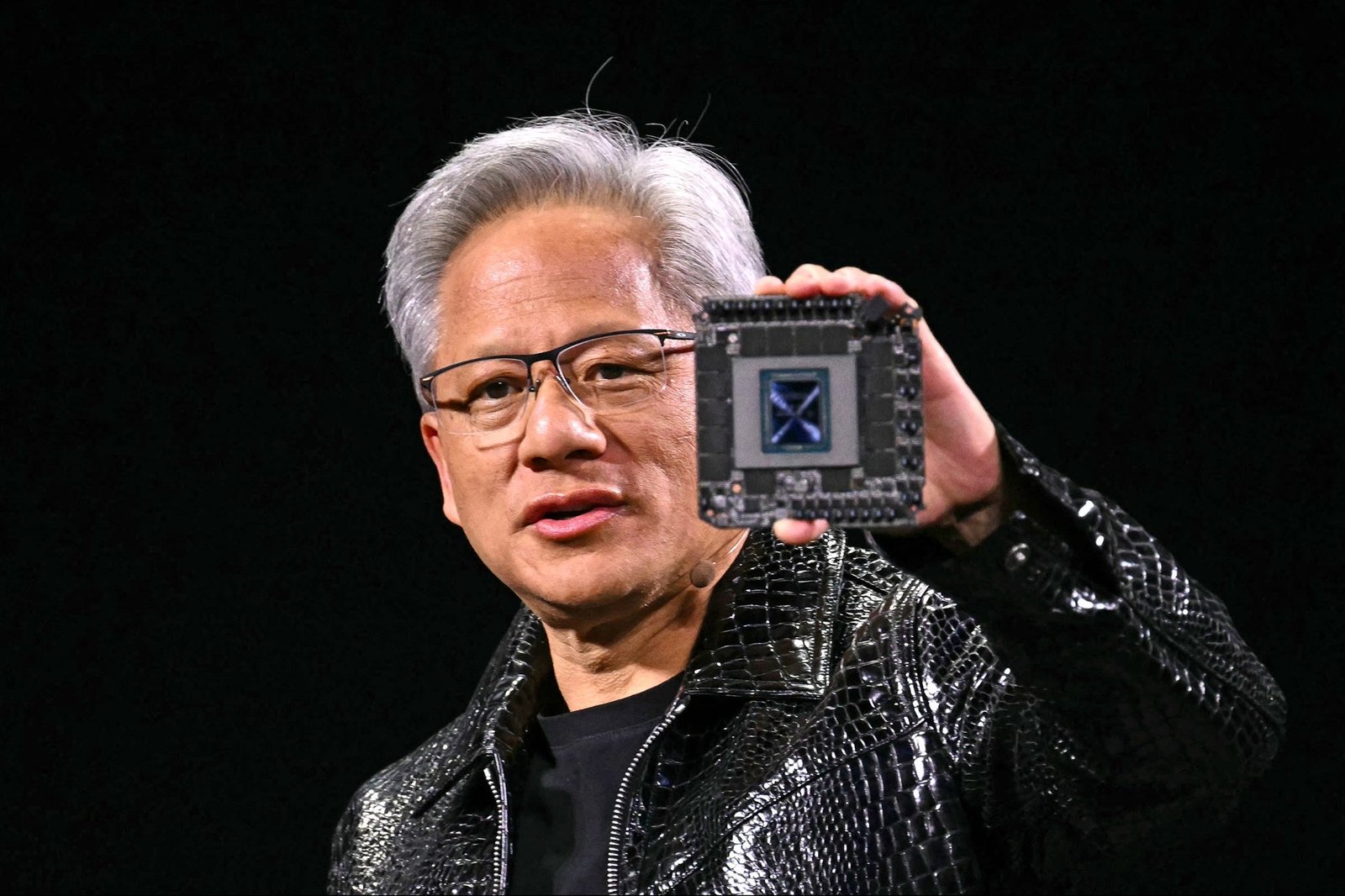
Jensen Huang founded Nvidia in 1993 to build graphics processors for gaming. The company he runs today has a market capitalization of $4.5 trillion, making it the most valuable semiconductor company in history and one of the most valuable companies of any kind. Huang wisely invested in CUDA, Nvidia’s parallel computing platform, more than a decade before AI demand emerged. This bet stands as the most consequential long-term technical move in the history of the chip industry.
This week, Huang made an assertion that captured attention across Wall Street: Nvidia’s Blackwell and Rubin chip families will generate $1 trillion in lifetime sales. For context, Intel has generated less revenue since its founding in 1968 than that figure. Regardless of the projection’s accuracy, it signals a clear trend: AI compute is becoming a multi-trillion-dollar permanent infrastructure category, a reality even Nvidia’s competitors now account for in their pricing.
The Vera Rubin platform, launching in the second half of 2026, will deliver 3.3 times the performance of Blackwell at one-tenth the token cost. The cost reduction is the number that matters most for the broader market, because it determines the range of applications that can be economically deployed at scale.
Lisa Su: AMD’s Best Year in a Decade
AMD CEO Lisa Su has quietly engineered the most competitive year for AMD in the data center market since the company’s founding. AMD’s stock has risen 78% over the past 12 months. Oracle has committed to deploying 50,000 of the MI450 chips inside Helios racks. OpenAI is a confirmed early customer for the Helios system. And the MI500 series, targeting a 1,000x performance increase over the MI300X on a 2-nanometer process, is AMD’s most ambitious chip roadmap in years.
Su’s strategic bet is that the largest hyperscalers, the companies buying compute at the scale of tens of thousands of chips at a time, want an alternative to Nvidia’s closed ecosystem. The Helios rack, built on the Open Rack Wide standard co-developed with Meta, gives those customers an open-standard alternative that can be deployed without committing to Nvidia’s proprietary NVLink interconnect. If even 20% of the data center market moves toward open-standard AI hardware, AMD’s growth trajectory changes materially.
Brad Smith: The Government Relations Executive Who Became an AI Diplomat
Microsoft President Brad Smith flew to Tokyo this week for a meeting that resulted in a $10 billion AI infrastructure commitment to Japan spanning 2026 to 2029. Smith has become one of the most effective government relations executives in the technology industry, not because he lobbies governments to relax regulations, but because he frames AI infrastructure investment as a national security and economic sovereignty conversation that governments find genuinely compelling.
Smith’s Japan playbook is consistent with his approach in other markets: he identifies what a government actually cares about, cybersecurity, digital sovereignty, AI readiness, and then structures Microsoft’s commercial proposition as a direct contribution to those goals. The result is that Microsoft is getting AI infrastructure commitments from governments that are simultaneously expressing concern about AI’s risks. Smith navigates that tension better than almost anyone in the industry.
Paul Atkins: The SEC Chair Who Changed Crypto’s Future
SEC Chairman Paul Atkins, confirmed in early 2026, has already made the most consequential regulatory decisions for the cryptocurrency industry in the commission’s history. The joint SEC/CFTC interpretation published in late March provides the clearest taxonomy of digital assets ever produced by a U.S. regulator, covering digital commodities, stablecoins, digital securities, and digital collectibles as distinct categories with distinct regulatory treatment.
Atkins described the previous administration’s approach to crypto regulation as refusing to acknowledge that most crypto assets are not securities. His willingness to say that clearly, and to provide actionable regulatory guidance that the industry has been requesting for a decade, has changed the calculus for every institutional investor considering crypto exposure. The April 16 CLARITY Act roundtable, which Atkins is convening, could produce legislation that permanently establishes the legal framework for digital assets in the United States.
The People Building the Next Layer
Behind the executives running the largest AI companies, a generation of founders is building the application layer that will define how AI is actually used. The co-founder and CEO of Narada, an enterprise AI agent platform spun out of UC Berkeley’s AI research lab, appeared on Anthropic’s Build Mode podcast this week to discuss building agentic AI for enterprise workflows. The founders at Cognichip are using AI to redesign how chips are designed. The team at Earendil Labs dosed their first patient in a Phase 1 trial for an AI-designed biologic.
These are not household names yet. But the pattern of every major technology wave suggests that the companies building in the application layer during the infrastructure build-out phase capture more cumulative value than the infrastructure companies themselves. Watching this generation of founders closely is how you see the next decade before it arrives.