Skip to content

Quote of the Day: “Price Is What You Pay; Value Is What You Get” Warren Buffett

Buffett

Warren Buffett, the longtime leader of Berkshire Hathaway and one of the best-known investors in history, wrote this sentence in his 2008 shareholder letter. He did not claim it as his own. He told readers that his teacher, Benjamin Graham, taught him long ago that “Price is what you pay; value is what you get.” … Read more

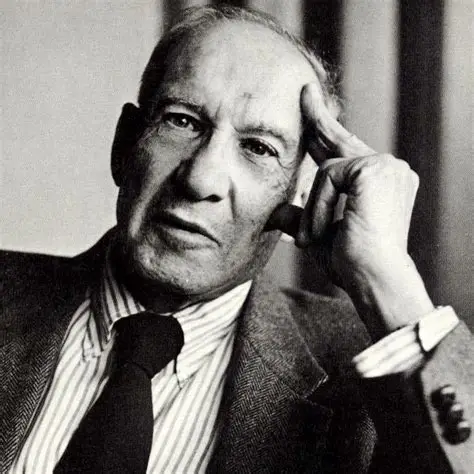
Quote of the Day: “Leaders Don’t Create Followers, They Create More Leaders” – Tom Peters

Quote of the Day “Leaders Don’t Create Followers, They Create More Leaders” - Tom Peters

This quote is consistently credited to Tom Peters, the American management writer best known for In Search of Excellence, and it appears under his name across business and leadership writing. A specific original book or speech for the exact wording is hard to pin down, so it is best described as “widely attributed to Tom … Read more

Quote of the Day: “Efficiency Is Concerned With Doing Things Right. Effectiveness Is Doing the Right Things” Peter F. Drucker

Quote of the Day: “Efficiency Is Concerned With Doing Things Right. Effectiveness Is Doing the Right Things” Peter F. Drucker Management thinker Peter F. Drucker, born in Vienna in 1909 and later based in California, spent more than sixty years explaining how organisations work, and many call him the founder of modern management. In his 1973 book Management: Tasks, Responsibilities, Practices, he wrote a sentence that has since been compressed into countless slogans: “Efficiency is concerned with doing things right. Effectiveness is doing the right things.” You may know a different version of the idea: “Management is doing things right; leadership is doing the right things.” That wording circulates widely and is often credited to Drucker. It was popularised by Stephen Covey in 1989, who credited both Drucker and the leadership scholar Warren Bennis, and Bennis had published a close variant in 1985 about managers and leaders. The most accurate reading is that the popular line grew out of a shared idea, while Drucker’s own documented words use efficiency and effectiveness. “Efficiency Is Concerned With Doing Things Right. Effectiveness Is Doing the Right Things” - Peter F. Drucker The sentence works by separating two things people usually treat as one. Efficiency is about how well a task is carried out: fewer errors, less waste, faster delivery. Effectiveness is about whether the task was worth doing at all. A team can be highly efficient and completely ineffective, polishing a process that serves no useful purpose. Drucker’s point is that the second question comes first. Covey gave the idea a picture that is easy to remember. Efficiency is how fast you climb a ladder, and effectiveness is whether the ladder is leaning against the right wall. A person can climb quickly and arrive somewhere that does not matter. Consider a sales department that spends a year improving its order processing. Orders are logged faster, invoices go out sooner and error rates fall to nearly zero. Meanwhile, the company’s main product is losing customers to a competitor with a better offering. The team did things right, and the business still suffered, because nobody asked whether the effort was aimed at the right problem. Both skills are needed, in the right order It would be a mistake to read the quote as a put-down of efficiency. Drucker built his career on helping organisations run better, and his writing treats good execution as essential. The point is sequence. Choosing the right goal comes first, and efficient execution comes second. Doing the wrong thing perfectly produces a polished failure, while doing the right thing clumsily at least points in a useful direction and can be improved. The popular management and leadership version of the line adds a second layer. It suggests that managers tend to focus on execution, while leaders focus on direction. That is a useful shorthand, but real roles overlap. A chief executive who never thinks about efficiency will bleed money, and a line manager who never asks what the team should be doing will drift. How to test whether you are doing the right things A simple habit helps. Before investing time in a project, ask what result it is meant to produce, who benefits and what would happen if you did not do it. If the answers are vague, the task may be efficient busywork. Do the same with recurring activities such as weekly reports and standing meetings. Many continue because they were once useful, and nobody has checked whether they still are. It also helps to review results, not just activity. Teams that measure how much they did, such as calls made or reports produced, can miss whether any of it changed an outcome that matters. Why this applies to individuals as well as companies The same distinction applies to personal careers. A professional can become excellent at a skill that the market no longer values. A founder can become skilled at running a product that customers have outgrown. Asking whether the work is still the right work is uncomfortable, but it is cheaper to ask early than to discover the answer after years of effort. Why this advice still holds true today Modern workplaces have more tools for measuring efficiency than ever before, from dashboards to automation. Those tools make it easy to optimise what can be counted and to overlook what cannot. Drucker’s sentence remains useful because it pushes the question that tools cannot answer: is this the right thing to be doing? Whether you meet it in his own words or in the popular version about management and leadership, the lesson is the same. Get the direction right, then work to get the details right.

Management thinker Peter F. Drucker, born in Vienna in 1909 and later based in California, spent more than sixty years explaining how organisations work, and many call him the founder of modern management. In his 1973 book Management: Tasks, Responsibilities, Practices, he wrote a sentence that has since been compressed into countless slogans: “Efficiency is … Read more

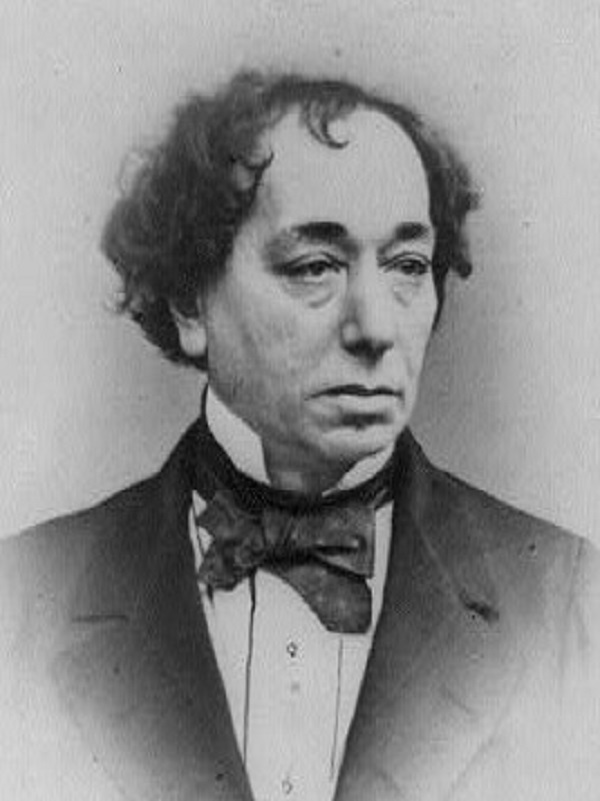
Quote of the Day: “Never Apologize for Showing Feeling. When You Do So, You Apologize for the Truth” – Benjamin Disraeli

Quote of the Day: “Never Apologize for Showing Feeling. When You Do So, You Apologize for the Truth” - Benjamin Disraeli

This quote is genuinely Disraeli’s. It comes from his 1832 novel Contarini Fleming, where the original line reads: “Never apologize for showing feeling, my friend. Remember that when you do so, you apologize for truth.” The shorter version that circulates online is a tidied-up paraphrase, and the meaning is identical. Disraeli went on to serve … Read more

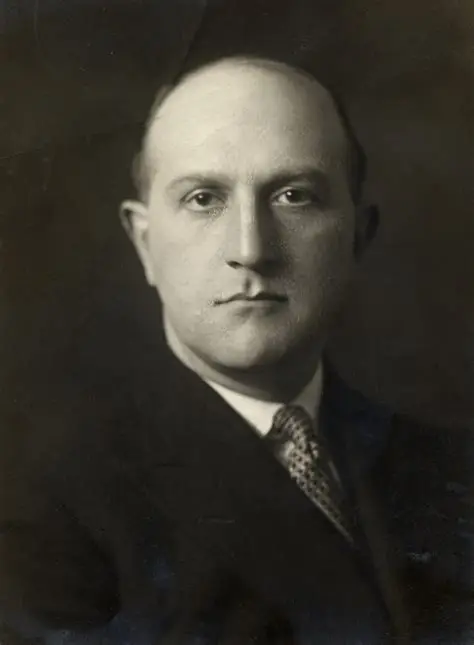
Quote of the Day: “There Is Only One Valid Definition of Business Purpose: To Create a Customer” Peter Drucker

Quote of the Day: “There Is Only One Valid Definition of Business Purpose: To Create a Customer” Peter Drucker

Management thinker Peter Drucker spent much of his career examining why businesses succeed, fail and remain useful. In The Practice of Management, published in 1954, he made a direct argument about the purpose of a business. He wrote: “There is only one valid definition of business purpose: to create a customer.” The statement sounds simple, … Read more

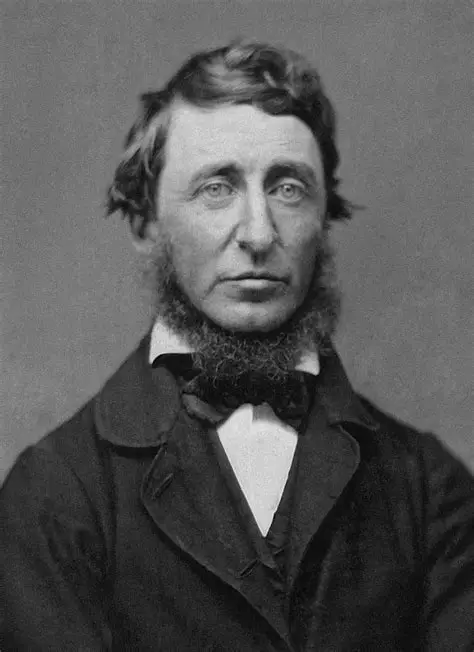
Quote of the Day: “Things Do Not Change; We Change” Henry David Thoreau

Quote of the Day: “Things Do Not Change; We Change” Henry David Thoreau

Writer and naturalist Henry David Thoreau, who lived from 1817 to 1862, built a cabin beside Walden Pond near Concord, Massachusetts, in 1845 and lived there for two years, two months and two days. He turned that experiment into Walden, published in 1854, and ended the book with a chapter of short, direct advice. In … Read more

Quote of the Day: “Our Greatest Glory Is Not in Never Falling, but in Rising Every Time We Fall” Oliver Goldsmith

Quote of the Day: “Our Greatest Glory Is Not in Never Falling, but in Rising Every Time We Fall” Oliver Goldsmith

Irish writer Oliver Goldsmith, born in 1728, made his name as a novelist, playwright and poet, and is best known for The Vicar of Wakefield and the comedy She Stoops to Conquer. He also wrote a satirical work in letters called The Citizen of the World, narrated by an imagined Chinese philosopher living in London. … Read more

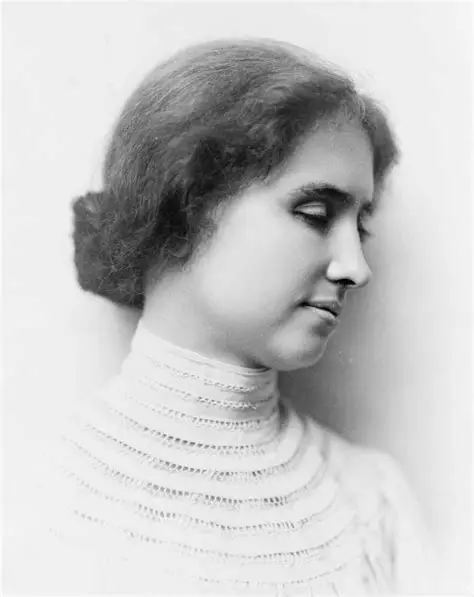
Quote of the Day: “Alone We Can Do So Little; Together We Can Do So Much” Helen Keller

Quote of the Day: “Alone We Can Do So Little; Together We Can Do So Much” Helen Keller

Author, lecturer and activist Helen Keller spent most of her life proving that one person’s limits are not the end of the story. Born in Alabama in 1880, she lost her sight and hearing as a toddler, learned language through her teacher Anne Sullivan, and went on to earn a university degree and campaign for … Read more

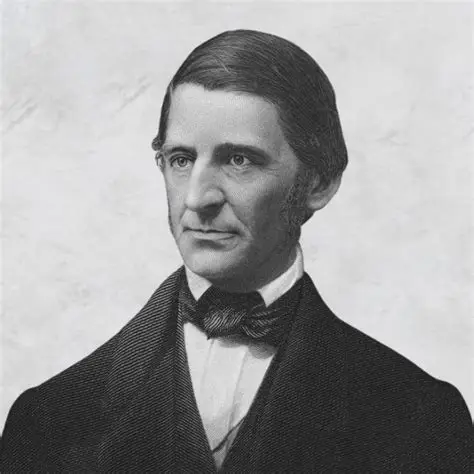
Quote of the Day: “The Benefit We Receive Must Be Rendered Again, Line for Line, Deed for Deed, Cent for Cent, to Somebody.” Ralph Waldo Emerson

Quote of the Day: “The Benefit We Receive Must Be Rendered Again, Line for Line, Deed for Deed, Cent for Cent, to Somebody.” Ralph Waldo Emerson

Essayist and lecturer Ralph Waldo Emerson, born in Boston in 1803, was a former minister who became the central voice of American Transcendentalism. In his 1841 essay “Compensation,” he wrote a sentence that now sits at the root of the modern idea of paying it forward: “The benefit we receive must be rendered again, line … Read more

Quote of the Day: “Life Is 10% What Happens to You and 90% How You React to It” – Charles R. Swindoll

Quote of the Day “Life Is 10% What Happens to You and 90% How You React to It” - Charles R. Swindoll

Pastor and author Charles R. Swindoll has spent decades teaching a simple idea: “Life is 10% what happens to you and 90% how you react to it.” Variations of the phrase existed in print before Swindoll became associated with it, but he is the one who built it into a lasting personal message, repeating it … Read more