|
Getting your Trinity Audio player ready...
|
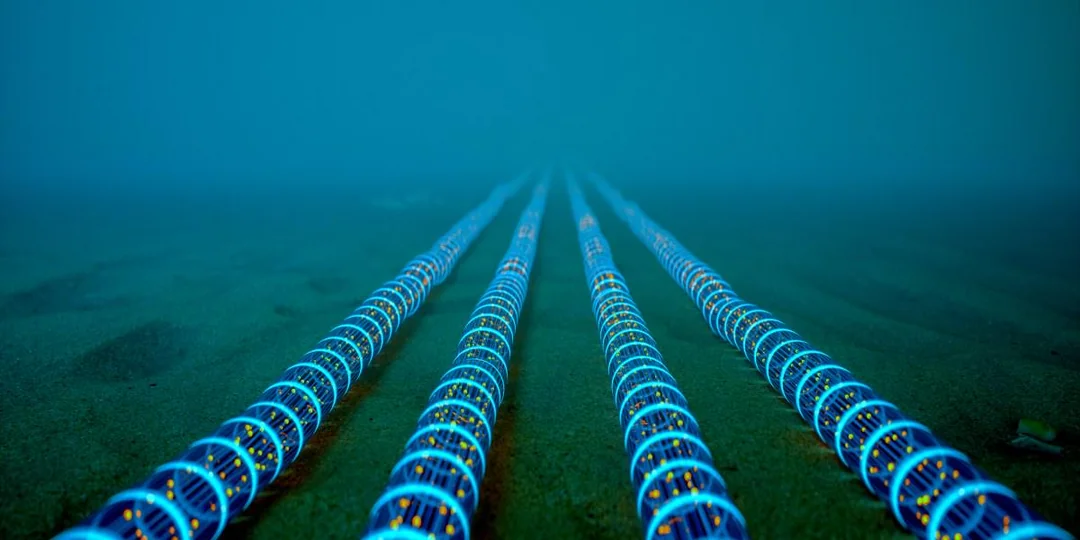
The United States has thrown its weight behind an ambitious new undersea internet cable project designed to give Thailand and several of its neighbors a direct digital connection to America that deliberately bypasses the South China Sea, part of a broader Washington strategy to keep Southeast Asia’s internet infrastructure outside Beijing’s reach. The U.S. Trade and Development Agency announced funding for a feasibility study on the project, which could stretch up to 11,500 miles, roughly 18,507 kilometers, connecting Thailand to the United States while routing through Indonesia, Malaysia, the Philippines, Singapore and Vietnam.
Industry estimates cited by Bloomberg put the total cost of the cable at more than $14 billion, though the USTDA itself has not offered an official price tag for the project. Thailand’s state-owned telecom operator, National Telecom, is leading the effort and plans to raise capital through an international consortium of co-investors drawn from neighboring Asian nations, a financing structure that reflects how expensive and logistically complex subsea cable construction has become as demand for digital capacity surges alongside the broader AI infrastructure boom.
The strategic logic behind avoiding the South China Sea specifically is rooted in rising military and geopolitical tension in the region. Muhammad Faizal Bin Abdul Rahman, a research fellow at Singapore’s Nanyang Technological University, told Fortune that both the United States and China are reportedly preparing for the possibility of military conflict around the South China Sea, making it practical and economically sensible for new subsea cables to route around the area entirely rather than risk disruption. He separately pointed to recent military conflicts in the Middle East and Europe as evidence that geopolitical crises can trigger cyber or physical disruptions to undersea cables, warning that the U.S. and its Asia-Pacific allies believe China could employ similar tactics if tensions escalated further.
This is not Washington’s first attempt to route critical internet infrastructure around China. The Pacific Light Cable Network, initiated back in 2015 and backed by U.S. tech giants Meta and Google, was originally designed to link the United States directly with Hong Kong before the project ran into its own complications tied to the broader U.S.-China technology rivalry. The new Thailand-U.S. cable is intended specifically to replace Thailand’s aging existing subsea connection to the United States, built to American engineering standards as part of the effort to modernize the region’s digital backbone under U.S.-aligned infrastructure standards rather than Chinese-built alternatives.
The scale of investment flowing into Pacific subsea cable infrastructure more broadly has grown substantially. According to the International Institute for Strategic Studies, nearly two dozen international cables are expected to be built across the Pacific between 2022 and 2030, with the aggregate cost of new undersea cable construction projected to exceed $14 billion between 2025 and 2027 alone. Separate Bloomberg reporting on the broader US-China cable rivalry found that global spending on cable systems is projected to surge to $15.4 billion by 2028, up dramatically from just $900 million in 2023, a jump driven substantially by the computing and data demands of the AI boom.
Major U.S. technology companies have increasingly taken direct ownership stakes in this infrastructure rather than relying solely on traditional telecom consortia. Meta, Google, Microsoft and Amazon have all begun funding their own dedicated subsea cables to secure guaranteed bandwidth and reduce long-term costs for their cloud and AI-intensive services, with Amazon expanding cable capacity through projects like CAP-1 and Google announcing a $1 billion investment in digital connectivity to Japan that includes new subsea cable construction. Meta’s global head of network investments, Alex-Handrah Aime, framed the underlying pressure driving all this investment bluntly to Bloomberg, arguing that the real risk facing global internet infrastructure isn’t sabotage but scarcity, given how quickly digital capacity demand is outpacing available cable infrastructure.
China has pursued its own aggressive strategy to win market share in this same infrastructure race, often through financial incentives and cost advantages. Chinese cable manufacturer HMN Technologies has reportedly been able to build undersea cable systems for 20 to 30 percent less than its competitors, giving Beijing-aligned projects a meaningful pricing edge in regions where cost sensitivity often outweighs geopolitical alignment. Washington has countered with its own mix of financial incentives and diplomatic pressure aimed at discouraging strategically positioned countries, including Vietnam, from becoming overly dependent on Chinese-built infrastructure, a dynamic that played out directly when a U.S. government agency reportedly offered training grants to telecom carriers that chose American firm SubCom over HMN Technologies for the SEA-ME-WE-6 consortium’s $600 million network back in 2021.
Southeast Asian nations now find themselves navigating an increasingly binary choice between competing U.S. and Chinese-led technology ecosystems, a divide that extends well beyond cables into artificial intelligence policy more broadly. Singapore joined Washington’s Pax Silica alliance last December but is reportedly also considering an invitation to join the China-led World Artificial Intelligence Cooperation Organization, illustrating the delicate balancing act many regional governments are attempting. The Philippines has aligned with the U.S.-led Pax Silica initiative, while Cambodia, Indonesia, Laos, Malaysia and Myanmar have joined China’s competing alliance, leaving the region genuinely split rather than uniformly aligned with either major power.
Muhammad framed the underlying stakes for the region in fairly direct terms, arguing that Southeast Asian countries need to reconsider what genuine neutrality means today, given how policy decisions across multiple sectors collectively determine whether any single nation becomes too dependent on one major power during periods of peace or crisis. Subsea cables carry more than 99 percent of global internet traffic, and currently just one cable, the Asia-America Gateway built in 2009, connects the U.S. directly to much of Southeast Asia, a bottleneck that has made the region’s underlying digital infrastructure a genuinely consequential front in the broader U.S.-China technology competition rather than a purely commercial telecommunications matter.
With the USTDA’s feasibility study now underway and National Telecom working to assemble its international investor consortium, the coming months will likely determine whether the Thailand-U.S. cable moves from planning stage toward actual construction, a process that, given the scale and complexity of similar past projects, is likely to take years even once funding and routing decisions are finalized. Continuing coverage of how global infrastructure competition is shaping technology and internet access is available on Business Tech. Additional detail on the project is available through the U.S. Trade and Development Agency’s official site, and further reporting on the region’s technology alignment can be found through Fortune’s coverage of the story.