|
Getting your Trinity Audio player ready...
|
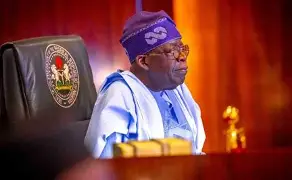
President Bola Ahmed Tinubu has defended his administration’s growing reliance on external borrowing, arguing that Nigeria needs sustained investment in roads, electricity, transportation, healthcare and other critical infrastructure to achieve its ambition of becoming a $1 trillion economy by 2030.
The President’s position comes amid increasing public debate over Nigeria’s debt burden, following his request for National Assembly approval to secure approximately $21.7 billion in additional external financing for the 2026 and 2027 fiscal years.
In an essay titled From Reforms to Delivery: Our Infrastructure Investment and Growth Strategy, Tinubu maintained that the economic value generated by borrowed funds should matter more than the amount of money the government obtains from international lenders.
“The real question is not how much we borrow, but what we build, what value we create and what future we leave behind,” the President said.
His comments provide a fresh explanation of the administration’s borrowing strategy at a time when Nigerians are closely monitoring government spending, the cost of living, infrastructure delivery and the country’s ability to repay its growing debt.
Tinubu identified several major projects that the government intends to prioritise, including the Lagos-Calabar Coastal Highway, Sokoto-Badagry Superhighway, Trans-Sahara Superhighway, electricity grid improvements and the modernisation of major commercial ports in Lagos.
According to the President, these investments are expected to improve transportation, reduce logistics expenses, connect economic centres, support industrial development and create employment opportunities.
However, the proposed borrowing has also attracted criticism from labour organisations and political groups, which have questioned whether additional foreign loans are justified when the government has already implemented major revenue and economic reforms.
The disagreement has brought renewed attention to an important economic question: how can Nigeria finance the infrastructure required for long-term growth without placing excessive pressure on future public finances?
Why Tinubu Is Defending Nigeria’s Infrastructure Borrowing
Tinubu’s defence is based on the argument that infrastructure investment is necessary to expand the productive capacity of the Nigerian economy.
The President believes that the country’s existing infrastructure cannot adequately support its long-term economic ambitions, particularly its target of building a $1 trillion economy by 2030.
According to the administration, Nigeria needs modern highways, reliable electricity, efficient seaports and better connections between agricultural and industrial centres to increase productivity.
Poor transportation infrastructure can increase the cost of moving agricultural produce, manufactured goods and essential commodities between different parts of the country.
Similarly, unreliable electricity can increase operating expenses for manufacturers, small businesses and service providers that depend on generators and alternative power sources.
Tinubu argues that investments in these areas could help reduce business expenses, improve trade and encourage private-sector participation.
The President also maintains that infrastructure projects can create employment during construction and generate additional economic activity after completion.
In his view, borrowing becomes economically useful when the funds support productive assets capable of generating long-term benefits rather than financing short-term government consumption.
This argument forms the foundation of his administration’s position that Nigeria should not judge borrowing exclusively by the size of the loans but also by the projects financed, their economic returns and the government’s ability to manage repayment obligations.
The President has also linked the infrastructure programme to his administration’s wider economic reforms, which include changes to petrol subsidies, foreign exchange management and taxation.
The government argues that these reforms are intended to strengthen public finances, improve investor confidence and create conditions that can support long-term investment.
However, the economic benefits of these policies remain an important subject of public discussion, particularly because households and businesses continue to assess their effects on purchasing power and operating expenses.
Details of the $21.7 Billion External Borrowing Plan
The proposed borrowing package covers the 2026–2027 Supplementary External Borrowing Plan.
According to the President’s request to the National Assembly, the financing consists of:
- US dollar borrowing: $20,517,755,901.
- Euro borrowing: €1,045,083,643.
- Estimated combined value: Approximately $21.7 billion.
The proposal is intended to finance development programmes across several sectors of the Nigerian economy.
These include electricity, transportation, healthcare, agriculture, education, water supply, security, employment generation and financial management reforms.
Tinubu explained that the projects were selected following technical and economic assessments, with the expectation that they would contribute to national development.
The President also indicated that most of the proposed projects and programmes would be implemented across Nigeria’s 36 states and the Federal Capital Territory.
The request was transmitted to the National Assembly in a letter read by Senate President Godswill Akpabio during plenary on October 27.
Following the presentation, the Senate referred the proposal to its Committees on Local and Foreign Debts and Appropriations for examination. The committees were directed to report within one week.
This means the request was undergoing legislative consideration at the time of the announcement. It should not be confused with a completed approval or the actual disbursement of the entire proposed amount.
The borrowing plan is also separate from the government’s previous financing arrangements, although some facilities may fall within earlier approved borrowing programmes. Premium Times Nigeria+1
Lagos-Calabar Coastal Highway and Other Major Projects
One of the most prominent infrastructure projects highlighted by Tinubu is the Lagos-Calabar Coastal Highway.
The proposed highway is expected to connect communities and commercial centres along Nigeria’s Atlantic coastline, improving transportation between several southern states.
The President believes the project could support trade, tourism, industrial development and economic activity along its route.
According to the administration’s projections, the highway could reduce logistics costs along its corridor by between 15 and 20 per cent.
Tinubu also estimated that the project could contribute up to two per cent to Nigeria’s GDP through increased trade, tourism and industrial activities.
The government projects approximately 100,000 direct jobs in construction and engineering, alongside more than 150,000 indirect employment opportunities in logistics, building materials and related industries.
These figures represent government projections rather than independently confirmed employment or economic outcomes.
Another important project is the Sokoto-Badagry Superhighway, which is intended to improve transportation between northwestern Nigeria and the country’s southwestern commercial corridor.
The road is expected to support the movement of agricultural products, manufactured goods and other commodities between different economic regions.
The Trans-Sahara Superhighway is another project identified by the President as part of the wider infrastructure development strategy.
In addition to road construction, the government plans to improve electricity transmission infrastructure and modernise major commercial ports in Lagos.
These investments are relevant to businesses because transportation delays, unreliable electricity and inefficient port operations can increase production and distribution expenses.
For manufacturers, improved electricity infrastructure could reduce dependence on expensive alternative power sources.
For farmers and agricultural businesses, better roads could make it easier to transport produce to processing facilities and consumer markets.
Similarly, improvements to commercial ports could support international trade by strengthening cargo handling and logistics operations.
However, the actual economic benefits will depend on project completion, maintenance, financing costs and the extent to which the infrastructure improves commercial activity.
NLC Questions the Need for Additional Foreign Loans
The President’s defence has not ended concerns about Nigeria’s borrowing strategy.
The Nigeria Labour Congress (NLC) has questioned why the Federal Government continues to seek additional external loans despite the removal of petrol subsidies and the reported increase in government revenue.
NLC President Joe Ajaero raised the concerns during an appearance on Channels Television’s The Morning Brief on October 29.
Ajaero argued that the government should explain why further borrowing is necessary when it has previously presented subsidy removal and other economic reforms as measures expected to improve public finances.
He also questioned the continued reliance on international financial institutions and other external lenders.
The labour organisation’s position reflects wider concerns about the relationship between government revenue, public expenditure and debt repayment obligations.
The removal of petrol subsidies changed the structure of government spending and revenue distribution. However, increased revenue does not automatically mean that the Federal Government has sufficient funds to finance every infrastructure and development project without borrowing.
Government expenditure includes salaries, security, debt servicing, statutory transfers and other obligations. These competing demands can limit the amount available for capital investment.
Nevertheless, the NLC’s argument raises an important accountability question: how much additional borrowing is necessary, and what measurable benefits will Nigerians receive from the funds?
The government will need to provide clear information about the financing terms, project allocations and expected economic returns to address these concerns. Channels Television+1
Concerns About Nigeria’s Rising Debt and Repayment Capacity
One of the biggest issues surrounding the proposed borrowing is whether Nigeria can comfortably manage additional debt obligations.
Borrowing can help governments finance infrastructure that would otherwise take many years to complete using internally generated revenue. However, foreign loans also create repayment obligations that can affect future budgets.
Nigeria faces particular challenges because a significant portion of its government revenue is already committed to debt servicing and other recurring expenditure.
The situation becomes more complicated when loans are denominated in foreign currencies.
If the naira weakens against the US dollar or euro, the domestic currency required to repay foreign obligations can increase, even when the original loan amount remains unchanged.
This creates an exchange-rate risk for the government.
The cost of borrowing also depends on interest rates, repayment periods, grace periods, insurance charges and other financing conditions.
For example, a long-term loan with favourable interest rates may provide more manageable repayment conditions than expensive commercial borrowing with shorter repayment periods.
This is why Nigerians and financial analysts are interested in the specific terms attached to the proposed facilities.
Another concern is whether the projects financed through borrowing will generate sufficient economic benefits to justify their costs.
A completed highway that improves trade and reduces transportation expenses may support economic growth over several decades. However, a delayed or poorly executed project could leave taxpayers responsible for repayment without delivering the expected benefits.
The International Monetary Fund and World Bank have repeatedly emphasised the importance of stronger revenue mobilisation and responsible public financial management in Nigeria.
The challenge for the Federal Government is therefore to balance infrastructure investment with fiscal discipline.
Tinubu Points to Improving Economic Indicators
In defending his borrowing strategy, Tinubu also referred to improvements in several economic indicators.
According to the Presidency’s October 30 statement, Nigeria recorded real GDP growth of 4.43 per cent in the second quarter of 2026.
The President also reported that headline inflation declined to 14.63 per cent in September, compared with 20.98 per cent a year earlier.
Gross external reserves reportedly reached $55.1 billion as of October 9, 2026, including approximately $46 billion in net reserves.
Tinubu also cited an increase in Nigeria’s tax-to-GDP ratio from seven per cent to 12.5 per cent.
The administration attributes these developments partly to economic reforms introduced since May 2023, including petrol subsidy removal, foreign exchange reforms and changes to the tax system.
Tinubu argued that improved economic indicators and investor confidence could strengthen Nigeria’s ability to attract long-term financing at more competitive rates.
However, these figures should be considered alongside other economic indicators, including household purchasing power, unemployment, public debt servicing and the cost of doing business.
Economic growth does not automatically translate into improved living conditions for every household.
For businesses, the important question is whether improved macroeconomic conditions will eventually translate into lower operating costs, better infrastructure, more reliable electricity and stronger consumer demand.
The Presidency’s full explanation of its infrastructure strategy is available through the State House official announcement.
What Happens Next With Tinubu’s Loan Request?
The next important development will be the National Assembly’s examination of the proposed external borrowing plan.
The Senate committees responsible for local and foreign debts and appropriations are expected to review the request and consider its implications for government finances.
Their examination will be important in determining the financing requirements, proposed projects and conditions attached to the borrowing arrangements.
Lawmakers will also need to consider whether the proposed loans are consistent with existing borrowing approvals and Nigeria’s broader debt management strategy.
Beyond legislative approval, the Federal Government will face the task of ensuring that any approved funds are properly allocated and used for their stated purposes.
Transparent procurement, project monitoring and regular public reporting will be important in building confidence in the programme.
The government will also need to demonstrate that projects financed through borrowing are progressing according to schedule and delivering measurable results.
For Nigerians, the most important measure will not simply be the amount of financing secured but whether the resulting infrastructure improves transportation, electricity supply, healthcare, education and economic opportunities.
Additional borrowing could help address infrastructure gaps, but the long-term outcome will depend on how effectively the funds are managed.
What Tinubu’s Borrowing Strategy Means for Nigerian Businesses
The proposed infrastructure programme could have implications for several industries if the projects are implemented successfully.
Construction and engineering companies could benefit from increased demand for roads, bridges, electricity infrastructure and port facilities.
Manufacturers could benefit from improved transportation networks and more reliable power infrastructure, potentially reducing the expenses associated with production and distribution.
Agricultural businesses could also gain from better connections between farming communities, processing facilities and major consumer markets.
The logistics and transportation industries may experience additional opportunities if highway and port improvements reduce delivery times and operating costs.
However, businesses will also be watching how government borrowing affects interest rates, taxation, foreign exchange conditions and the availability of credit.
If debt servicing consumes an increasing share of government revenue, it could limit the funds available for public investment and essential services.
The balance between infrastructure financing and fiscal stability will therefore remain important for private-sector confidence.
Businesses seeking to understand how these developments affect Nigeria’s economy can follow additional financial and policy reporting through BusinessTech.
Conclusion
President Bola Tinubu’s defence of infrastructure borrowing has renewed the debate over how Nigeria should finance its long-term development.
The administration maintains that additional foreign financing is necessary to address infrastructure shortages, improve economic productivity and support its ambition of building a $1 trillion economy by 2030.
The proposed $21.7 billion borrowing package covers investments across transportation, electricity, healthcare, agriculture, education, water supply and other important sectors.
However, concerns raised by the Nigeria Labour Congress and other stakeholders demonstrate that the government must also address questions about repayment capacity, transparency and the effectiveness of previous borrowing.
Ultimately, the success of Tinubu’s infrastructure strategy will depend on whether the proposed financing produces completed projects, stronger economic activity, employment opportunities and improved living conditions.
Securing foreign loans is only one part of the process. Delivering measurable economic benefits while maintaining sustainable public finances will determine the longer-term impact of the administration’s borrowing decisions.