|
Getting your Trinity Audio player ready...
|
Xynova Flex 2: The Xiaomi-Backed Robotic Hand Built for Next-Level Dexterity in Humanoid Robots
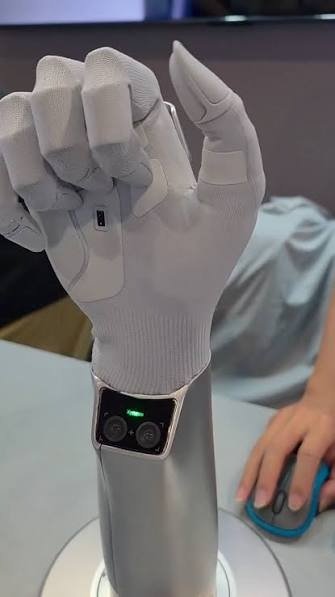
A small robotics startup in Hangzhou has just given the humanoid robot industry a fresh reminder that hands, not legs or torsos, are often the hardest part of building a machine that can actually do useful work in the real world. Xynova, founded in late 2024, has unveiled the Flex 2, its second-generation dexterous robotic hand, and the specification sheet reads less like a lab prototype and more like a genuine attempt to solve one of humanoid robotics’ most persistent bottlenecks: giving a machine hand the kind of fine motor control a human takes for granted.
The Flex 2 weighs just 400 grams and packs 23 degrees of freedom into that compact frame, using a hybrid drive system that combines cable-driven tendons with direct-drive actuation. That combination matters because it’s designed to balance two things that are usually in tension with each other in robotic hand design: flexibility and precision. Xynova says the hand achieves positional repeatability of plus or minus 0.1 millimeters and force control accuracy as fine as 0.05 newtons, precise enough in theory to pick up something as delicate as an egg or a glass without crushing it, while also supporting a single-hand grasp load of up to 12 kilograms at peak, though that figure drops to a more sustainable 4 kilograms during continuous operation. According to the company, the Flex 2 also posted a perfect score on the Kapandji Thumb Opposition Test, a standard clinical measure of hand dexterity based on how far the thumb can rotate to touch each of the other fingers, a benchmark more commonly used to evaluate human hand mobility than robotic hardware.
Beyond raw mechanics, Xynova has built what it calls a cerebellum-style control layer into the hand, a reference to the part of the human brain responsible for fine motor coordination and balance. In practice, that layer handles slip detection, adaptive grasping, and compliant reflexes, meaning the hand can sense when an object is beginning to slide out of its grip and adjust pressure automatically rather than relying entirely on a central robot controller to notice and react. Combined with multimodal sensing across the hand’s surface, the goal is a hand that can handle objects of varying shape, texture and fragility without needing every grip calculated in advance, a capability that’s become one of the clearest dividing lines between humanoid robots that look impressive walking around a stage and ones that can actually be useful doing manipulation tasks in a warehouse, lab or home.
Interestingly, the Flex 2 isn’t simply a strict upgrade over its predecessor. The original Flex 1, launched in August 2025, actually offered two more degrees of freedom at 25, weighed slightly less at 380 grams, and could lift more than 30 kilograms with over 20 newtons of fingertip force per finger, figures that on paper make it the stronger hand. Xynova’s decision to trade some of that raw strength and joint count for the Flex 2’s sensing layer and finer force control suggests the company is betting that most real-world humanoid tasks call for controlled precision over maximum lifting capacity, a different design philosophy rather than a straightforward regression between generations.
The financial backing behind Xynova is where Xiaomi enters the picture, and it’s a more layered story than a single headline investment. The company closed a roughly 100 million yuan angel funding round in December 2025, led by CATL Capital with Xiaomi’s strategic investment arm co-investing alongside it. That was followed earlier this year by a Pre-A round reportedly led by a major Chinese internet company, and Xynova has since closed a Series A round that brought its total funding to nearly 1 billion yuan, or roughly $148 million, with backing from Li Auto, China Securities Company Limited, Xiaomi Technology, and a mix of other Chinese industrial and financial investors. In its own statement on the investment, Xiaomi described dexterous hands as key end-effectors for precise robotic operation, a fairly blunt acknowledgment that whichever company builds the best robotic hand stands to become a critical supplier for every humanoid robot maker that needs one, regardless of who builds the rest of the robot.
That positioning appears to be translating into actual commercial traction rather than remaining purely conceptual. Xynova says it has already received orders for more than 10,000 hands from what it describes as top-tier clients since the Flex 1’s launch, and the company is building a dedicated manufacturing facility targeting an annual output of 10,000 hands alongside 200,000 micro electric cylinders, the small actuators used throughout the hand’s joint system, with commissioning expected in the second quarter of 2026. That kind of production scale-up mirrors a broader pattern taking shape across China’s robotics sector. A January report from Gasgoo noted that rival firm Inspire Robots delivered 10,000 dexterous hands in 2025 alone, up sharply from just 2,000 the year before, suggesting China’s humanoid robotics supply chain is moving from prototype-stage demonstrations toward genuine industrial-scale component manufacturing at a pace that’s happening faster than many outside observers expected.
For the broader humanoid robotics industry, the Flex 2 and the funding trail behind it point to a shift in how investors and manufacturers are valuing individual robot components. Rather than treating the hand as a minor accessory bolted onto a humanoid platform built primarily around locomotion and balance, companies like Xynova are positioning dexterous hands as core infrastructure, comparable in strategic importance to the actuators and sensors that let a humanoid robot walk in the first place. Whether the Flex 2 becomes a standard component across multiple robot makers or remains one option among several competing Chinese hand manufacturers will likely become clearer once Xynova’s new manufacturing facility comes online and the first wave of Flex 2-equipped robots reach real-world deployment later this year. Additional technical details are available through Xynova’s official website.