|
Getting your Trinity Audio player ready...
|
Z.ai Shares Surge 8% After Releasing New AI Model Running Only on Chinese Chips
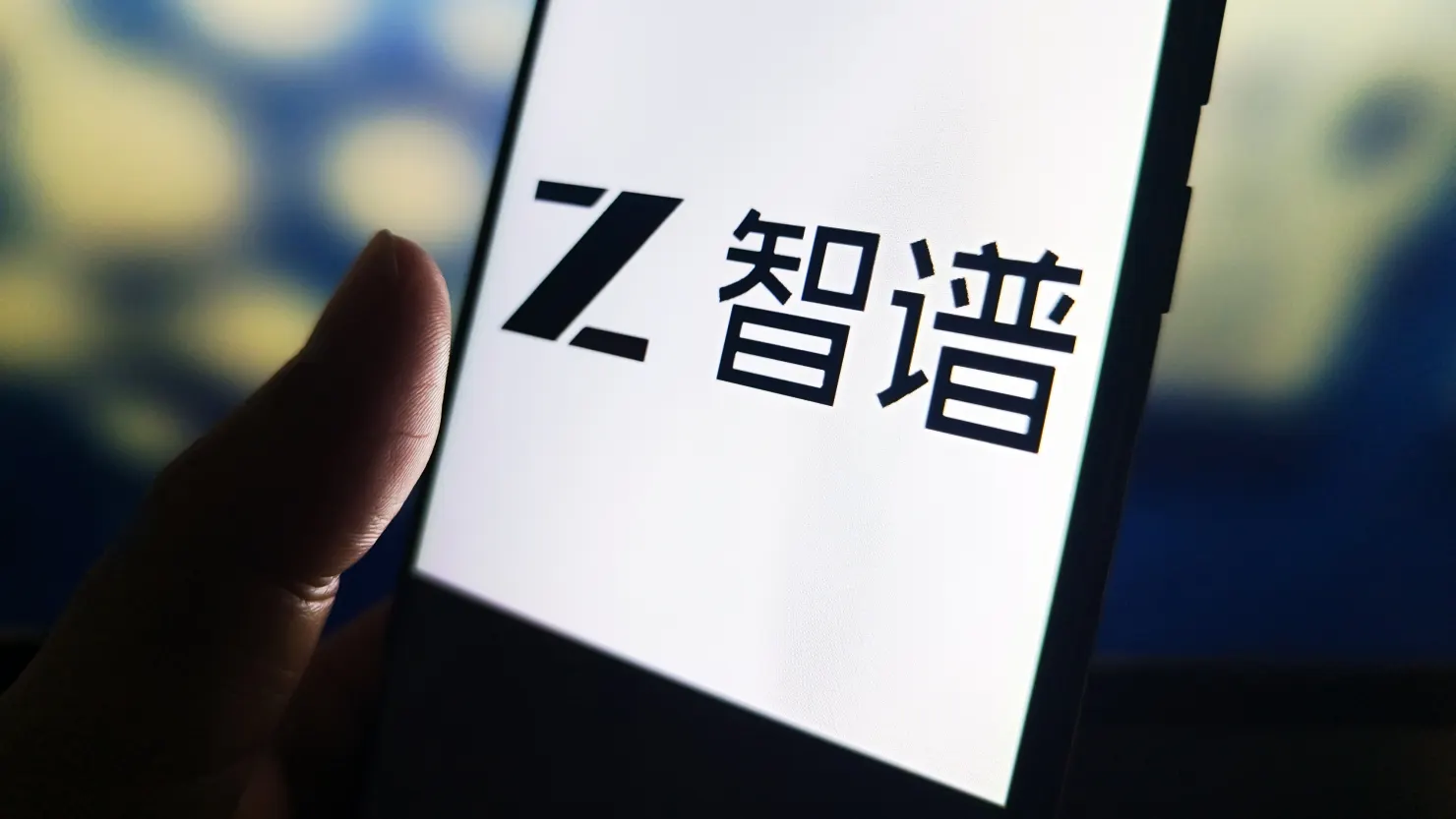
Chinese AI company Z.ai saw its Hong Kong-listed shares climb more than 8 percent on Thursday after unveiling a new model that the company says runs entirely on domestically produced semiconductors, the latest sign of Beijing’s push to build an AI industry that doesn’t depend on Western hardware.
The model, called GLM-5.3-Flash, is a lower-cost version of Z.ai’s flagship large language model. It quickly climbed to 10th place on the Artificial Analysis Intelligence Index, a widely watched benchmark that ranks AI models on reasoning and general capability, putting it ahead of DeepSeek’s V4 Pro Max. Z.ai, also known by its former name Zhipu, confirmed the model’s origins in a blog post after weeks of online speculation about a mysterious system code-named “Ox Alpha” that had been quietly generating buzz on developer platforms.
That stealth period turned out to be more than just marketing. Before its official unveiling, the model spent a week processing traffic on OpenRouter, a popular marketplace where developers route requests to different AI models, and on the coding platform OpenCode. According to Z.ai, the system handled 62 trillion tokens during that trial run, including more than 11 trillion tokens in its first three days on OpenRouter alone, making it the platform’s largest launch to date. That kind of sustained, high-volume inference load matters because it demonstrates the model could handle real commercial traffic at scale, not just perform well on a curated benchmark test.
The bigger story, though, is what the model ran on. Z.ai says GLM-5.3-Flash operated on a cluster of 100,000 domestically produced chips throughout its stealth trial, a claim that, if accurate, represents one of the more concrete demonstrations yet that Chinese AI firms can train and serve large-scale models without relying on Nvidia’s hardware. Nvidia has been effectively locked out of large parts of the Chinese market by a mix of U.S. export restrictions and Beijing’s own countermeasures, and rival chipmakers like Huawei have spent the past two years racing to close the performance gap with alternative accelerators.
This is not Z.ai’s first move in that direction. The company completed construction earlier this year of a large data center built around Chinese-made chips, a facility Bloomberg previously reported involved roughly a 1-gigawatt capacity, enough to power hundreds of thousands of homes, dedicated to training and running its GLM model family. That earlier announcement itself sent Z.ai’s shares sharply higher, and it laid the groundwork for Thursday’s launch by giving the company the domestic compute capacity needed to actually run a fully homegrown-hardware model at scale rather than simply announce one.
Z.ai’s stock has been on a volatile run since its Hong Kong initial public offering in January, when the company traded under its official name, Knowledge Atlas Technology. Shares surged as much as 48 percent at one point following the release of an earlier flagship model, GLM-5.2, and the stock’s market value briefly touched $137 billion, putting it ahead of established Chinese internet companies like PDD Holdings and NetEase. That valuation has since cooled to around $80 billion, still roughly ten times where the stock started the year, but the swings reflect how sensitive investors remain to every new model release and every twist in the broader U.S.-China AI rivalry.
Z.ai wasn’t alone in Thursday’s rally. Shares of rival MiniMax gained about 3 percent after the company reported a nearly 300 percent surge in first-half revenue compared with a year earlier, even as its adjusted net loss more than doubled to $293 million. MiniMax’s flagship M3 model currently ranks 18th on the Artificial Analysis Intelligence Index. Both companies are scheduled to report full first-half results in the coming days, with Z.ai’s due Monday, giving investors a clearer look at how much actual revenue is backing up the stock market enthusiasm.
The pattern emerging across Chinese AI stocks this year is that hardware independence has become just as important a catalyst for investors as raw model performance. Leading American models from companies like OpenAI and Anthropic remain officially unavailable in China, and Nvidia’s most advanced chips are largely off-limits there too, which has pushed domestic AI developers and domestic chipmakers into a tighter, mutually reinforcing relationship. Every time a Chinese lab demonstrates that its models can run competitively on Chinese silicon, it validates not just that company’s technology stack but the broader national strategy of building AI infrastructure that can’t be cut off by future export controls.
That strategy carries real technical trade-offs. Training and serving large models on hardware that hasn’t matched Nvidia’s performance and software ecosystem for years typically means accepting some combination of higher costs, slower training times or engineering workarounds to compensate for weaker chip-to-chip communication and memory bandwidth. Z.ai’s own account of the Ox Alpha trial suggests the company has made real progress on that front, but independent verification of the claims is limited, and skepticism remains warranted until third-party benchmarks and cost data are available.
For now, the market reaction speaks for itself. Investors have shown they’re willing to reward Chinese AI companies handsomely for demonstrating hardware self-sufficiency, even when the underlying revenue picture, as MiniMax’s widening losses show, is still far from settled. With Z.ai’s own earnings due next week and the AI leaderboard shifting on a near-weekly basis as Chinese labs including DeepSeek, Alibaba’s Qwen team, Moonshot and Xiaomi all push out competing models, GLM-5.3-Flash is unlikely to be the last release this year framed as proof that China’s AI industry can stand on its own hardware.