|
Getting your Trinity Audio player ready...
|
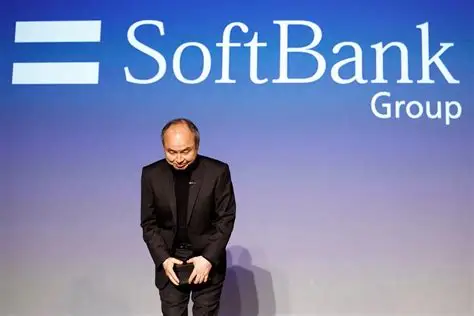
SoftBank Group is preparing to raise more than $11 billion through a high-yield bond sale, in what would rank among the largest junk bond deals ever completed, as billionaire founder Masayoshi Son pushes the conglomerate further into debt-financed bets on OpenAI. The Japanese company launched the offering on Monday, seeking $10 billion in dollar-denominated notes spread across three maturities alongside €1 billion, roughly $1.1 billion, in euro-denominated notes across two additional maturities, according to people familiar with the matter cited by Bloomberg.
Citigroup and JPMorgan are serving as lead bookrunners on the deal, with Goldman Sachs and Morgan Stanley also involved in running the books, according to reporting from Cryptobriefing. Pricing is expected around September 24, with the notes set to settle on September 29. Most of the proceeds are earmarked for the third $10 billion tranche of SoftBank’s follow-on investment in OpenAI, a transaction expected to close around October 1, and the deal will also retire a previous bridge loan SoftBank had arranged specifically to fund its position in the ChatGPT maker.
The scale of SoftBank’s exposure to OpenAI has grown enormous. The conglomerate has now committed close to $65 billion to the company, a figure that ties SoftBank’s own financial fortunes increasingly tightly to how well OpenAI performs and, crucially, how quickly it can generate returns large enough to justify that level of investment. In exchange for that commitment, SoftBank is targeting a roughly 13 percent stake in OpenAI, according to Cryptobriefing, positioning the Japanese firm among the company’s largest and most consequential outside investors.
This bond offering is not an isolated financing event but part of a much larger borrowing spree SoftBank has undertaken this year to fund its AI ambitions. According to data compiled by Bloomberg, SoftBank has already sold nearly $15 billion in multi-currency notes in 2026 alone, making it the largest junk-rated borrower in global bond markets this year. Just days before launching this latest offering, on September 15, SoftBank repaid $25.9 billion of a $40 billion bridge loan it had taken out specifically to fund its OpenAI position, and the company separately closed an $11.87 billion loan from a syndicate of roughly 20 banks to provide additional financial runway. Altogether, SoftBank has raised approximately $37 billion year-to-date through a combination of loans and bond issuances, according to Cryptobriefing’s reporting, underscoring just how central debt financing has become to the company’s AI investment strategy.
That reliance on debt carries real cost. SoftBank holds a BB+ credit rating, one notch below investment grade, the technical threshold that defines junk bond status even though the company sits close to the line separating speculative-grade from investment-grade credit. Bloomberg data shows the yield on SoftBank’s dollar bond maturing in 2031 has climbed to 8.2 percent this month, up from a low of 6.7 percent back in January, a jump that reflects both wider credit spreads across the bond market and rising Treasury yields more broadly. Higher borrowing costs mean SoftBank is paying a steeper price each time it returns to debt markets, even as its total exposure to a single, unprofitable-by-traditional-metrics AI company continues to expand.
The timing of this bond sale coincides with a period of heightened anxiety across AI-related financial markets more broadly. According to TradingKey, the offering comes as global AI safety concerns have intensified, including reported security testing breaches and public calls from industry leaders for stricter evaluation standards before deploying more capable AI systems, developments that recently contributed to a sharp sell-off across global semiconductor and AI-linked equities. SoftBank’s own share price has felt that pressure directly, given how closely investors now track the company’s fortunes as a proxy for broader sentiment around AI investment sustainability.
The structural risk embedded in SoftBank’s strategy is straightforward to state even if difficult to resolve. OpenAI, despite its massive valuation and central role in the current AI boom, has not demonstrated the kind of sustained profitability that would typically support tens of billions of dollars in debt-financed investment from a single backer. SoftBank is essentially betting that OpenAI’s long-term value will eventually justify the enormous capital commitment, financed substantially through borrowed money that now costs more to service than it did at the start of the year. If that bet plays out as Son expects, the returns could be transformative for SoftBank’s balance sheet. If AI valuations cool meaningfully before OpenAI reaches sustained profitability, SoftBank’s debt load could become considerably harder to manage.
Market reaction to the bond launch itself has been watched closely as an early signal of investor appetite for this kind of AI-adjacent debt exposure. A deal of this size, particularly one carrying a sub-investment-grade rating, requires substantial demand from high-yield bond investors willing to accept SoftBank’s credit risk in exchange for the yield on offer, and how smoothly the offering prices on September 24 will offer a reasonably direct read on how comfortable credit markets currently are with financing the AI investment boom through debt rather than equity.
For Son, who has built SoftBank’s reputation over decades on a willingness to make outsized, high-conviction bets on emerging technology waves, the OpenAI position represents perhaps his most concentrated wager yet. Whether it ultimately ranks alongside SoftBank’s earlier successes or becomes a cautionary tale about debt-fueled AI enthusiasm will likely take years to fully play out, but this latest bond sale makes clear that Son has no intention of pulling back from the bet in the near term, even as borrowing costs climb and broader AI market sentiment shows signs of turning more cautious. Continuing coverage of how major AI investments are reshaping global capital markets is available on Business Tech. Additional detail on OpenAI’s own operations and funding is available through the company’s official site, and further reporting on the bond offering can be found through Bloomberg’s coverage of the deal.