|
Getting your Trinity Audio player ready...
|
NNPC’s Annual Profit Jumps 33% to ₦7.2 Trillion Even as Revenue Falls
Nigeria’s state oil company closed out 2025 with its strongest profit performance in years, even though the top-line revenue figure actually moved in the opposite direction, a split that NNPC Limited’s leadership credits to tighter cost discipline rather than a booming market.
NNPC Limited announced Tuesday that profit after tax climbed 33 percent to ₦7.2 trillion for the financial year ended December 31, 2025, up from ₦5.4 trillion the year before. The figures were unveiled following the company’s annual general meeting and its second earnings call with financial and business analysts, part of a push to communicate results more directly to the investment community since its restructuring under the Petroleum Industry Act. Revenue, by contrast, actually fell 24 percent to ₦34.5 trillion, a decline NNPC attributed to softer crude oil prices for much of the year alongside reduced volumes of refined white products, the result of market deregulation that took effect in 2024 and opened up competition in fuel distribution that NNPC had previously dominated more exclusively.
That combination, falling revenue paired with rising profit, is the central story behind this year’s numbers, and NNPC Group CEO Bashir Ojulari was fairly direct about how it happened. He said the stronger bottom line came down to improved operational efficiency and financial discipline during a year when overall revenue was clearly under pressure. According to Ojulari, the company’s cost of sales held at roughly the same proportion of revenue as in 2024, meaning NNPC didn’t actually find savings in its core production costs. Instead, the real gain came from general and administrative expenses, which the company cut by about a quarter over the course of the year. On top of that, an improving financial position allowed NNPC to reverse some provisions it had previously set aside against doubtful receivables, money owed to the company that it had earlier assumed might not be collected, giving profit an additional one-time boost on top of the underlying cost savings.
Beyond the headline profit and revenue figures, several other financial measures moved firmly in NNPC’s favor. Earnings before interest, tax, depreciation and amortisation rose 22 percent to ₦18.0 trillion, earnings per share climbed 32 percent to ₦35.9, and operating cash flow grew 16 percent to ₦12.8 trillion. Return on equity improved by 200 basis points to 16 percent, and the board declared a dividend of ₦5.8 trillion, up 35 percent from the previous year’s payout, a sum that flows back to the Nigerian government as the company’s sole shareholder.
On the operational side, NNPC reported its strongest crude oil and condensate production in five years, averaging 1.77 million barrels a day across the year, while natural gas output averaged 7.2 billion standard cubic feet a day, a three-year high. Total oil and condensate production for the year came to 565.8 million barrels, up 5 percent from 2024, with NNPC’s own equity share of that output rising 11 percent to 223.7 million barrels. The company’s statutory payments and remittances to Nigeria’s federation account, the pooled revenue that gets distributed across federal, state and local governments, jumped 39 percent to ₦22.3 trillion for the year, a figure that matters well beyond NNPC’s own balance sheet given how heavily Nigeria’s state governments rely on oil-linked federal transfers to cover their budgets.
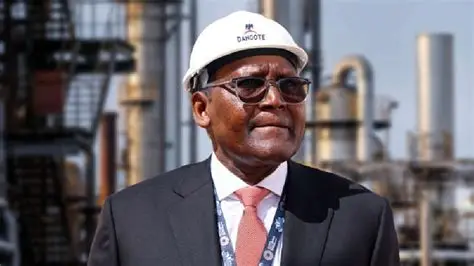
The results also offer a window into how NNPC’s role in Nigeria’s domestic refining sector has evolved. The company continues supplying crude feedstock to the Dangote Petroleum Refinery under the naira-for-crude arrangement that eliminated much of the foreign currency friction that had previously complicated how Nigerian refiners sourced local crude. At the same time, NNPC’s own government-owned refineries in Port Harcourt, Warri and Kaduna remain largely idle, a persistent weak point in the company’s operations that stands in contrast to the production and profit gains reported elsewhere in the business.
Looking at how the year actually built up gives some texture to the full annual figures. NNPC’s own monthly reports showed considerable swings along the way. March 2026 profit after tax came in at ₦276 billion, more than double the prior month’s figure, with crude and condensate production at 1.56 million barrels a day. April brought a further jump to ₦481 billion in profit, alongside crude output climbing to 1.68 million barrels a day and oil revenue for the month surging 79 percent to ₦4.971 trillion from ₦2.77 trillion in March. By the time cumulative statutory payments for the January-to-April stretch were tallied, they already stood at ₦3.714 trillion, a pace that, extrapolated across the full year, helps explain how the company arrived at its eventual ₦22.3 trillion in annual remittances.
Taken together, the full-year results paint a picture of a company that’s managed to grow profitability and production even as the broader revenue environment worked against it, a dynamic shaped as much by cost control and operational discipline inside NNPC as by anything happening in global oil markets. Whether that pattern holds into the current financial year will likely depend on how crude prices and Nigeria’s own refining and deregulation landscape continue to evolve, particularly as the country’s domestic refining capacity, led by Dangote’s expanding operations, keeps reshaping the market NNPC now has to compete in rather than simply control.