|
Getting your Trinity Audio player ready...
|
Tinubu Says Nigeria Has Cut Its Dependence on Oil Revenue, Vows to Go Further
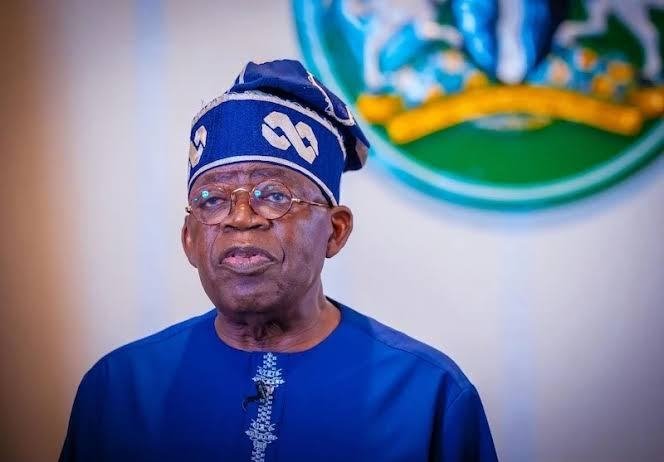
President Bola Tinubu declared Tuesday that Nigeria has already significantly reduced how much it depends on crude oil revenue to run the country, telling an audience in Abuja that his administration intends to push that shift even further as it works to channel petroleum earnings into building a broader, more diversified economy.
Tinubu, represented at the event by Vice President Kashim Shettima, made the remarks at the fifth anniversary celebration of the Nigerian Upstream Petroleum Regulatory Commission. He framed the government’s thinking in fairly direct terms: the goal is no longer an economy built around simply extracting and exporting petroleum, but one that uses oil and gas earnings to fuel manufacturing, agriculture, infrastructure, jobs and investment across the wider economy. We have already reduced our dependence on oil revenue, he said, and we intend to go further, while adding that a genuinely diversified economy still needs energy, foreign exchange and investment to function, which is exactly where the petroleum sector continues to serve the nation.
He didn’t frame gas as an afterthought either. Tinubu described the current period as the decade of gas, and said Nigeria intends to pursue an energy transition that’s suited specifically to the country’s own needs rather than simply copying a model designed for wealthier economies with different energy profiles. He pointed to gas’s ability to power homes and factories directly, while noting that broader petroleum earnings continue to support a stable naira and help fund the federation’s budget obligations, a reminder that even as the government talks about diversification, oil and gas revenue still underwrites much of what keeps the country’s finances functioning day to day.
Jobs featured prominently in his pitch too. Tinubu argued that a well-run upstream petroleum industry is capable of generating real employment for Nigerian engineers, fabricators and service companies, framing the sector’s potential contribution to the economy as extending well beyond the royalties and taxes it generates for government coffers. He said these gains matter well beyond the oil and gas industry itself, tying the sector’s performance into the government’s broader Renewed Hope Agenda, under which agriculture, manufacturing, the digital economy and the creative industries are each meant to play a growing role in national output.
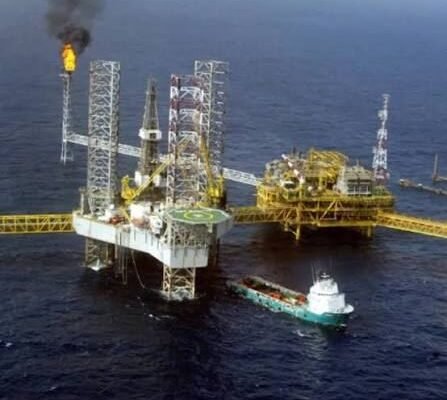
Tinubu also used the occasion to make a renewed pitch to international investors specifically around deep offshore oil prospects, some of Nigeria’s largest untapped reserves, which he said had remained undeveloped for years despite their potential. He said recent reforms are designed to unlock as much as $50 billion in new deep offshore investment, framing the message to global investors in blunt terms: Nigeria is open for long-term investment, and the terms are clear. He credited improved security in oil-producing areas, achieved through coordinated work between security agencies, oil operators, host communities and the Commission, with making production steadier and stronger, a shift he said has already drawn back investors who had previously abandoned Nigeria in search of better opportunities elsewhere. As evidence, he pointed to Nigeria ranking first among Africa’s leading destinations for upstream oil and gas investment for two consecutive years.
Looking ahead, Tinubu promised the government will keep pushing rather than treat recent gains as a finishing line, vowing that his administration won’t rest until Nigeria becomes the preferred global destination for hydrocarbon investment. He said the next phase of reform will insist more firmly on compliance and accountability across the sector, while pledging the government would uphold the rule of law and the sanctity of contracts, aiming to reduce the number of investment disputes and ensure any that do arise get resolved quickly and fairly, a commitment clearly aimed at reassuring foreign investors wary of regulatory unpredictability.
Minister of State for Petroleum Resources Heineken Lokpobiri used his own remarks at the event to credit NUPRC’s creation under the Petroleum Industry Act as concrete evidence that Nigeria has made genuine progress reforming its oil and gas sector over the past five years. He laid out some of the specific numbers behind that progress: crude oil production has climbed to around 1.7 to 1.8 million barrels a day, active drilling rigs have risen from roughly 14 in 2023 to more than 60 today, and the country has recorded over $8 billion in major Final Investment Decisions since President Tinubu took office in May 2023. He said the infrastructure being built today will serve Nigeria for decades, framing current investment as a long-term foundation rather than a short-term fix. At the same time, Lokpobiri was careful not to overstate how far the job is finished, saying Nigeria, despite sitting on more than 37 billion barrels of oil reserves, still needs substantially more investment, exploration activity and additional licensing rounds to unlock the full potential of its petroleum resources. He urged NUPRC to keep building on its progress by adopting more decisive regulatory measures and clearing away the kind of bureaucratic bottlenecks that tend to discourage investors from committing capital.
Senator Jarigbe Agom Jarigbe, who chairs the Senate Committee on Gas, added his own assessment of the reforms carried out under the Petroleum Industry Act, saying they have meaningfully improved transparency, regulatory certainty and the flow of investment into Nigeria’s oil and gas sector over the past several years.
Taken together, Tuesday’s event reinforced a message the Tinubu administration has been building toward consistently this year: that Nigeria’s upstream oil sector is recovering in measurable ways, but that the government’s broader ambition is to use that recovery as a springboard for diversification rather than treating a stronger oil sector as the end goal in itself.