|
Getting your Trinity Audio player ready...
|
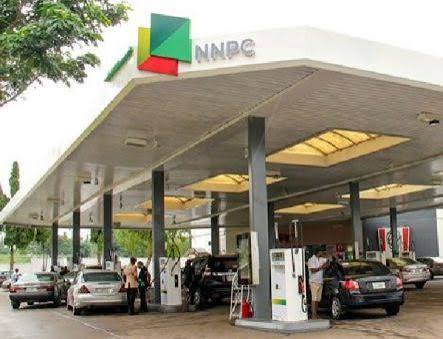
The federal government has announced a 30-day petrol discount at filling stations run by the Nigerian National Petroleum Company Limited (NNPC), and within hours the plan had become a political battleground. Finance Minister Taiwo Oyedele unveiled the measure at a press briefing in Abuja on Thursday, October 8. Opposition parties, labour unions and civil groups have since called it tokenism, an election-season move, or too small to matter, while the government says it is a targeted response to a spike in global crude prices.
According to Vanguard’s account of the briefing, designated NNPC stations will sell petrol at N1,350 per litre under the scheme, with a price that will be reviewed every month. Oyedele said the discount runs for 30 days in the first instance, with priority for public transporters nationwide. He added that NNPC Retail already sells petrol at the lowest price in the market and will offer the new arrangement through its outlets. The minister also described a second element: the government is negotiating a ceiling of N1,350 per litre on the ex-gantry or landing cost of petrol, a step meant to keep prices stable when crude prices or exchange rates move sharply.
It is worth separating those two ideas, because early coverage blurred them. The Guardian reported that Oyedele explained the proposed ceiling is not a fixed pump price of N1,350, but a cap on the cost at which petrol leaves depots or arrives at the coast, so that sudden swings in global crude or the naira do not immediately feed into higher pump prices. The discount at NNPC stations is a separate, temporary offer. Oyedele said the discount is a margin reduction under which petrol is sold at cost, and he insisted it is not a return of fuel subsidy, which the Tinubu administration removed in 2023. The government has not published the per-litre discount, the volume of petrol covered or the cost of the programme, and one critic quoted in The Guardian urged it to disclose all three.
The numbers help explain why the announcement landed so badly with some Nigerians. ThePointNG reported that NNPC’s pump price was N1,355 per litre in Lagos and Rivers and N1,370 in Abuja at the time, which means the new figure sits only slightly below what many motorists already pay. The Guardian said consumers were questioning whether that amounts to relief when the current price is just N10 to N20 above the benchmark. In other words, a headline of N1,350 may not feel like a discount to a driver who is already paying N1,355, and much depends on how many stations take part and how long supplies last.
The government’s explanation is that global conditions forced its hand. ThePointNG said the discount was triggered by crude price shocks and volatility that are hurting vulnerable households, and Oyedele said he hopes other marketers will follow NNPC’s lead because the price spike is not expected to last long. That context is plausible: Brent crude has been trading above $100 a barrel this month, driven by attacks around the Strait of Hormuz and a storm threatening US Gulf output, and a country that imports much of its refined fuel feels such swings quickly. Oyedele also said the government has granted a full waiver of taxes and duties on petrol, valued at more than N3.3 trillion for the period up to September 30, 2026, according to coverage by The Eagle Online.
The opposition response was swift. The Nigeria Democratic Congress (NDC) rejected the plan and called it deceit, according to Leadership, describing it as tokenism and a Greek gift from a government that, in its view, removed the subsidy without proper consultation or measures to cushion the impact. The party also argued that the pricing mechanism is an attempt to bring back petrol subsidy through the backdoor and questioned how discounted fuel could be distributed fairly through designated NNPC outlets in a country of Nigeria’s size. A separate statement from the party said the move showed a government in free fall, ready to clutch at anything to survive.
Atiku Abubakar, the former vice president and presidential candidate of the African Democratic Congress (ADC), questioned what happens when the 30 days end and whether Nigerians would return to buying petrol at more than N1,400 per litre. The ADC campaign council went further, accusing the government of electoral inducement, according to Opinion Nigeria’s report. One line from its statement was that you cannot buy a country’s future with 30 days of cheaper fuel. The council also asked why, if the government can lower the burden for a month, Nigerians were left to suffer for more than 800 days. Those are political claims made in campaign season, and the government has not accepted that the measure is electoral.
The Obidient Movement, whose director of media and communications is Onyeka Dike, said three years of suffering cannot be erased by 30 days of petrol discount and asked why the government waited so long. The Makinde/Daura Presidential Campaign Organisation described the scheme as a deceitful and failed media stunt, as reported by The Guardian. Labour was no more welcoming. The Nigeria Labour Congress urged the government to bring the price below N1,000 per litre, and Assistant General Secretary Chris Onyeka called the N1,350 benchmark a wicked set-up against workers. The National President of the Association of Senior Civil Servants of Nigeria, Muhammed Shehu, said N1,350 is not enough to cushion workers. Vanguard also noted that the NLC has given the government a 14-day ultimatum on petrol and wages, which adds pressure to the debate.
Behind the sound and fury sit a few practical questions. Who benefits? The priority for public transporters could reduce fares if drivers pass on savings, but there is no mechanism described for ensuring that happens. How will supply be managed? NNPC has a large retail network, but the number of designated stations and the quantity of fuel allocated have not been announced, and queues are a familiar risk when a price gap opens between outlets. What happens after 30 days? The government says prices will be reviewed monthly, which leaves open both an extension and a return to market prices.
There is also a timing dimension. ThePointNG reported that the 2027 general election is less than four months away, and many Nigerians reacting online linked the discount to the president’s re-election drive, according to TheNiche. The government has framed the step as a response to crude price volatility, and it is true that oil prices have moved sharply this year. Both explanations can hold at once, and the practical test will be whether relief reaches drivers and passengers, not the motives behind it.
For the wider economy, the episode illustrates a tension that policymakers face in a deregulated market. When the government stopped subsidizing petrol, it passed global price movements directly to consumers, which improved public finances but left households exposed to every spike. A temporary discount or a landing-cost ceiling attempts to smooth those spikes without restoring a full subsidy, but critics argue that any intervention funded by NNPC or taxpayers is a subsidy in effect. Oyedele rejects that label, and the details that would settle the argument, including who bears the cost, have not been released.
Readers who want to follow the scheme can check participating outlets and announcements on the NNPC Limited website, and Vanguard’s full report on the announcement is available in its coverage of the 30-day discount. Readers who follow Nigeria’s energy, business and technology stories can find more at BusinessTech Nigeria.
Over the next few weeks, three things will show whether the plan works: how many stations actually sell at the lower price, whether transport fares fall, and what the government says before the 30 days expire. Until then, the discount remains a promise on paper, and the argument over it is likely to run well past the first month.