|
Getting your Trinity Audio player ready...
|
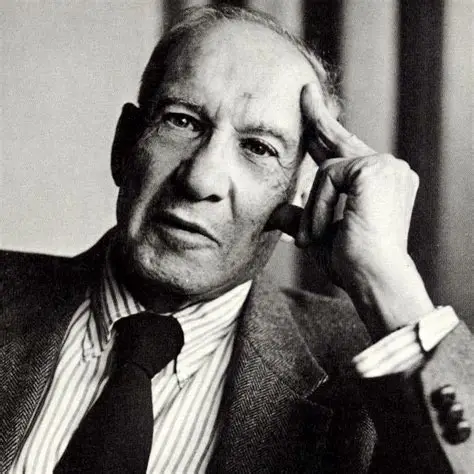
Management thinker Peter F. Drucker, born in Vienna in 1909 and later based in California, spent more than sixty years explaining how organisations work, and many call him the founder of modern management. In his 1973 book Management: Tasks, Responsibilities, Practices, he wrote a sentence that has since been compressed into countless slogans: “Efficiency is concerned with doing things right. Effectiveness is doing the right things.”
You may know a different version of the idea: “Management is doing things right; leadership is doing the right things.” People often attribute the wording to Drucker, but Stephen Covey popularised it in 1989 and credited both Drucker and leadership scholar Warren Bennis. In 1985, Bennis had published a similar version that contrasted managers with leaders. The most accurate reading is that the popular line grew out of a shared idea, while Drucker’s own documented words use efficiency and effectiveness.
“Efficiency Is Concerned With Doing Things Right. Effectiveness Is Doing the Right Things” – Peter F. Drucker
The sentence works by separating two things people usually treat as one. Efficiency is about how well a task is carried out: fewer errors, less waste, faster delivery. Effectiveness is about whether the task was worth doing at all. A team can be highly efficient and completely ineffective, polishing a process that serves no useful purpose. Drucker’s point is that the second question comes first.
Covey gave the idea a picture that is easy to remember. Efficiency is how fast you climb a ladder, and effectiveness is whether the ladder is leaning against the right wall. A person can climb quickly and arrive somewhere that does not matter.
Consider a sales department that spends a year improving its order processing. Orders are logged faster, invoices go out sooner and error rates fall to nearly zero. Meanwhile, the company’s main product is losing customers to a competitor with a better offering. The team did things right, and the business still suffered, because nobody asked whether the effort was aimed at the right problem.
Both skills are needed, in the right order
It would be a mistake to read the quote as a put-down of efficiency. Drucker built his career on helping organisations run better, and his writing treats good execution as essential. The point is sequence. Choosing the right goal comes first, and efficient execution comes second. Doing the wrong thing perfectly leads to failure, no matter how polished the result looks. Doing the right thing imperfectly creates room for progress, learning and improvement.
The popular management and leadership version of the line adds a second layer. It suggests that managers tend to focus on execution, while leaders focus on direction. That is a useful shorthand, but real roles overlap. A chief executive who never thinks about efficiency will bleed money, and a line manager who never asks what the team should be doing will drift.
How to test whether you are doing the right things
A simple habit helps. Before investing time in a project, ask what result it is meant to produce, who benefits and what would happen if you did not do it. If the answers are vague, the task may be efficient busywork. Do the same with recurring activities such as weekly reports and standing meetings. Many continue because they were once useful, and nobody has checked whether they still are.
It also helps to review results, not just activity. Teams that measure how much they did, such as calls made or reports produced, can miss whether any of it changed an outcome that matters.
Why this applies to individuals as well as companies
The same distinction applies to personal careers. A professional can become excellent at a skill that the market no longer values. A founder can become skilled at running a product that customers have outgrown. Asking whether the work is still the right work is uncomfortable, but it is cheaper to ask early than to discover the answer after years of effort.
Why this advice still holds true today
Modern workplaces have more tools for measuring efficiency than ever before, from dashboards to automation. Those tools make it easy to optimise what can be counted and to overlook what cannot. Drucker’s sentence remains useful because it pushes the question that tools cannot answer: is this the right thing to be doing? Whether you meet it in his own words or in the popular version about management and leadership, the lesson is the same. Get the direction right, then work to get the details right.