|
Getting your Trinity Audio player ready...
|
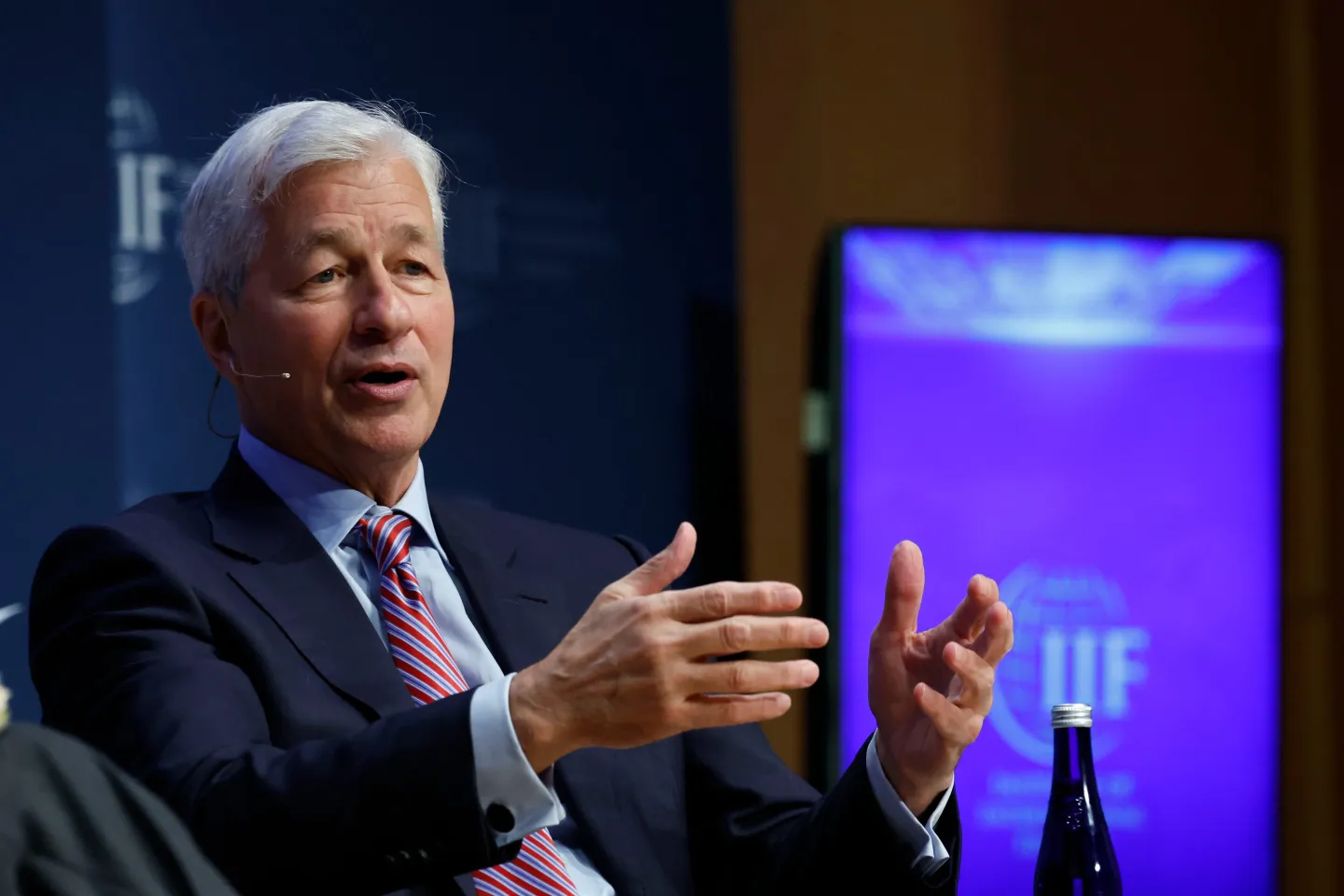
JPMorgan Chase CEO Jamie Dimon offered one of the starkest numbers yet on the scale of the AI infrastructure boom this week, telling CNBC-TV18 that spending across the hyperscaler ecosystem could reach $1 trillion next year, up from roughly $700 billion this year and just $300 billion the year before. Speaking on the sidelines of the 11th annual JPMorgan India Conference, Dimon framed the trajectory as evidence that the AI buildout shows little sign of slowing, even as he stayed cautious about the inflationary and financial risks accumulating alongside it.
The pace of that growth is what makes Dimon’s projection notable. Hyperscaler spending, the enormous capital outlays companies like Microsoft, Amazon, Google and Meta pour into data centers, chips, power infrastructure and networking equipment, has more than doubled in each of the past two years, and Dimon’s forecast suggests that trend has yet to meaningfully decelerate. He described the economic impact in fairly concrete terms, saying the surge is adding roughly 1 percent to GDP each year, a contribution large enough to function as a genuine macroeconomic tailwind rather than a narrow, sector-specific story confined to tech earnings reports.
That same spending, Dimon warned, carries a real cost on the inflation side of the ledger. As companies hire workers, construct new factories and power plants, and purchase enormous volumes of equipment and materials to support AI infrastructure, the resulting demand adds upward pressure on prices across the broader economy. Dimon said he remains hopeful inflation will ease from current levels but acknowledged genuine uncertainty, adding that there’s a real chance price pressures could persist or even tick up further, and that the Federal Reserve should stay committed to its 2 percent inflation target regardless of how the AI spending boom evolves.
Dimon’s comments came with a longer-term counterpoint that complicates the inflation narrative. He suggested AI could ultimately prove deflationary over time, once companies move past the initial capital-intensive buildout phase and become more efficient in how they actually deploy the technology, describing AI broadly as an unbelievable technology whose rapid expansion looks likely to continue. That framing, inflationary in the near term as infrastructure gets built, potentially deflationary once efficiency gains kick in, reflects a view increasingly common among economists tracking the AI investment cycle, even if the timeline for that shift remains genuinely uncertain.
On the question of whether all this spending will actually pay off financially, Dimon pushed back against the idea that every AI investment needs to clear a straightforward return-on-investment calculation before it’s justified. He said some of the spending functions as table stakes, a baseline cost of remaining competitive rather than a discrete bet expected to generate a clean, measurable payoff, pointing specifically to improvements in customer experience as a benefit that’s difficult to quantify but can still make a business meaningfully more efficient over time.
Dimon’s $1 trillion figure, while striking on its own, is actually more conservative than some of the more recent projections circulating on Wall Street. According to Stocktwits’ reporting, S&P Global Ratings has projected combined hyperscaler capital expenditure could exceed $1.3 trillion in 2027, while UBS has forecast total AI capital spending reaching roughly $1.4 trillion over the same period. That range of estimates, all clustered well above $1 trillion, underscores just how much consensus has built around the idea that AI infrastructure spending is entering an entirely new order of magnitude, even if analysts differ somewhat on the precise scale.
Not everyone has treated Dimon’s comments as an unambiguous vote of confidence in the AI trade. Stocktwits noted that investors largely shrugged off the figure when it circulated, a reaction that may reflect how thoroughly aggressive AI spending assumptions have already been priced into markets, leaving even a headline number like $1 trillion feeling more confirmatory than surprising at this point in the cycle. Dimon himself has expressed more pointed skepticism about AI-related market risk in the past. In October 2025, he said he believed some of the money currently flowing into AI investment would ultimately be wasted, and warned the odds of a meaningful stock market drop over the following two years were higher than markets appeared to be pricing in at the time, even while maintaining that AI as a technology would eventually pay off in the way cars and televisions did, despite many individual companies and investors along the way not faring well financially.
That tension, genuine belief in AI’s long-term transformative potential paired with real caution about near-term financial excess, ran through Dimon’s latest comments as well. He pointed out that AI spending is not the only major source of capital demand currently pushing interest rates higher, citing infrastructure investment, remilitarization spending and persistent government deficits as additional factors competing for the same pool of capital. He also acknowledged the possibility of a broader market correction but said he was not convinced AI specifically would be the trigger, suggesting the risk, if it materializes, is more likely to stem from a combination of these overlapping pressures rather than an AI-specific bubble bursting in isolation.
Dimon’s remarks extended beyond AI spending into broader geopolitical territory as well, with the JPMorgan CEO urging deeper engagement between the United States and China ahead of a planned summit between President Donald Trump and Chinese President Xi Jinping, specifically calling for the two countries to fully engage on trade, AI and security matters. That call for cooperation, delivered in the same conversation as his AI spending forecast, reflects how tightly intertwined the AI investment boom has become with broader questions of global economic policy and U.S.-China relations heading into the new year. Continuing coverage of how AI investment is reshaping global markets and economic policy is available on Business Tech. Additional detail on Dimon’s comments is available through CNBC’s original reporting, and further background on JPMorgan’s economic outlook can be found through the company’s official site.